
REVIEW · SELF-GUIDED TOURS
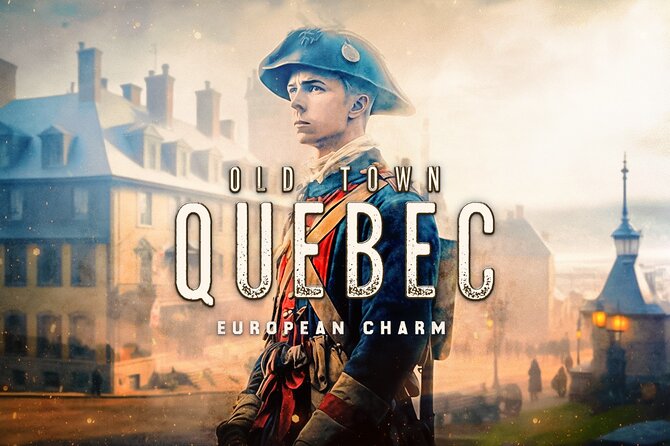
Old Town Quebec Secrets: Private Exploration Game and Tour
Quebec City turns into a puzzle walk. I love the way this offline game turns famous streets into solvable questions, and I also like that it gets you looking closely at places like Saint-Louis Gate and Place Royale instead of rushing past them. One watch-out: some clues can feel outdated or oddly worded, so plan on using the in-app hints if you hit a dead end.
This is a private exploration game in English, priced at $9.29 per person for about 1 hour 30 minutes. You download it to your phone, start at Av. Honoré-Mercier, and work your way step by step toward Old Quebec, ending near Rue des Pains Bénits, all at your own pace.
In This Review
- Key things I’d focus on before you play
- How the Offline Questo Game Works in Old Quebec
- Price and Time: $9.29 for About 1.5 Hours
- Starting at Av. Honoré-Mercier, Ending Near Rue des Pains Bénits
- Tourny Fountain: Moreau’s 1853 Sculptures and Your First Puzzle
- Saint-Louis Gate: French Beginnings, British Closures, and Trade Disruption
- The Elm Tree With the Cannonball: A Weird Quebec Detail Worth Chasing
- Couvent des Ursulines: Women’s Education in 1639, Montcalm’s Burial
- Cathedral of the Holy Trinity: Anglican Architecture Outside Britain
- Place de l’Hôtel-de-Ville: The Public Square’s Many Names
- Séminaire de Québec: François de Laval and a Mission Beyond Priests
- A Founder’s Monument by Paul Chevré, Then Jean-Paul Lemieux’s Artistic Periods
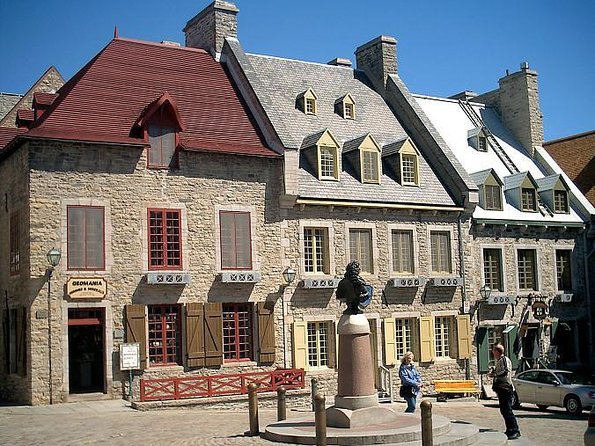
- Place Royale: Champlain’s 1608 Fort, Trading Post, and the Cradle of French North America
- Hôtel du Parlement: Taché’s Building, the Jesuit Barracks Years, and a Sloping Hill
- Notre-Dame-de-Québec: Since 1664, Cathedral Status, Basilican Timing, and Rebuilding
- Tips to Solve Faster and Keep the Fun Going
- Should you book Old Town Quebec Secrets?
- FAQ
- How much does Old Town Quebec Secrets cost?
- How long is the experience?
- Can I play without an internet connection?
- Is the tour guided by a physical guide?
- What language is the experience available in?
- Is this activity private?
- Can I start and pause the game when I want?
- Where do I meet and where does it end?
- Is it free for kids?
Key things I’d focus on before you play
- Offline by design: You can play without data or internet, so your battery and phone settings matter more than your signal.
- Private group format: Only your group plays, so you can spread out and solve as a team without crowd pressure.
- Start, pause, resume: The game is built for real sightseeing breaks, not a fixed guided schedule.
- A history route with variety: You’ll move from gates and fountains to convents, cathedrals, and the Parliament area.
- Built for problem-solvers: It’s intentionally game-like, so if you enjoy riddles, you’ll likely have more fun.
- Good value for short time: For 1.5 hours, the $9.29 price can feel like a lot of “see-and-do” packed together.
How the Offline Questo Game Works in Old Quebec
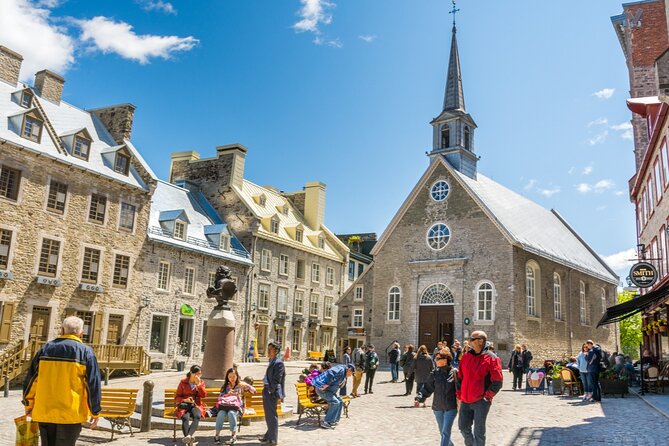
This experience is essentially a self-guided walking quest using the Questo app. You follow step-by-step instructions on your phone to reach each stop. The big practical win is that it’s playable offline, so you do not have to chase mobile data while you’re looking around.
I also like the flexibility built into the format. The game lets you start and pause whenever you want. That matters in Old Quebec, where you might want to duck inside a church entrance area, grab a coffee, or just stare at something weird in the street (you’ll see).
The only real downside is that the route depends on phone instructions. If your app experience is glitchy or a clue feels wrong because something changed outside (construction, closures, general drift), you may need patience and hints to keep going.
A few more Quebec City days to compare
- Quebec City Walking Tour
★ 5.0 · 4,716 reviews - Quebec City: Guided Tour of Fairmont Le Château Frontenac
★ 4.7 · 3,027 reviews - Québec City: Guided Sightseeing River Cruise
★ 4.4 · 3,000 reviews
Price and Time: $9.29 for About 1.5 Hours
At $9.29 per person for roughly 1 hour 30 minutes, this is priced more like an activity than a premium guided tour. The value comes from two things: you get a curated set of stops, and you get the “why am I looking at this?” layer that turns sightseeing into an actual mini-challenge.
It also helps that kids are free, which can make this a smart family add-on when you want everyone moving and engaged. And if your group is over 15 people, you can book multiple runs rather than forcing one huge group onto a single game.
If you’re the type who prefers a person speaking to you the whole time, this is not that. It’s quieter. It’s a walk where you do the talking with your team by comparing what you’ve noticed.
Starting at Av. Honoré-Mercier, Ending Near Rue des Pains Bénits
You meet at 3004 Av. Honoré-Mercier, Québec, QC G1A 1A2, and the game leads you toward Old Quebec and ends at Rue des Pains Bénits, Québec, QC G1K. The route is designed so you can keep moving without worrying about finding the “next museum.” You’re mostly following your phone instructions and scanning the street for the answer to each challenge.
Because it’s near public transportation, you can make it easy on yourself if you’re combining it with other Old Quebec sights. And since it’s a private activity, you are not being herded by strangers. You can pause when the mood hits you.
For comfort, wear shoes you trust. Old Quebec is walkable, but “engaging sightseeing” still means a lot of feet, especially when you stop to hunt for answers.
Tourny Fountain: Moreau’s 1853 Sculptures and Your First Puzzle
Your quest begins with Tourny Fountain. Even though it has only recently been installed in Quebec City, the story behind it goes back to the 1850s. There were six copies of this work, created by French sculptor Mathurin Moreau in 1853, and one big moment in its career was being exhibited at the 1855 World’s Fair in Paris.
What makes this first stop work is the way it sets the game tone. You’re told to look around and find the answer that moves you forward. In practice, that means you’ll spend a few extra minutes actually reading details and noticing how public art shows up in everyday city life.
Potential hiccup: if the fountain area has temporary barriers or re-routing, your phone instructions may still point you toward the “normal” viewing angle. If you don’t immediately see what the clue expects, take a breath and scan wider.
A different day out in Canada:
- Half-Day Trip to Montmorency Falls and Ste-Anne-de-Beaupré from Quebec city
★ 4.0 · 2,718 reviews - Old Quebec City: Grand Walking Tour with Private Option
★ 4.8 · 2,609 reviews - Quebec City: Montmorency Falls with Cable Car Ride
★ 4.6 · 2,392 reviews - Quebec City: Montmorency Falls & Ile d’Orleans Half-Day Tour
★ 4.3 · 2,144 reviews
Saint-Louis Gate: French Beginnings, British Closures, and Trade Disruption
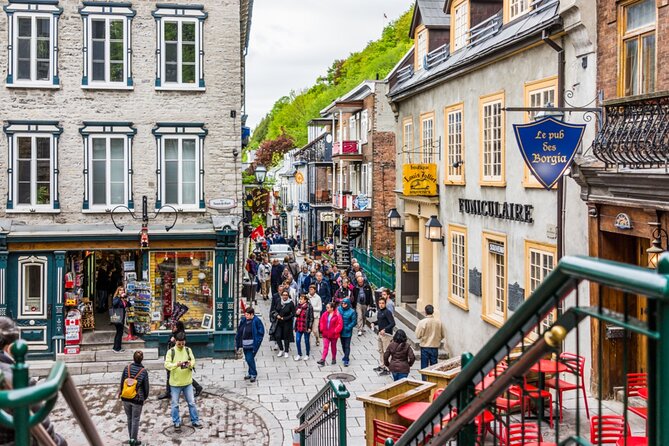
Next up is Saint-Louis Gate, tied to the city’s defensive and economic history. The first gate goes back to the late 17th century under the French Regime, at the present location. Under the British Regime, the gates were closed at night to limit travel between the city and surrounding areas, which disrupted trade and slowed the city’s development.
This is a good stop for anyone who likes history that feels physical. A gate is not an abstract idea. It’s a boundary you can stand near and imagine the flow of people and goods being restricted on purpose.
Drawback to expect: gate areas can be busy with walkers, cyclists, and occasional street activity. If you’re solving in a group, you might want to spread out just enough to read surroundings without blocking foot traffic.
The Elm Tree With the Cannonball: A Weird Quebec Detail Worth Chasing
If you want a quick dose of “wait, what?” this stop delivers. On Rue Saint-Louis at the corner of Rue du Corps-de-Garde, there’s a tall old elm tree known for a surprise: a cannonball seemingly trapped in the gnarly roots.
It’s the kind of detail people point out to tourists, including calèche drivers who slow their horses to show the feature to passengers. For the game, you’re again hunting for the answer in the scene. That means you’re not just taking a photo, you’re also training your eyes to notice specific clues from the environment.
This is one of those moments where the puzzle format helps. Without the game, it can feel like a quirky anecdote you hear and forget. With the game, you look at it longer, and it sticks.
Couvent des Ursulines: Women’s Education in 1639, Montcalm’s Burial
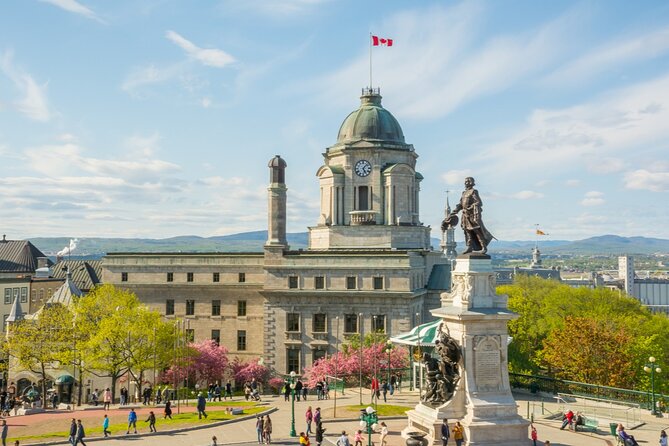
Then the route shifts into a deeper, quieter kind of history at Couvent des Ursulines. Founded in 1639, it’s described as the oldest women’s learning institution in North America. The chapel is where French general Louis-Joseph Montcalm was buried after the 1759 battle that helped decide the fate of New France.
I like how this stop balances the earlier defensive and civic stories with something human and lasting: learning and remembrance. It’s also a reminder that Old Quebec’s most famous battles and leaders are tangled with institutions you might not expect.
Practical consideration: chapels and convent sites can have different visitor rules depending on the day. The game still works as a puzzle walk, but you may need to adjust how long you spend outside if access is limited at that moment.
Cathedral of the Holy Trinity: Anglican Architecture Outside Britain
After the Ursulines, you’ll reach the Cathedral of the Holy Trinity. In 1804, it was the first Anglican church built outside Britain. It’s also a National Historic Site of Canada (designated 1989).
Architecturally, the cathedral is neoclassical Palladian in style and was modeled after St Martin-in-the-field Church in Trafalgar. That detail matters because it changes what you notice. Instead of expecting the same French colonial look you see elsewhere, you’ll clock the different design language right away.
What I’d watch for as you play: Palladian details can be subtle if you’re walking fast. The game nudges you to look for answers, so slow down on purpose. It makes the architecture more than background scenery.
Place de l’Hôtel-de-Ville: The Public Square’s Many Names
Next comes the public square area, historically known by different names. At one point it was Grande Place, then Grande Place de la Haute Ville, and also Place du Marché. In 1900, it was renamed Place de l’Hôtel-de-Ville after the construction of city hall. It was also called place Notre-Dame and place de la Basilique until the mid-20th century.
This is an excellent game stop because squares are where layers pile up. The stones are old, the use changes, and the name changes tell you how the city’s priorities evolved. The puzzle approach keeps you from treating it like a quick pass-through.
If you’re solving with a group, agree on a quick system. For example, one person reads clue text, the others scan the surroundings, and you reconvene before moving on.
Séminaire de Québec: François de Laval and a Mission Beyond Priests
At the Séminaire de Québec, you’re looking at religious and administrative power from the 1600s. It began as a society of Catholic priests founded in 1663 by François de Laval, who later became the first bishop of Quebec. The mission was broader than training priests, including evangelizing Aboriginal people and administering the colony’s parishes as a whole.
This stop makes the route feel “real” in a different way. You’re seeing how institutions shaped daily life, not just how leaders delivered speeches. The game pushes you to notice what’s around you, which is a useful skill in historic areas.
Possible drawback: institutional spaces can vary in how much is visible from the street. If your clue seems to rely on a detail you cannot see from where you are standing, use the hint rather than forcing it. Your time is better spent enjoying the rest of the route.
A Founder’s Monument by Paul Chevré, Then Jean-Paul Lemieux’s Artistic Periods
The route continues with a monument honoring the founder of Quebec City, attributed here as a work by Paul Chevré, inaugurated in 1898. After that, you’ll encounter Jean-Paul Lemieux, a major 20th-century Canadian painter known for working in several styles across five artistic periods.
These stops do something useful: they break the purely religious and political rhythm. You go from “who built the city” to “who represented Canada in paint,” which gives your brain a fresh hook while still staying in the Old Quebec context.
As a reader, you’ll probably enjoy this part most if you like variety. If you only care about battles and churches, you can still play it, but you may find these moments feel more interpretive than dramatic.
Place Royale: Champlain’s 1608 Fort, Trading Post, and the Cradle of French North America
Then comes one of the most important turning points in the whole experience: Place Royale. This is described as the precise location where Samuel de Champlain built the first permanent French settlement in the Americas. The settlement dates to 1608, and the first habitation combined a fort, store, trading post, and residence all in one.
That’s why Place Royale is considered the cradle of French North America. In a puzzle format, this stop has a big advantage. You’re not just reading a plaque. You’re scanning the environment and answering questions that make the place feel anchored.
If you like history that has a “you are standing where it happened” factor, you’ll appreciate this. It’s also where the route’s pacing usually starts to click, because the city starts to feel like a connected story instead of isolated photos.
Hôtel du Parlement: Taché’s Building, the Jesuit Barracks Years, and a Sloping Hill
The game’s later part focuses on Parliament Building (Hôtel du Parlement), an eight-floor building and home to the Parliament of Quebec. It includes the Lieutenant-Governor and the National Assembly. Architect Eugène-Étienne Taché designed it, and it was built from 1877 to 1886.
The building was inaugurated on September 15, 1896 in Old Quebec. It slopes downward because it was built on a hill. Before it was Parliament-related in the way we understand it today, it was once home to the Jesuit College, also called the Jesuit Barracks, from the 1730s to 1878. The city hall is noted as a National Historic Site of Canada in 1984.
This is a great stop for architecture-minded people. Even if you do not know Palladian or neoclassical terms, you can still notice how the building’s shape follows the terrain, and you can connect layers of power to how the city physically changed.
Practical note: since the structure involves multiple levels and a slope, take your time at the edges rather than rushing. The game answers are tied to details, not just the overall view.
Notre-Dame-de-Québec: Since 1664, Cathedral Status, Basilican Timing, and Rebuilding
Finally, you reach Notre-Dame-de-Québec, described as serving the first Catholic parish in North America since 1664. It acquired cathedral status in 1674 when it became the seat of the huge Diocese of Québec, and 200 years later it became a basilica. Its past includes shelling, fires, and multiple reconstructions and renovations.
This stop is emotionally different from the political and artistic moments before it. The game format helps because it slows you down. You’re not treating Notre-Dame as a quick exterior shot. You’re actually paying attention to the story, including the idea that this place has endured damage and change and still remained central.
Since the experience ends at Rue des Pains Bénits, this finale works as a natural “wrap” around the major spiritual landmark area.
Tips to Solve Faster and Keep the Fun Going
A puzzle walk is only fun if you keep moving without getting stuck. Here’s how to make the experience smooth, based on how the game is structured.
- Treat clues like scavenger hunts. Look for the detail in front of you, not the idea you want the answer to be.
- Use hints early, if needed. Some clues can be frustratingly off, especially if wording seems imperfect or the scene has changed. Hints save the day.
- Battery beats data. Since the game is offline, your biggest risk is running down your phone instead of losing mobile signal. Start with a decent charge.
- Team up your roles. One person reads the next prompt, another scans for visual details, and you both confirm the answer before moving.
- Give yourself buffer time. You’re walking through multiple landmarks, and each one requires a bit of looking around. If you keep moving too fast, the “game” part can turn into frustration.
Should you book Old Town Quebec Secrets?
Book it if you want a fun way to see Old Quebec without joining a large group tour. I especially think this is a good match for people who enjoy architecture, history, and puzzles in the same hour. The best value is that you get a structured route with real-world stops, and you can play it at your pace, including starting and pausing when you need a break.
Skip it if you strongly prefer a live guide explaining everything in order, or if you hate any hint of uncertainty. A few clues may feel outdated or oddly phrased, so you should be willing to use hints and slow down when the street view does not perfectly match what you expect.
If that sounds like your style, this is a smart, budget-friendly way to make Old Quebec feel like more than sightseeing.
FAQ
How much does Old Town Quebec Secrets cost?
It costs $9.29 per person.
How long is the experience?
It lasts about 1 hour 30 minutes.
Can I play without an internet connection?
Yes. You can play offline and you do not need internet or data.
Is the tour guided by a physical guide?
No. This is a private exploration game, and there is no physical tour guide included.
What language is the experience available in?
It is offered in English.
Is this activity private?
Yes. Only your group will participate.
Can I start and pause the game when I want?
Yes. You can begin and pause the game whenever it suits you.
Where do I meet and where does it end?
You start at 3004 Av. Honoré-Mercier, Québec, QC G1A 1A2, Canada, and it ends at Rue des Pains Bénits, Québec, QC G1K, Canada.
Is it free for kids?
Yes. It is free for kids.
Recently listed around Quebec City
- Wine Tasting on Ile d’Orleans★ 4.5 · 163 reviews
- Quebec City : Winter Magic Walking Tour★ 4.5 · 9 reviews
- Heritage Upper Town E-Bike Tour★ 5.0 · 6 reviews
- VIP Agritourism Tour of Île d’Orléans & Montmorency Falls (Lunch)★ 5.0 · 11 reviews
- Skiing (Hok Ski) Excursion in Jacques-Cartier National Park★ 5.0 · 22 reviews
- A Private Walking Journey in Quebec City with Funicular Ride★ 5.0 · 5 reviews
- 4 Hours Private Quebec City Guided Tour★ 5.0 · 83 reviews
- A Taste of History Walking Tour★ 4.5 · 86 reviews
Self-Guided Tours, compared.

Vancouver Bike or Ebike Rental – Self Guided Map provided
Read our review →
Icefields Parkway: a Smartphone Audio Driving Tour
Read our review →

Niagara: Behind The Falls, Skylon Tower Ticket & Tesla Audio Tour
Read our review →
Vancouver to Whistler Seaplane Day Trip: Self-Guided Adventure
Read our review →
Browse the lists this tour appears in