
REVIEW · CAPE BRETON TOURS
Cabot Trail: a Smartphone Audio Driving Tour
Four to five hours of self-guided Cabot Trail magic. This smartphone audio route on Cape Breton Island mixes GPS-triggered storytelling with offline driving, so you can enjoy the coast without constantly checking your phone. You only need no signal after the initial download, and the tour stays yours to revisit.
I love the simple value, you buy one tour per vehicle, even if you have up to 15 people in your car. I also love the pace, there are no time limits, so you can stop for viewpoints, short walks, or lunch whenever it fits your day.
My main caution is technical: you need reliable Wi-Fi or mobile signal for the initial download. If your download is incomplete, some audio parts may not play smoothly once you hit patchy reception.
In This Review
- Key highlights you should care about
- Why an audio guide works so well on the Cabot Trail
- Price and value: paying for the car, not just the headset
- Before you drive: the download step is the whole game
- From Buckwheat Corner toward Cape Smokey: the “start strong” stretch
- Keltic Lodge to Cape Smokey: classic road-trip comfort and big views
- Ingonish and the Highlands National Park area: whales, hikes, and “mountains meet sea”
- Geology talk that actually changes how you look: Bras d’Or terrane and Aspy Bay
- Easy walks you can bring the dog to: Lone Shieling and MacIntosh Brook
- Pleasant Bay to Skyline: whale-watching viewpoints and cliff views
- Acadian stories at Le Buttereau and the Cheticamp River
- Cheticamp town breaks: beaches, museums, and Mi-careme mask making
- Southward toward Belle Côte and Margaree: coastal plates and salmon dreams
- Final pull-offs: river tours, salmon stops, and two churches that look alike
- What could go wrong, and how you protect your trip
- Who this Cabot Trail audio tour suits best
- Should you book this Cabot Trail smartphone audio tour?
- FAQ
- Do I need data or cell signal during the tour?
- How much does the tour cost?
- How long is the Cabot Trail driving tour?
- Where does the tour start and end?
- What do I need to use the tour?
- Is this a private experience?
Key highlights you should care about
- One booking per vehicle: share the same tour inside your car and keep the cost low for groups
- Download once, then drive offline: after you start, you should not need data or signal to hear the narration
- No rushing: take as long as you like, with time built around real pull-offs and short hikes
- GPS-triggered stop notes: the narration is designed to come alive as you pass key points
- Lots of “stop and stretch” ideas: waterfalls, easy trails, picnic parks, and whale-watching viewpoints
- History that ties to the scenery: Alexander Graham Bell, the Scots, and Acadian stories show up right where you are looking
Why an audio guide works so well on the Cabot Trail
The Cabot Trail is one of those drives where scenery can steal your attention in both the best and worst ways. Best, because you’ll keep pulling over. Worst, because you might miss the “why” behind what you’re seeing.
This tour solves that with hands-free narration built around your route. As you drive, you get short explanations and practical pointers for where to stop and what to notice. I especially like that the audio encourages you to park, walk a little, and come back to the car instead of treating the drive like one long staring contest.
The other big win is flexibility. Instead of locking you into a strict schedule, the tour is designed for a real road trip rhythm, stop when you want, skip what you do not, and replay later if you want to catch details you missed the first time.
A few more Cape Breton days to compare
- Cabot Trail Discovery Tour
★ 5.0 · 203 reviews - Cabot Trail Bus Tour for Cruise Excursion
★ 4.0 · 138 reviews - Blackwood Tours: Highland Village, Baddeck, Bell Museum Tour
★ 4.5 · 82 reviews
Price and value: paying for the car, not just the headset
At $9 per group (up to 15), the math is surprisingly friendly. The key is that you only need one booking per vehicle. That means you can spread the cost across family members, friends, or a small multi-generational crew without feeling like you paid for separate “tickets” for each person.
Also, you do not have to treat this like a one-day rental. Once you’ve downloaded it, it is yours to keep, so you can use it again on another trip or revisit the same stops later.
So the value is not only the price, it’s the payoff: you get a long list of viewpoints and story stops that would normally require reading, researching, and then trying to remember where to turn off.
Before you drive: the download step is the whole game
This tour is built around one idea: get set up before reception drops.
You’ll want decent connection for the initial download at the start point. After that, the tour is meant to run without requiring data. In practice, this is where most problems show up. If your phone or tablet fails to finish the download, the GPS-triggering can feel flaky and you may end up manually starting audio at each stop.
My practical advice:
- Download the tour using reliable Wi-Fi if you can.
- Run through the built-in basics first, so you know how playback and stop prompts work.
- If you’ll have spotty service later, plan to do all of the setup before you leave town.
- Bring your charger. You want battery for navigation and map use.
From Buckwheat Corner toward Cape Smokey: the “start strong” stretch
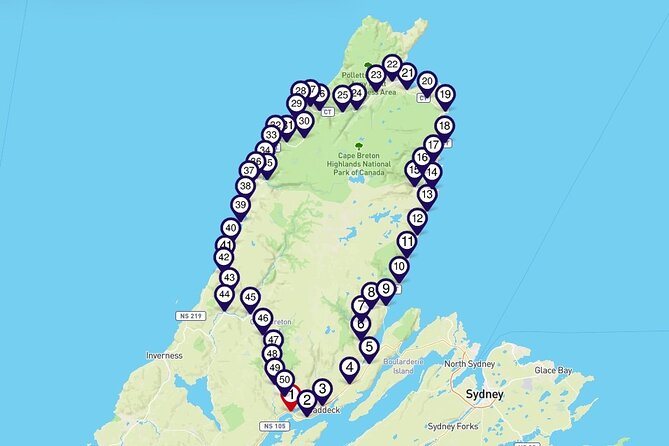
You begin at Buckwheat Corner, Nova Scotia, and you loop through a big chunk of the Cabot Trail region, then return to the same meeting point.
Early on, the audio helps you slow down and look past the obvious. You get glimpses of Bras d’Or Lake, a 90 km body of water with long fingers stretching northward into Cape Breton. Instead of just telling you it exists, the guide frames what you’re seeing so it feels like more than a quick photo moment.
Next, you’ll hear Alexander Graham Bell’s connection to Cape Breton. The narration nudges you toward the National Historic Site and Museum nearby, which is a good move if you want a break from driving and turn this into a real stop instead of just listening.
Then the guide moves into industries and settlers. You’ll hear about the Plaister Mines, including what they mined and how that fits the broader Cape Breton story. After that, the audio explains the Scots and how they shaped the region and why they ended up here.
As you keep rolling, the guide steers you toward nature stops where you can park and get out. A highlight is the area around Goose Cove Brook, with mention of multiple waterfalls along the brook and how to reach them easily. If you like water sounds and quick walks, this is where the tour gives you a lot for your time.
You also get a turn toward protected nature, including the North River Wilderness Area, protecting thousands of hectares of highland plateau and rugged river valley. The guide keeps this useful by linking it to options for trails, with material aimed at different levels.
Then there’s the Plaster Provincial Park segment, where you get facts as you drive along the park edge, plus a sense of how large and rugged this protected area is. It’s the kind of storytelling that makes a roadside border feel meaningful.
A different day out in Canada:
- Highlands National Park: Cabot Trail Tour
★ 4.4 · 63 reviews - Sydney: Highland Village & Bell Museum Cruise Excursion
★ 4.7 · 20 reviews - Fortress of Louisbourg Driving Tour from Sydney Nova Scotia
★ 3.5 · 10 reviews - From Sydney, Canada: Walking Tour of Louisbourg Fortress
★ 5.0 · 4 reviews
Keltic Lodge to Cape Smokey: classic road-trip comfort and big views

One of the most memorable moments in this tour is built around a familiar road-trip stop. The audio points you to a long-running business on the Trail since 1976 and highlights the fact you can get legendary lobster sandwiches there. Even if you only stop for a quick bite, it’s a handy place to reset your energy.
Then you head toward the Cape Smokey area. The guide includes a pull-off on your ascent where you can pause for a panoramic ocean view. If you have ever felt like you missed “the view” because you drove too fast, this is exactly the kind of cue that helps.
On top, you reach Cape Smokey Picnic Park, with picnic tables, flush toilets, and scenic lookouts. That mix matters more than people think. A view is nice, but clean facilities and a comfortable place to sit turns a quick stop into something you’ll actually enjoy.
Ingonish and the Highlands National Park area: whales, hikes, and “mountains meet sea”

As the route reaches the Ingonish area, you’ll hear that the community is made up of five villages, acting like a gateway to the Cape Breton Highlands National Park. This is a big shift from “drive and glance” to “drive and choose,” because you’re getting close to beaches, trails, and lookout points.
The audio also spends time on Indigenous history, including how the two harbours of Ingonish benefited the Mi’kmaq over 9,000 years ago, and how that connection still matters for residents and tourists today.
Then the narration leans into variety: Trails, whales, golf & goats. It’s playful, but it points at real decisions you can make in the moment. If you want camping, hiking, beaches, or waterfalls, the guide sets you up with ideas and context so you can pick what fits your energy.
This segment also includes the idea that the park is where mountains meet the sea, with glaciers and rivers shaping the environment. It also mentions unique animals found nowhere else in Nova Scotia. Even if you do not go far from the car, this helps you understand why people travel here beyond the views alone.
The guide adds more places above the park too, including Neils Harbour, a tiny summer tourist community with about 300 residents. It’s the kind of stop that feels optional, but the audio makes it sound like a real local pause instead of a dot on a map.
Geology talk that actually changes how you look: Bras d’Or terrane and Aspy Bay
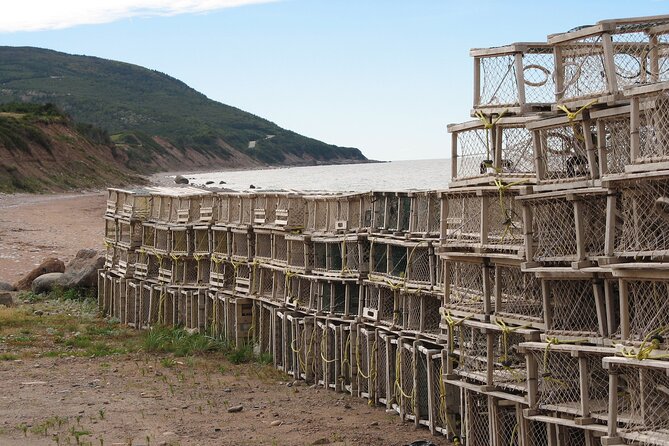
One reason this audio tour feels better than a generic narration is that it covers geology without turning the drive into a lecture.
You’ll hear about the Bras d’Or terrane and how the surrounding geology connects to Cape Breton’s broader history. Then you’re guided toward Aspy Bay, including mention of a red sand bar that protects the large South and North Aspy Bays.
Next comes the Polletts Cove – Aspy Fault Wilderness area, tied to plate collisions. If you’ve ever wondered why faults and rock types get mentioned in coastal Canada, this is where the guide makes it understandable by connecting it to places you can actually see from the road.
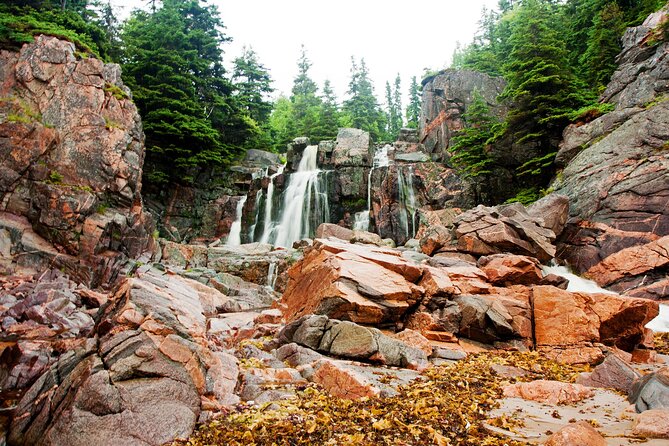
The narration also points you to an accessible waterfall option in the park, described as a short walk leading to a pretty waterfall. This is great for families or anyone who wants the “waterfall payoff” without a long hike plan.
Then the tour shifts again to lookoffs along the road, including one offering best views of a giant fault line cutting through northern highland plateaus. These stops are where you get to connect the science talk to the view in front of you.
Easy walks you can bring the dog to: Lone Shieling and MacIntosh Brook

If you want the tour to feel active, not just informational, pay attention to the short walk recommendations.
The Lone Shieling is described as a replica of an old Scottish crofter’s hut, with interpretive panels and about a 15 minute walk through old sugar maples. This is the kind of stop that pairs well with your history listening, because you’re not just hearing about crofters, you can walk through the setting.
Another family-friendly stop is the MacIntosh Brook trail, described as about a 30 minute walk suitable for the whole family, including the dog. The path follows a brook to a woodland waterfall at the end. Even if you only do the easier sections, it is a good way to break up driving and get the “this is why we came” feeling.
Pleasant Bay to Skyline: whale-watching viewpoints and cliff views
The audio takes you to Pleasant Bay, labeled as the whale-watching capital of Cape Breton. Even if you do not see whales, the narration sets up the viewpoint so you know what to scan for and why that spot is famous.
From there, you get a lookoff providing a view of the Gulf of St Lawrence, described as a good place to catch your breath. That matters because Cabot Trail driving can feel nonstop. A short stop like this keeps the trip from becoming just another highway day.
The guide continues toward the entrance of the Fishing Cove Trail, pointing out views of mountain headlands swooping down to the ocean. Then it shifts to wildlife again, including a section on moose in Cape Breton, describing their history and that they feed on forest herbs and aquatic plants in the lake.
Another easy pull-off is French Lake, described as a highland lake surrounded by Boreal forest. These stops are good if you like quiet views where the guide gives you a reason to pause.
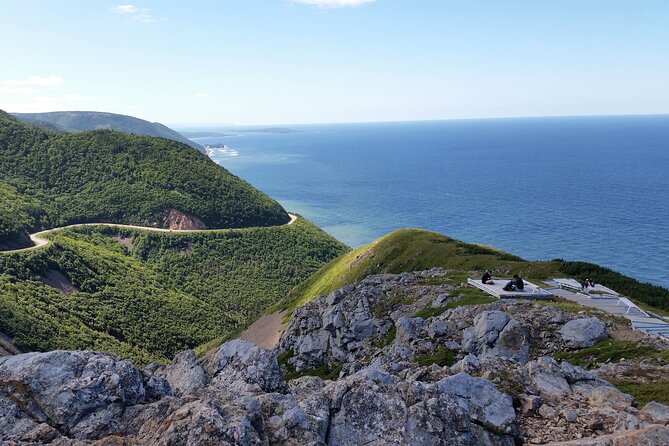
Then comes the famous photo-style moment. If you’ve seen postcards of the Cabot Trail, the guide says they were likely taken from the end of the Skyline trail. The route describes a well-groomed path rated easy, leading to dramatic cliff views of the Cabot Trail winding along French Mountain. If you want one “wow” stop without a hard hike, this is it.
Acadian stories at Le Buttereau and the Cheticamp River
History shows up in this tour in a way that makes the scenery feel personal.
You’ll hear about a walking-through-history section where 30 Acadian families once lived, tied to the expulsion of 1755 in Nova Scotia. The audio adds more detail at Le Buttereau, explained as French for little hill, where the guide says seven Acadian families once lived. This is the kind of storytelling that helps you look at small places and understand the larger forced migration behind them.
Then you reach the Cheticamp River, described as the western entrance of the National Park, with a campground and nearby trails including le chemin du Buttereau. The narration points out a striking natural feature, an arm of gravel and sand that sweeps from red bluffs across a tidal estuary, almost cutting the river off from the sea. That description makes the geography feel like a living system, not just a shoreline.
Cheticamp town breaks: beaches, museums, and Mi-careme mask making
Once the route gets to Cheticamp, the audio essentially shifts from “natural wonders” to “town time.”
You’ll hear that Cheticamp is described as one of the Acadian capitals of the world, with whale watching, a museum, several restaurants, and an excellent golf course. Even if golf is not your thing, this part matters because it gives you a reason to plan a longer stop for food or a proper indoor break.
For beach time, the guide points you to Plage St. Pierre beach and campground on Cheticamp Island. If you want sand time without hunting for it, this is a helpful nudge.
The audio also includes the Mi-careme tradition and suggests visiting the Centre de la Mi-careme, where you can make your own mask if you have time. That’s a concrete cultural activity, not just trivia.
Southward toward Belle Côte and Margaree: coastal plates and salmon dreams
As the route travels south, the audio notes that the landscape flattens out for views of the Gulf of St Lawrence. You’ll also hear about the Cape Breton Trough, described as a rich marine environment along the coast.
Then comes Belle Côte, explained as beautiful coast. The guide suggests a detour on Belle Côte Beach Road to the shoreline so you can see how the area earns its name.
Next is the Margaree Harbour area, where the audio warns it can look like a lake but is actually a river. The narration describes it as almost a kilometer wide, a broad Margaree River estuary.
At the East Margeree Crossing, you get an excellent view of how the river winds along the valley floor, with a suggestion that you might even see someone fishing in waders. It’s a nice reminder that the scenery here includes real daily life, not just weekend sightseeing.
The guide also brings back geology at a simpler level, explaining the hills around here are Appalachian, part of the mountain range that extends all the way from Florida to Newfoundland.
Final pull-offs: river tours, salmon stops, and two churches that look alike
Near the end, the audio becomes more “roadside interests,” with ideas beyond pure viewpoints.
You’ll hear an option about getting wet, pointing to Live Life in Tents River Tours for camping experiences and tours through the rapids. This is the sort of add-on that fits if you want to turn your Cabot Trail day into an actual adventure day.
Then you reach the Margaree Salmon Museum and, not far away, the Margaree Fish Hatchery. If you like fishing culture, wildlife management, or just seeing how communities support the local ecosystem, these stops are built to satisfy.
The tour also includes a scenic picnic park by the road, described as offering views of low mountains across a lake, with a romantic backdrop for a pause.
Finally, the audio includes a couple of quirky endings: an old mine in the hills beyond fields, where you’ll have a chance to guess what was mined there, and then two churches described as standing side by side, white clapboard with grey spires, like fraternal twins dressing alike. It’s a fitting close because it mixes industry, faith, and local identity instead of ending only on scenery.
What could go wrong, and how you protect your trip
The best way to enjoy this tour is to treat the download as a mini pre-trip ritual.
Based on real-world issues people reported, the biggest risk is spotty reception during setup or incomplete downloads. When that happens, audio may not play automatically at each stop, and you might lose the “GPS-guided” smooth experience.
Here’s how I’d protect against that:
- Download fully before leaving town. Do it on Wi-Fi if you can.
- Use the audio tutorial at least once while you’re still in good signal.
- If the narration stops auto-advancing, be ready to manually start the stop audio using the app controls.
- If your car has Bluetooth, and you plan to use it, test that audio plays clearly before you hit the first tricky reception stretch.
- Keep a little patience. Even when auto-triggering is off, the map and stop prompts are there to help you keep going.
Also, the tour is flexible and there are many natural and walking suggestions. That means your real timing depends on how often you step out, how long you stay at lookoffs, and how many easy trails you decide to try.
Who this Cabot Trail audio tour suits best
This is a strong match if:
- You want a self-guided way to learn the “why” behind the Cabot Trail without paying for a full guided bus tour.
- You like history tied to exact viewpoints, not history in a separate museum-only day.
- You’re traveling in a group in one vehicle and want to keep per-person costs down.
- You want practical stop ideas, including waterfall walks and picnic parks.
It may be less ideal if:
- You can’t reliably handle the download and setup on your phone.
- You need a guaranteed perfect auto-play experience in areas with very weak reception and you do not want to troubleshoot.
Should you book this Cabot Trail smartphone audio tour?
If you’re the type of traveler who loves to stop often, learn as you go, and shape the day around viewpoints instead of a fixed schedule, I think this is a solid booking.
You should book it if you want:
- Value for one carload at a low price point
- An offline-friendly drive with GPS-triggered narration
- Lots of story stops and “pull over here” prompts, including easy walks
You might skip it if:
- You know your device struggles with downloads or offline playback
- You prefer a strictly scheduled guide and plan to do no walking at all
FAQ
Do I need data or cell signal during the tour?
No. The tour is designed so you do not need signal or data after your initial download. You do need a good connection for the download step.
How much does the tour cost?
It’s $9.00 per group, up to 15 people, and you only need one tour booking per vehicle.
How long is the Cabot Trail driving tour?
Plan for about 4 to 5 hours. The tour is flexible, so you can take as long as you like.
Where does the tour start and end?
It starts at Buckwheat Corner, NS B0E 1B0, Canada and ends back at the same meeting point.
What do I need to use the tour?
You’ll use your own smartphone or tablet, but those devices are not included. You’ll also use your own vehicle.
Is this a private experience?
Yes. It’s a private tour or activity where only your group participates. Service animals are allowed.
Recently listed around Cape Breton
- Sydney: Highland Village & Bell Museum Cruise Excursion★ 4.7 · 20 reviews
- Highlands National Park: Cabot Trail Tour★ 4.4 · 63 reviews
- Fortress of Louisbourg Driving Tour from Sydney Nova Scotia★ 3.5 · 10 reviews
- From Sydney, Canada: Walking Tour of Louisbourg Fortress★ 5.0 · 4 reviews
- Cabot Trail Bus Tour for Cruise Excursion★ 4.0 · 138 reviews
- Cabot Trail Discovery Tour★ 5.0 · 203 reviews
- Blackwood Tours: Highland Village, Baddeck, Bell Museum Tour★ 4.5 · 82 reviews
Cape Breton Tours, compared.
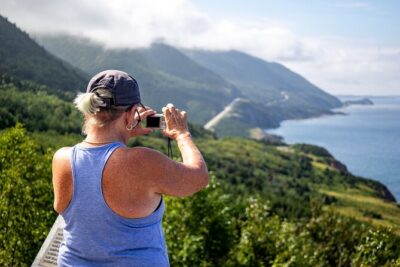


Blackwood Tours: Highland Village, Baddeck, Bell Museum Tour
Read our review →
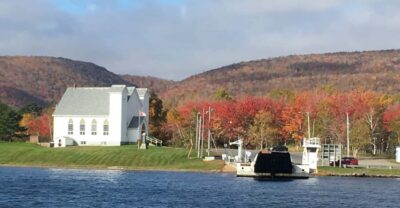
Sydney: Highland Village & Bell Museum Cruise Excursion
Read our review →
Fortress of Louisbourg Driving Tour from Sydney Nova Scotia
Read our review →
From Sydney, Canada: Walking Tour of Louisbourg Fortress
Read our review →Browse the lists this tour appears in