
REVIEW · HISTORICAL TOURS
Old Québec & French Canada Private History Walking Tour
Old Quebec has a habit of turning streets into a timeline. In about 2 hours 30 minutes, you walk through the big moments that shaped French Canada and its long rivalry with the British, with a guide who keeps the story clear and connected.
I like two things most: the private pacing (up to 10 people, so you can ask real questions without shouting) and the way the guide brings places to life with maps, timelines, and on-the-ground context. You’ll also get direct, local perspective on why the Quebec City story matters to both Canada and the United States.
One thing to plan for: this is a walking tour with some stairs and ups and downs, and it’s listed for moderate physical fitness. If hills and steps slow you down, you’ll want good shoes and a calm pace.
In This Review
- Key highlights worth planning for
- A 2.5-hour walking timeline through French and British Canada
- Price and value for up to 10 people
- Getting picked up and finding your start point fast
- The military museum: where Quebec City’s battles start
- Fairmont’s Frontenac and the big shift to modern Canada
- Forts under the boardwalk: the view that hides the past
- War monuments and the long memory of conflict
- Strongholds facing the American threat after 1812
- The Plains of Abraham: the French and Indian War battlefield where Britain won
- Ramparts controlling the St. Lawrence seaway
- Quebec’s Legislature: the French-speaking heart of provincial power
- Ursuline roots: the first school for girls and French art education
- Hôtel-Dieu de Québec: the first hospital in North America
- Upper Town and Lower Town: UNESCO density in real walking form
- Notre-Dame de Québec and the diocese that stretched to New Orleans
- Mission training: the school that became part of Université Laval
- A 1929 pulp and paper headquarters, Great Depression symbolism, and today’s tourism
- Champlain’s birthplace and the unfinished Museum District idea
- Shopping lanes with an 1980s vision for artisans
- A museum with Native American exhibits and Canadian historical context
- The 1775 failed invasion sites: Arnold and Montgomery, plus a reclaimed waterfront
- One rampart gate with Lord Dufferin’s 1875 medieval makeover
- Stairs between Petit-Champlain and Upper Town
- Cannon platform at the King William’s War defense line
- Who should book, and how to prepare like a pro
- Should you book this Old Quebec private history tour?
- FAQ
- How long is the Old Québec & French Canada Private History Walking Tour?
- What is the group size for this private tour?
- Is pickup available?
- What language is the tour offered in?
- Do I get a mobile ticket?
- What’s included in the price?
- What physical fitness level is required?
- Are service animals allowed?
- What is the cancellation policy?
Key highlights worth planning for
- Private group up to 10: You get a guided loop that can flex to your interests.
- 1608 to 1812 in one walk: Founding, wars, treaty shifts, and defense changes stay in chronological order.
- Forts hiding under a boardwalk: You’ll learn what’s literally beneath the modern view.
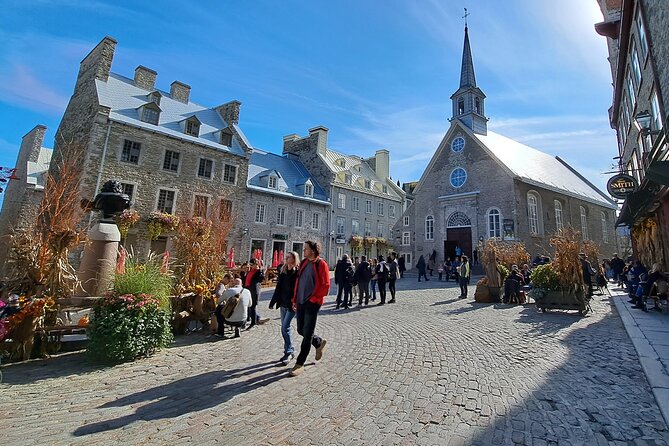
- Upper Town and Lower Town in one sweep: UNESCO zone energy above the walls, then Place Royale and the Old Port below.
- Strong history for families too: The tone works for kids, not just adults who love footnotes.
- English guiding with pickup help: Hotel pickup works if you stay in Old Quebec.
A 2.5-hour walking timeline through French and British Canada
Think of this tour as a guided “how we got here” walk. You start with Quebec City’s early battles and French settlement era, then move through the moments when British power solidified, and later when Canada built stronger defenses against the American threat.
What makes it satisfying is the logic. You’re not just stopping at pretty landmarks. You’re learning what each place was used for, what changed over time, and why people fought over this specific stretch of the St. Lawrence.
More History Tours in Quebec City
- Evening Gourmet Tour 5 Course Dinner – History and Food in Old Quebec City
★ 5.0 · 496 reviews - Quebec City: Old Quebec Historical Walking Tour
★ 4.8 · 409 reviews - Combo Historical and Food Tour of Old Quebec
★ 5.0 · 360 reviews
Price and value for up to 10 people
The cost is $213.92 per group, for up to 10 people, for about 2 hours 30 minutes. That can be a great deal if you’re traveling with friends or family and can fill most of the group cap, because you’re effectively paying for one guide, not separate tickets per person.
If you’re traveling solo or as a couple, the per-person value depends on how comfortable you are paying for private interpretation. In my view, it’s still worth it here because the guide ties together wars and geography across a tight Old Quebec route. A self-guided walk can show you the sights, but it won’t explain why the British won where they did, or what’s hidden under walkways.
Also note the demand signal: this tour is commonly booked well before travel, with an average booking window of 67 days. If your dates are fixed, book early so you’re not scrambling.
Getting picked up and finding your start point fast
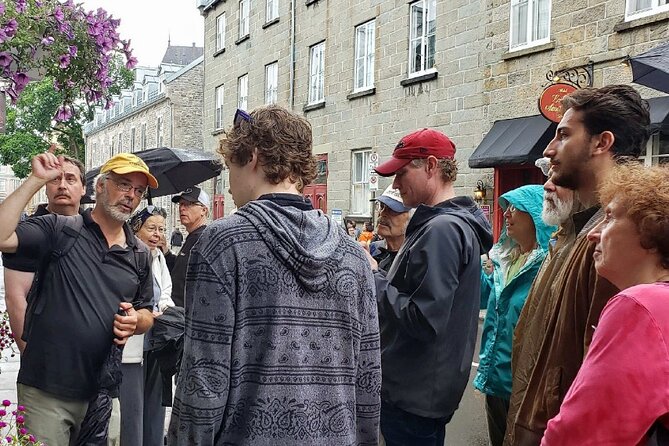
You’ll get pickup help if you stay in Old Quebec. In that case, the guide meets you in your hotel lobby about 5 minutes before tour time. If your hotel is outside Old Quebec, the provider will contact you with an easy-to-find meeting point.
You’ll also get a mobile ticket, so make sure your phone is charged. For a walking tour, that’s just good sense. And since it’s offered in English, you can focus on the story rather than translating in your head.
The military museum: where Quebec City’s battles start
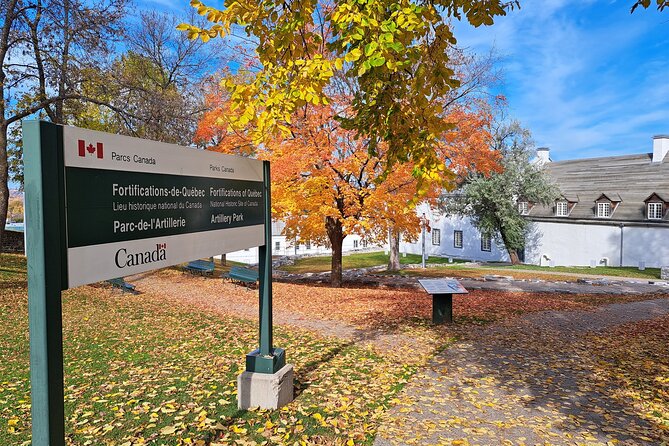
The walk begins at a museum focused on Canada’s military history and major battles in Quebec City, spanning from early French settlers through 1776. This stop matters because it sets the rule for the rest of the tour: every later site connects back to specific conflicts and decisions.
If you like history that actually explains outcomes, you’ll enjoy how the guide anchors later landmarks to earlier events. If you’re more of a “show me the place, then tell me why it’s important” traveler, this museum intro helps you connect the dots quickly.
A possible drawback: since the tour is only 2 hours 30 minutes, you won’t get museum-depth time for every exhibit. This is more of a smart orientation than a slow browse. If you’re a museum person, you may want a second visit after the tour.
More Walking Tours in Quebec City
- Quebec City Walking Tour
★ 5.0 · 4,716 reviews - Old Quebec City: Grand Walking Tour with Private Option
★ 4.8 · 2,609 reviews - Old Quebec Classique Walking Tour with Funicular
★ 5.0 · 1,317 reviews - Quebec: Crimes of New France Animated Walking Tour
★ 4.6 · 926 reviews
Fairmont’s Frontenac and the big shift to modern Canada
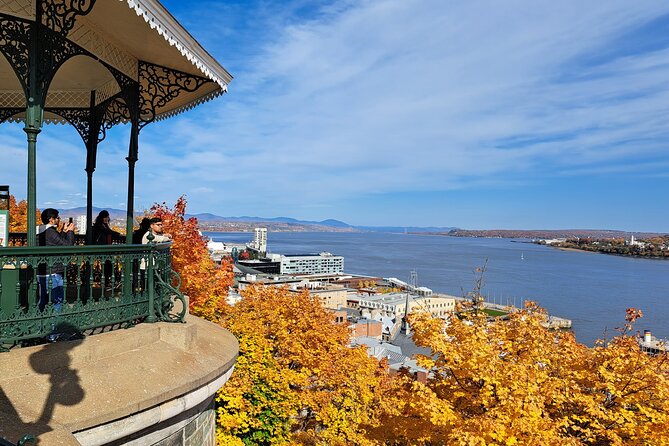
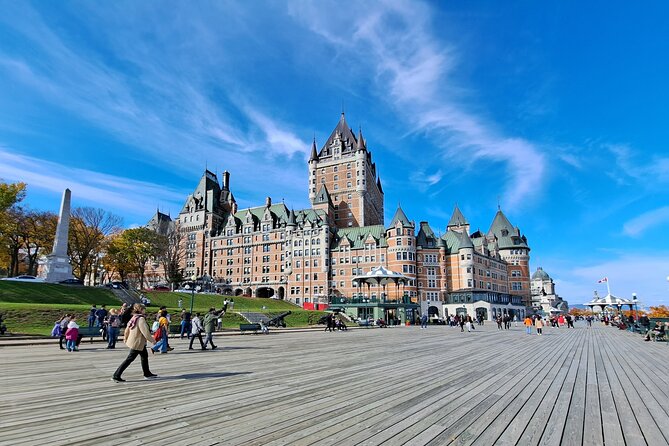
Next up is the 1893 Canadian Pacific Railway Hotel, now the Fairmont. On the surface, it’s a classic Old Quebec photo stop. In context, it’s about Canada’s modern identity and how the city keeps reinventing itself while staying tied to its strategic position.
This is one of those stops where the guide’s job is to make you look up from your phone. You’ll understand how the city’s topography and history influence the way landmark architecture gets placed and remembered.
Forts under the boardwalk: the view that hides the past
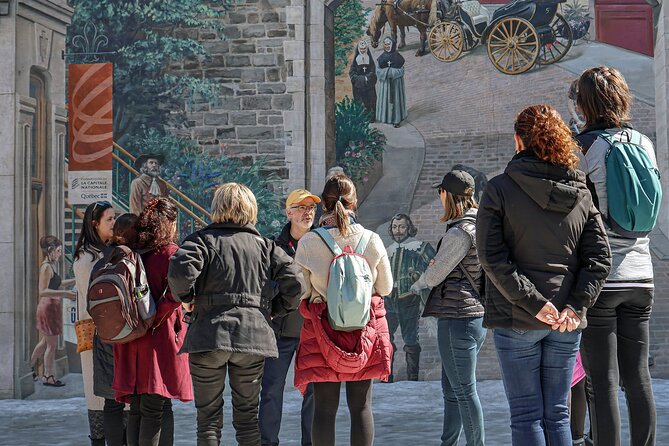
Then comes a memorable, slightly mind-bending moment: a boardwalk area connected to Forts and Chateaux St-Louis National Park. The key detail is that you’ll learn about the French governors’ castle and earlier fortifications located under the boardwalk.
That’s the kind of thing you can miss completely if you just walk through. Here, the guide gives you a mental model for what you’re standing above and how the layers of Quebec’s past are literally stacked.
If you’re the type who loves “how is this possible?” history, this will be a favorite. If you prefer stories tied to obvious ruins, it might feel more conceptual. Either way, it’s a strong example of why the tour feels more like guided understanding than sightseeing.
War monuments and the long memory of conflict
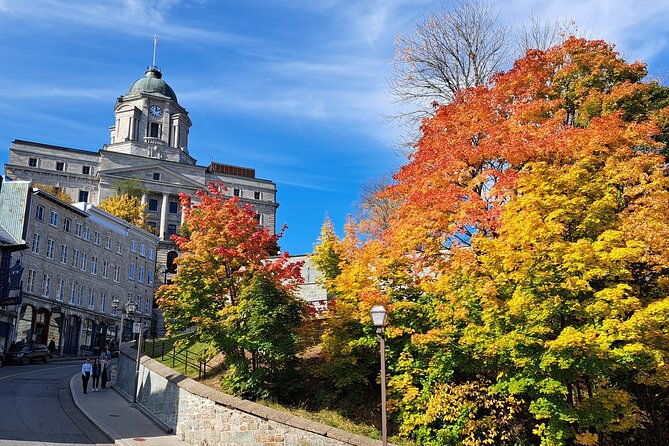
From there, the route moves into a set of war monuments and markers that keep returning to the French and Indian War era, and later shifts in power. You’ll stop at a memorial tied to the French and Indians War in Canada, then move toward a monument reflecting British Quebec City built around the timeframe connected to the Louisiana Purchase.
This part of the tour is not just about remembering names. It’s about how empires translated victories and treaties into built space, public symbols, and defenses. You’ll see how monuments help turn political changes into something you can physically stand near.
Strongholds facing the American threat after 1812
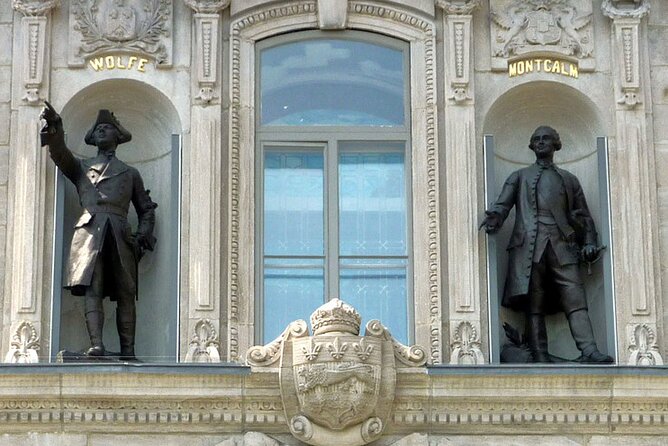
You’ll also visit the stronghold added to Quebec City’s defense system after the War of 1812, designed with the American threat in mind. For me, this stop closes an important loop: the earlier story is about French and British rivalry, but this phase shows Canada thinking about its own security and relationships in a broader North American context.
The guide’s timing matters here. By the time you reach this, you’ve already learned the earlier “why” behind Quebec’s strategic position on the St. Lawrence.
The Plains of Abraham: the French and Indian War battlefield where Britain won
One of the tour’s centerpiece stops is the iconic ground battlefield of the French and Indians War in America, often called the decisive moment where the British defeated the French. The tour also clarifies that Canada became British from the 1763 Treaty of Paris.
This is where the walk really turns into a mental movie. The guide helps you place the conflict in geographic reality, so you don’t just memorize dates. You’ll also get an angle that matters: the comparison between other famous U.S. battlefield stories and the Quebec outcome that shaped Canadian history.
If you’re a history buff, you’ll probably spend extra time asking questions here, because it’s hard not to. If you’re traveling with kids, this is also a good point for them to learn that battles are not just battles, they’re decisions with long consequences.
Ramparts controlling the St. Lawrence seaway
Next, you’ll look at French and British ramparts built to protect a strategic outpost that controlled the St. Lawrence seaway up toward the center of the continent.
This is a practical stop. It teaches you why people cared about this waterway, and why the city’s defense system made sense in its time. It also gives you a way to understand the layout of Old Quebec: the city isn’t random, it’s planned around movement, sightlines, and control.
Quebec’s Legislature: the French-speaking heart of provincial power
Then you’ll reach the Legislature of the Province of Quebec. The tour frames it as the only French-speaking province in Canada, with Quebec City still acting as the provincial capital even though Montreal is the most populated city.
This stop is a good reminder that history is not frozen. You’re moving from wars and defenses into the present political identity of the province. If you want to understand why the French language and culture matter in Quebec City today, this is a strong “bridge stop.”
Ursuline roots: the first school for girls and French art education
You’ll also see a site tied to the first school for girls in North America, plus a museum about French art and Catholic education. The tour highlights it as one of the top French heritage institutions in Old Quebec and Canada.
If you’re used to thinking of old buildings as just old buildings, this stop changes the mindset. It shows you education as an engine of culture and influence, not just a background detail.
The drawback is simple: if you’re short on time, you might want to return later for a longer museum visit. This tour keeps things moving, so you get context rather than a full day inside.
Hôtel-Dieu de Québec: the first hospital in North America
Another standout is a site connected to the first hospital in North America, now functioning as a present-day wellness center and museum. The tour also positions it among the top French heritage institutions in Old Quebec and Canada.
I like this stop because it shows how French Catholic institutions created practical care and long-lasting community structures. You’ll see the continuity between mission and infrastructure, then connect it to the modern wellness use.
As with the school stop, this is likely more about orientation than deep museum time. But orientation here is valuable, because you’ll know what you’re looking at and why it matters.
Upper Town and Lower Town: UNESCO density in real walking form
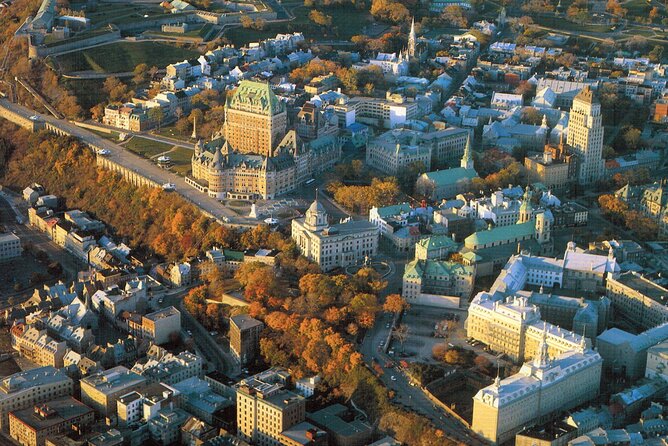
As you move through the walk, you’ll get the big “map lesson” on Upper Town and Lower Town. Upper Town is essentially the UNESCO World Heritage zone within the walls of Old Quebec, packed with historical sites covering roughly 400 years. Lower Town covers areas like Place Royale, Petit-Champlain, and the Old Port, again with dense, layered sites covering about the same span.
This is where you feel the city’s design. Upper Town feels built for defense and authority. Lower Town feels built for daily life, commerce, and contact. The guide helps you see those differences in motion, not just on paper.
If you get tired, this is also where the private format helps. You can slow down, ask for context, or adjust your pace. Since it’s a private group, you’re not trapped in a hurry-up queue.
Notre-Dame de Québec and the diocese that stretched to New Orleans
You’ll visit the founding cathedral of Catholicism in French America, and the head of a diocese described as large as French Louisiana, from Quebec City to New Orleans.
This stop helps you understand how religion traveled alongside empire and settlement. It’s not only about architecture. It’s about a network that tied distant regions together through institutions, education, and clergy.
Mission training: the school that became part of Université Laval
After that, you’ll learn about the school for French Catholic missionaries sent to convert French territories across North America. In the present day, the tour notes that this is connected to the School of Architecture of Université Laval and a high school.
This is one of those stops that makes you rethink “education” again. The guide’s framing makes it clear that training and sending people was part of how influence spread. If you like cause-and-effect history, this one lands.
A 1929 pulp and paper headquarters, Great Depression symbolism, and today’s tourism
You’ll also see an iconic monument built in 1929 as a pulp and paper company headquarters. The tour frames it as a symbol of the Great Depression and resilience of a six-generation Welsh family now involved in high-end tourism in Quebec City.
Even if you do not care about business history, it’s a useful reminder that modern wealth and modern tourism have roots in earlier industries. This stop adds a later layer to the timeline so the tour doesn’t end in the 1700s and 1800s.
Champlain’s birthplace and the unfinished Museum District idea
One of the most intriguing story stops is the site described as Canada’s Jamestown and Williamsburg combined. It’s the birthplace of Canada, and it also relates to a never-completed 1970s Museum District project.
In 1608, the tour points out that Samuel de Champlain founded Quebec City on this site, which has been continuously occupied since then. You’ll hear how one location can carry so many eras at once, from founding to later plans that never fully happened.
Shopping lanes with an 1980s vision for artisans
From there you’ll pass through one of the tour’s highlighted shopping areas in Old Quebec, shaped by an 1980s project led by two local architects. The intent was to create high-end artisan shops in a devitalized Old Port area.
It’s a good break in the historical intensity. You get to see how the city repackaged parts of itself for modern visitors, without losing the Old Quebec feel.
A practical note: if you’re shopping, decide early what you want, because Old Quebec lanes can be a slow crawl. If you’re not shopping, use this time to reset and enjoy the architecture around you.
A museum with Native American exhibits and Canadian historical context
The tour also includes a museum stop described as within the top museums of Old Quebec, featuring history exhibitions about Canada and Native Americans.
This fits the larger theme: Quebec City history is not only French and British. The guide’s approach helps you see how Indigenous presence and history are part of the full picture rather than a side note.
The 1775 failed invasion sites: Arnold and Montgomery, plus a reclaimed waterfront
You’ll then reach the area tied to the 1775 failed American invasion of Canada, where leaders Benedict Arnold and Richard Montgomery were defeated. The tour also explains that the zone is a man-made area reclaimed from water, with French, British, and Canadian periods layered into the same ground.
Today, that district is described as the old financial district of Canada, now with art and antique shops. It’s a neat transformation: military conflict and economic life in the same space, then repurposed for modern browsing.
One rampart gate with Lord Dufferin’s 1875 medieval makeover
Another memorable stop is one of the gates on the French rampart. The tour explains that narrow openings with doors from the original military structures were removed and later rebuilt to look like medieval structures as part of Lord Dufferin’s 1875 Quebec Improvement plan, influenced by European historicist movement.
This is a great “learn how cities edit themselves” lesson. You’ll understand that preservation is not always a pure time capsule. Sometimes it’s a deliberate style choice that helps people visualize an era.
Stairs between Petit-Champlain and Upper Town
You’ll also walk the stairs linking Petit-Champlain and Upper Town. This is short and practical, but it also gives you the city’s vertical story in real life. Petit-Champlain sits lower, more intimate. Upper Town sits higher, more formal and strategic.
If you want one reason this tour feels good, it’s that you stop treating Old Quebec like a flat postcard. You experience it as a working, defensive city.
Cannon platform at the King William’s War defense line
To finish the defense-themed portion, you’ll visit a military cannon platform added during King William’s War in America, when Frontenac defeated invaders from Boston led by William Phips.
This stop gives you a sharp visual of how protection worked. It also ties back to earlier war conversations so the end feels like a conclusion, not a random final photo.
Who should book, and how to prepare like a pro
This is a solid fit if you want history that connects geography, politics, and culture in a tight walking format. It’s also a great match for families because the guide approach is built to keep attention, not drown everyone in dates.
You’ll get the most out of it if you’re comfortable walking for a couple hours and can handle some stairs. Bring comfortable footwear, and plan for weather. If it’s hot or icy, you’ll feel every cobblestone decision.
Since it’s a private tour, it also works well when your group has mixed interests. The guide can tailor the story to your questions, and that flexibility is part of the value.
Should you book this Old Quebec private history tour?
Book it if you want a guided walkthrough that turns Old Quebec into a connected story from founding times, through the decisive wars, and into later defense and identity. The private format, plus the guide’s use of maps, timelines, and clear explanations, makes it easier to understand what you’re seeing instead of just collecting landmarks.
Skip it if you only want casual wandering and do not plan to think about historical context. Also skip it if your walking tolerance is low, since the route includes steps linking areas like Petit-Champlain and Upper Town, and it’s rated for moderate physical fitness.
If you’re choosing between a self-guided stroll and a guided tour, this one wins when you care about why Quebec City shaped North American history.
FAQ
How long is the Old Québec & French Canada Private History Walking Tour?
It runs for about 2 hours 30 minutes.
What is the group size for this private tour?
It is a private tour with your group only, up to 10 people.
Is pickup available?
Yes. If your hotel is in Old Quebec, the guide meets you in the hotel lobby 5 minutes before tour time. If your hotel is not in Old Quebec, the provider will suggest an easy-to-find meeting point.
What language is the tour offered in?
The tour is offered in English.
Do I get a mobile ticket?
Yes, the tour provides a mobile ticket.
What’s included in the price?
The guiding services are included.
What physical fitness level is required?
The tour is listed for travelers with a moderate physical fitness level.
Are service animals allowed?
Yes, service animals are allowed.
What is the cancellation policy?
You can cancel for a full refund up to 24 hours in advance. If you cancel less than 24 hours before the experience starts, the amount you paid will not be refunded.
More Historical Tours in Quebec City
- Walking Tour Through Quebec City’s History
★ 4.5 · 263 reviews - Quebec City’s History in Virtual Reality
★ 4.5 · 141 reviews - Old Quebec City Private Walking Tour : History and Nature
★ 5.0 · 104 reviews - A Taste of History Walking Tour
★ 4.5 · 86 reviews
Recently listed around Quebec City
- Wine Tasting on Ile d’Orleans★ 4.5 · 163 reviews
- Quebec City : Winter Magic Walking Tour★ 4.5 · 9 reviews
- Heritage Upper Town E-Bike Tour★ 5.0 · 6 reviews
- VIP Agritourism Tour of Île d’Orléans & Montmorency Falls (Lunch)★ 5.0 · 11 reviews
- Skiing (Hok Ski) Excursion in Jacques-Cartier National Park★ 5.0 · 22 reviews
- A Private Walking Journey in Quebec City with Funicular Ride★ 5.0 · 5 reviews
- 4 Hours Private Quebec City Guided Tour★ 5.0 · 83 reviews
- A Taste of History Walking Tour★ 4.5 · 86 reviews
Historical Tours, compared.


Evening Gourmet Tour 5 Course Dinner – History and Food in Old Quebec City
Read our review →
Browse the lists this tour appears in