REVIEW · TORONTO TOURS
Toronto Essentials Tour: Old Town & Downtown Highlights (PWYC)
Two hours is all you need. This tour strings together the city’s big landmarks and the in-between details, with CN Tower views and PATH walking that help you understand Toronto fast. I especially like how the guide keeps you oriented, so you can move through downtown without guessing, and how you learn the story behind places like Old City Hall versus the modern City Hall. The only real drawback is the pace, you cover a lot of ground in about 2 hours, so it works best if you are ready for a steady walking tour.
I also love the value angle here. At $4.50 per person and a group capped at 30, you get a guided route through Union Station, Brookfield Place, and Nathan Philips Square without turning your day into a scavenger hunt. Plus, I picked up useful pointers from guides like David and Michael, and those tips made the stop at City Hall and the Financial District feel way more meaningful than just snapping photos.
In This Review
- Key things to know before you go
- A 2-hour shortcut to Toronto’s layout, from tracks to skyscrapers
- Starting at Union Station the right way, inside the Great Hall
- CN Tower skyline context you can actually use
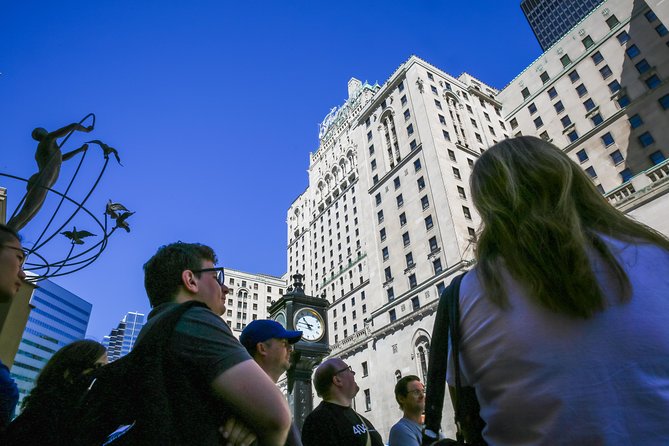
- Royal York Hotel and the railway-era dream that survived
- Walking part of PATH: fast direction, real-world underground payoff
- Brookfield Place: Calatrava’s public-space wow factor
- Berczy Park’s dog fountain, and why small details matter
- St. James Cathedral: Muddy York in Gothic-revival form
- Financial District skyscrapers, banks, and the 1904 Great Fire story
- The City Hall finish: Nathan Philips Square and the sign photo
- Tour pace, group size, and how it fits your day
- Who should book this Toronto Essentials tour
- Should you book it? My practical take
- FAQ
- How long is the Toronto essentials tour?
- Where do I meet the guide at Union Station?
- Where does the tour end?
- What language is the tour offered in?
- Do I need a printed ticket?
- How large is the group?
- Is the tour suitable for most people?
- What if I arrive late?
- Is the price worth it for a short visit?
- Can I cancel for a full refund?
Key things to know before you go
- Union Station inside the Great Hall is the real meeting spot, near the info booth under the clock
- CN Tower viewpoints give you skyline context even if you are short on time
- PATH is confusing on purpose, so you’ll walk part of it with your guide staying close
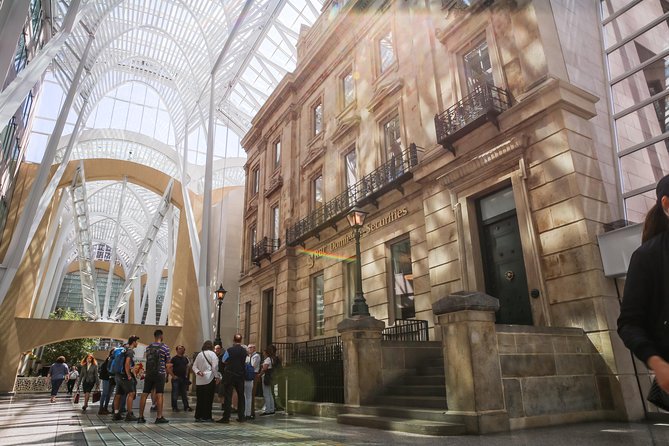
- Brookfield Place by Santiago Calatrava is worth slowing down for (high vaulted white steel and glass)
- Old Town meets downtown energy with Berczy Park, St. James Cathedral, and the Financial District on one route
- City Hall ends at Nathan Philips Square, perfect for a group photo and a final downtown snapshot
A 2-hour shortcut to Toronto’s layout, from tracks to skyscrapers
This is the kind of tour that gives your brain a map. Toronto is not one simple loop. You have dramatic towers, historic pockets, and then the underground world under it all. In about two hours you get the “where am I?” clarity, plus enough stories to make the skyline feel like it has a past, not just a view.
You’ll also get a clean sense of how the city is organized. You start in the rail era at Union Station, you head toward the modern downtown core, then you finish at City Hall and Nathan Philips Square. By the end, you can look at the buildings around you and understand why they matter.
A few more Toronto days to compare
- Toronto: Niagara Falls Day Tour with Optional Boat Cruise
★ 4.6 · 3,178 reviews - Niagara Falls Day Tour from Toronto
★ 5.0 · 2,889 reviews - Toronto: Casa Loma Entry Ticket
★ 4.7 · 2,705 reviews
Starting at Union Station the right way, inside the Great Hall
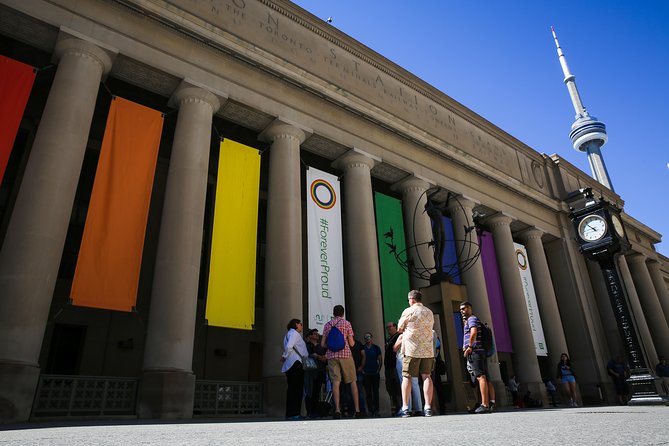
Your first job is to find the guide, and the guide helps after that. The meeting point is inside Union Station, in the Great Hall above ground. Look for the big room with huge windows, a high ceiling, flags on one wall, and an info booth under a clock in the center of the room.
This matters more than you’d think. There are plenty of spots inside Union Station that look important, but the tour’s “magic trio” is clock, info booth, and the big high-ceiling Great Hall. Also note that there is a separate tourist info area elsewhere in the station, a food court people often assume is the Great Hall, and an outside clock on the sidewalk. If you show up just outside the station or in the wrong food court, you’ll lose time you do not have.
One more practical thing: the tour leaves on time. If you are late, the guide cannot wait, so it is worth arriving a few minutes early and doing a quick look for the booth under the clock.
CN Tower skyline context you can actually use
Once you’re moving, the tour does what the best city walks do: it gives you a skyline anchor. The CN Tower is the obvious star, and your guide helps you see it from prime vantage points instead of only from the obvious obvious angles.
This stop includes the kind of detail that makes your view click. CN Tower was the tallest free-standing structure in the world before the Burj Khalifa rose in Dubai. Locally, Torontonians still take pride in it, and there’s a practical tech story tied to the tower’s height. It improved TV and radio reception in the area back in the 1970s, which is a nice reminder that big landmarks are not just pretty, they can affect daily life.
If you have limited time in Toronto, these viewpoint moments are a win. You leave with pictures, but more importantly, you leave knowing where the tower sits in the city and how the downtown skyline is layered.
Royal York Hotel and the railway-era dream that survived
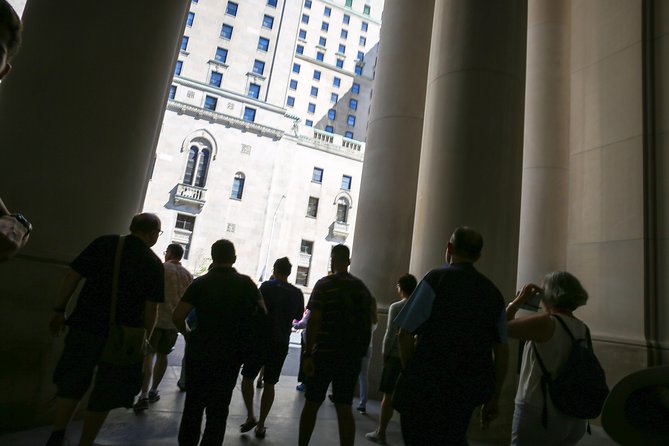
You also get a story about how Toronto became a rail hub. Building the railroad across Canada was expensive and took a long time, so rail companies tried to make the journey pay off by building luxury hotels near stations in major cities.
Toronto’s grand example was the Royal York Hotel, opened in 1929, right before the economy collapsed. That timing is part of the charm and the realism of the story. The Great Depression and hotel competition did their damage, yet the Royal York remains a beloved landmark and a symbol of the city’s prosperity.
The tour doesn’t linger inside with you. It focuses on what you can admire from the outside, which makes sense given the walking route and time limit. It is a good stop for architecture lovers who want context without turning the day into a long museum visit.
A different day out in Canada:
- Niagara Falls Canada Day Tour From Toronto + Boat Cruise Option
★ 5.0 · 2,576 reviews - Toronto: Harbor and Islands Sightseeing Cruise
★ 4.7 · 2,566 reviews - Toronto: City Sightseeing Hop-On Hop-Off Bus Tour
★ 4.3 · 2,544 reviews - Niagara Falls from Toronto: Skip-the-Line Boat & Skylon Tower
★ 5.0 · 2,406 reviews
Walking part of PATH: fast direction, real-world underground payoff
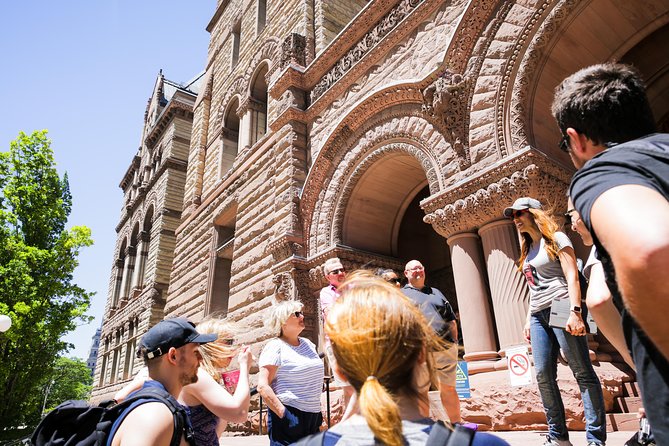
Here’s where Toronto gets fun. Downtown has a network of underground connections known as PATH, and your guide explains the history while walking part of it with you. The key practical point is navigation. PATH is not easy to figure out on your own, especially when you are already walking above ground and then suddenly below.
If you have ever heard people talk about Toronto in winter, PATH is why. It can be a lifesaver when the weather turns. On this tour, you learn it as a system, not just a hallway maze. You’ll also get your guide’s sense of humor, including a cautionary joke about what not to do if you get lost, like opening a Cinnabon in a food court and giving up on escape.
The value here is big. You’re not just seeing a tunnel. You are understanding how downtown life works when the sidewalks are too cold or you want quicker routes between stations and buildings.
Brookfield Place: Calatrava’s public-space wow factor
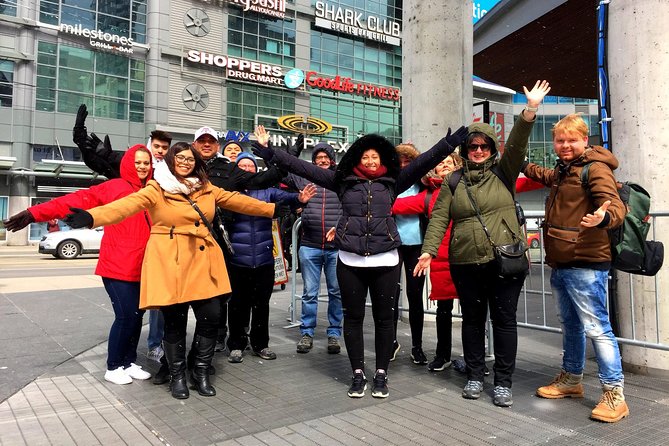
Next comes Brookfield Place, designed by Santiago Calatrava. Even if you are not an architecture nerd, you’ll know why people take photos here. The space uses high vaulted ceilings made of white steel and glass, creating an otherworldly feel that still functions as a real public area.
This stop is also about how Toronto handles public space. Your guide shares how private and public space can overlap in downtown, and you get a glimpse into the underground network in a way that ties it back to the buildings above.
If you like places that feel dramatic even when you are just walking through, this is one of the stops that slows the group down in a good way. And it gives you a mental break from looking only upward at towers.
Berczy Park’s dog fountain, and why small details matter
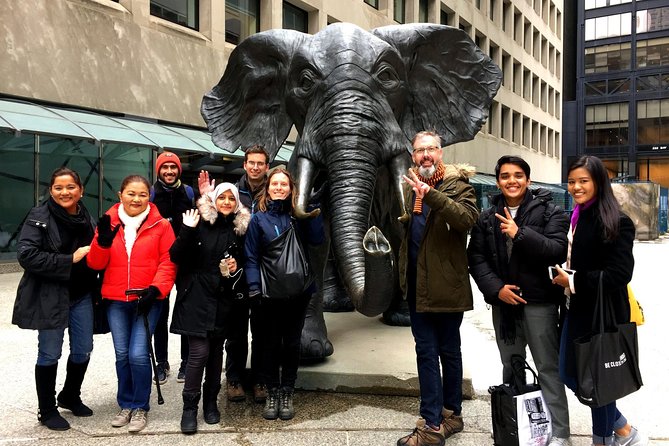
You’ll hit Berczy Park for a short but memorable moment. Toronto is known for nicknaming landmarks, and this one is famous for the dog fountain. The tour also explains why people make art like this part of everyday public space, which turns the stop from a quick photo into a small lesson.
Even in a short park stop, the point is bigger than the fountain itself. It’s a reminder that downtown is not only money and offices. You have places where the city shows off personality.
St. James Cathedral: Muddy York in Gothic-revival form
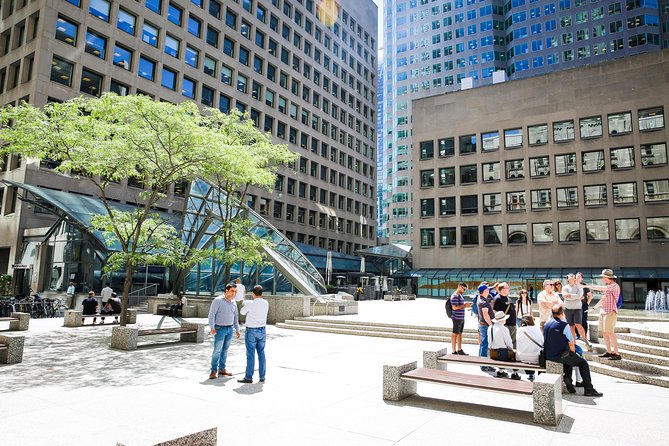
Then you move into Old Toronto’s spiritual and political center at the Cathedral Church of St. James. Your guide treats it as more than a pretty building. It’s described as the spiritual centre of Old Toronto and a seat of power in the 19th century.
You also get a clear explanation of how religion and politics played out in Toronto, once known as Muddy York. That context matters because gothic-revival architecture can feel like a style choice, unless someone connects it to how people lived and governed back then.
This stop is a helpful balance to the downtown financial and corporate vibe. It makes the “Old Toronto versus modern Toronto” theme more concrete, not abstract.
Financial District skyscrapers, banks, and the 1904 Great Fire story
The walk through the Financial District is where the city starts shouting. Your route is between some of the biggest skyscrapers in Canada, and the guide explains the role of major Canadian banks. You also learn about the Great Fire of 1904, including a specific person mentioned in the tour story, John Croft.
That kind of detail gives the area texture. Skyscrapers can feel all the same from the sidewalk, but a story like this makes you notice what is beneath the modern skyline. You also get a sense of the everyday mindset of people working in the financial world, described in the familiar buy low and sell high theme.
There is also a practical takeaway. If you commute through downtown, you’d understand why so much of this tour’s time is spent on routes and shortcuts. This area is built for movement, and your guide helps you feel that even while you are just visiting.
The City Hall finish: Nathan Philips Square and the sign photo
The tour ends at Toronto City Hall, an iconic building that even shows up in the city’s logo. The City Hall stop also includes the “Toronto sign” out front, which is basically photo bait in the best sense.
Completed in 1965, the building is described as a symbol of Toronto’s aspirations as a modern metropolis, plus its role as a provincial capital and a national hub for culture and finance. The tour also points out the city’s love of concrete, which is a fun lens for understanding why Toronto looks the way it does.
Then the finale expands into the public space around it, Nathan Philips Square. This is where the city gathers for public holidays, New Year’s Eve, farmers markets, and protests of all kinds. If you want one place where Toronto feels democratic and alive, this is it.
And it’s convenient to wrap up here. Public washrooms are nearby, so you can extend your visit without needing to plan your next step too hard.
Tour pace, group size, and how it fits your day
This is a 2-hour walk with a small group maximum of 30. That size is important. It helps you hear the guide and keeps the route manageable. You also get the benefit of a mobile ticket, which usually means less time fussing with paper.
Most travelers can participate, but the tour does require a walking pace to cover multiple downtown stops, including a walk part underground through PATH. If you prefer a slow wander with long rests, this might feel like a “see it and go” day. If you want orientation and landmark highlights without spending half your day in transit, it is a strong match.
If you are traveling with family, it can work well because the route includes recognizable highlights like CN Tower, the dog fountain at Berczy Park, and the big City Hall photo moment.
Who should book this Toronto Essentials tour
I’d book it if you want a fast, guided way to understand downtown Toronto. It is also a good choice for people who like city context, not only postcard views. The route mixes architecture, civic space, and underground navigation, so you learn more than just where things are.
I’d especially recommend it if you are visiting for the first time and want to avoid getting lost. Your guide’s role is real here, from finding the correct spot at Union Station to staying close during PATH.
It also feels like a smart fit for history and architecture lovers. Guides like David and Michael bring clear storytelling and an enthusiasm that makes the city’s layers easier to remember. Even if you are not a “history person,” the stories give you something to point at while you walk.
Should you book it? My practical take
Yes, I think you should book this one if you want a high-value downtown orientation in a short window. For $4.50 per person, you get a guided walkthrough of major landmarks, viewpoint context for the skyline, and PATH knowledge that can save you time later.
Skip it only if you hate walking, or if you are looking for deep museum-style time at a single site. This tour is about connection, not long stays. If that fits your travel style, you’ll come away with a better sense of Toronto, plus a handful of stops you’ll feel confident revisiting on your own.
FAQ
How long is the Toronto essentials tour?
It runs about 2 hours.
Where do I meet the guide at Union Station?
Meet inside Union Station in the Great Hall, above ground. The guide will be near the info booth under the clock in that large room.
Where does the tour end?
The tour ends at Nathan Phillips Square, in front of Toronto City Hall near the Toronto sign.
What language is the tour offered in?
The tour is offered in English with an English-speaking guide.
Do I need a printed ticket?
You’ll have a mobile ticket.
How large is the group?
The tour has a maximum of 30 travelers.
Is the tour suitable for most people?
Most travelers can participate, and service animals are allowed. The tour is near public transportation.
What if I arrive late?
The tour leaves on time and the guide cannot wait if you are late. If you are on time, you are on tour.
Is the price worth it for a short visit?
At $4.50 per person for about 2 hours, it is designed to cover a lot of core downtown highlights with free admission noted for the stops.
Can I cancel for a full refund?
Yes. Free cancellation is available up to 24 hours before the experience start time for a full refund.
Recently listed around Toronto
- All-Inclusive Camp & Tube At Elora Gorge (2 Day)★ 5.0 · 4 reviews
- Canada eSIM | 3-30 days | Daily data | QR code★ 4.0 · 12 reviews
- Toronto Craft Brewery Tour★ 5.0 · 97 reviews
- Pottery wheel class in Toronto Bay&Dundas★ 4.5 · 5 reviews
- Handcrafted Donuts of Toronto: A Sweet City Walking Tour★ 5.0 · 141 reviews
- Underground Toronto PATH Tour★ 4.5 · 6 reviews
- Tour to Niagara Falls from Toronto★ 4.0 · 19 reviews
- Roundtrip Private Transfer from Toronto Airport (YYZ)★ 5.0 · 3 reviews
Toronto Tours, compared.
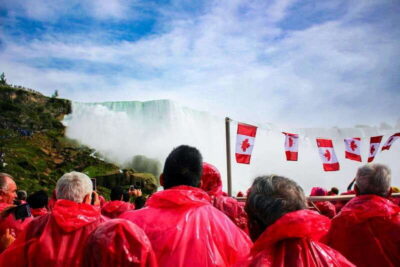
Niagara Falls Day Tour with Optional Boat Cruise
Read our review →

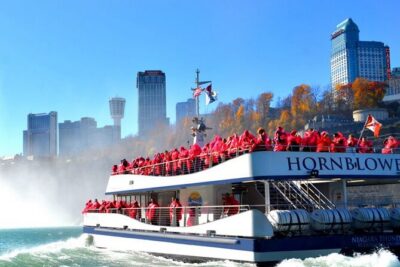
Niagara Falls Canada Day Tour From Toronto + Boat Cruise Option
Read our review →
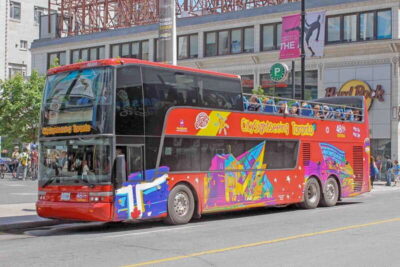

Niagara Falls from Toronto: Skip-the-Line Boat & Skylon Tower
Read our review →