
REVIEW · WALKING TOURS
Toronto Discovery District 2hr Walking Tour
Toronto’s best highlights come with context. In just two hours, you walk from Nathan Phillips Square to the Royal Ontario Museum while a local guide ties the buildings to the stories behind them. What I like most is the pacing, each stop is short enough to stay fun, and the guide is ready to help with questions and photos.
I also like that you get practical add-ons, like quick tips for what to do after the tour, so you’re not left staring at a map. The one thing to consider is timing and meeting up early, one past guest reported a guide did not show up, and another said the meeting location was tricky to find at first.
In This Review
- Key things that make this tour work so well
- A practical two-hour route that gives you bearings fast
- Where to meet: Nathan Phillips Square, your easy starting point and photo target
- Stop 1, Nathan Phillips Square: the Toronto sign and the city’s public mood
- Stop 2, College Place: hospital history and the idea behind the design
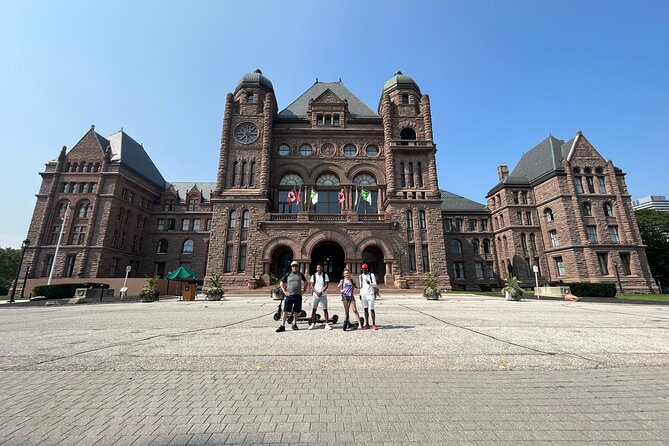
- Stop 3, Queen’s Park: Ontario’s story compressed into a green pause
- Stop 4, University of Toronto: campus views and war remembrance
- Stop 5, Convocation Hall: origins after the 1890 fire and today’s alumni ritual
- Stop 6, Soldiers’ Tower: a WWI and WWII memorial you can walk up to
- Stop 7, Philosopher’s Walk: art, music, and how a path shapes culture
- Stop 8, Koerner Hall: music culture, plus a real break
- Final stop, Royal Ontario Museum architecture: outdoors only and a strong landing spot
- Price and value: $34.99 for 2 hours and a guide who actively helps
- What you should expect from the guide and group experience
- Who this tour is best for, and who might want a different format
- Final verdict: should you book the Toronto Discovery District walking tour?
Key things that make this tour work so well
- Small group (up to 15) means you can actually ask questions, not just listen.
- Photo help so you can get shots at major landmarks without awkward guesswork.
- Short, focused stops keep the energy up for a true two-hour loop.
- Civic to campus to museum gives you a fast overview of how Toronto is organized.
- Real-life local recommendations to help you plan the rest of your day.
- Good value for $34.99 because the route is tightly planned and most stops list free admission tickets.
A practical two-hour route that gives you bearings fast
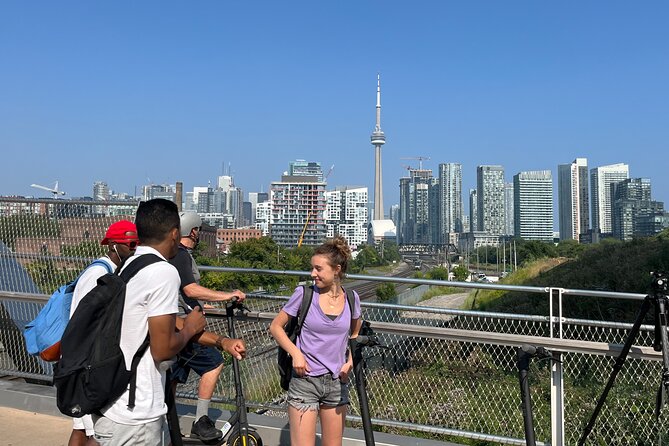
This is the kind of tour that works even if it’s your first time in Toronto. You start in the city’s civic heart at Nathan Phillips Square, then you flow through Queen’s Park and the University of Toronto area, finishing at the Royal Ontario Museum. The route is built to help you understand how these places connect, and why Toronto feels like it has multiple “centers” instead of one single downtown.
At about 2 hours, it’s long enough to learn names, dates, and reasons, but short enough that you do not feel trapped on a long bus ride. It’s also a walking tour, so you’ll get street-level impressions, not just zoomed past views.
The guides for this experience are local and English-speaking, and in the reviews people highlighted guides like Joel for making them fall for Toronto, Tai for humor and keeping things lively, and Wei-Ting and Joshua for adapting to interests. Even if you end up with a different guide, the theme is the same: you should feel like you’re getting a conversation, not a lecture.
One small consideration: because the format depends on the guide and the group, language can sometimes feel less smooth for some guests, even though English is offered.
More Walking Tours in Toronto
- Show me the City! A Small Group Walking Tour of Toronto
★ 5.0 · 621 reviews - Toronto Distillery District Walking Tour
★ 5.0 · 327 reviews - Toronto: City Highlights Walking Tour | 3-Hour
★ 4.6 · 306 reviews
Where to meet: Nathan Phillips Square, your easy starting point and photo target
Meet at Nathan Phillips Square (100 Queen St W). It’s a great choice because it’s a visual anchor. Right away, you’re in front of the Toronto sign, which is basically made for a quick selfie that tells friends you survived your arrival and you’re already exploring.
This square can also be active. Depending on the day, you might see markets, festivals, or protests. That matters because Toronto doesn’t only look pretty from postcards. It lives in public space, and this is one of the places where that shows.
The main practical tip I’d give you is simple: arrive a few minutes early and orient yourself before you join the group. One review complained the guide did not show up and the guest waited in snow. While you cannot plan for every problem, you can avoid adding stress by not arriving at the last second.
Also, if you’re worried about finding the exact meeting spot, give yourself extra time around the square, because one guest said the location was harder to spot at first than expected.
Stop 1, Nathan Phillips Square: the Toronto sign and the city’s public mood
Your first stop is Nathan Phillips Square, and it’s more than a photo moment. It’s where the city gathers for big civic energy, and it’s where you can see Toronto’s “public life” layered into the skyline.
Expect a quick introduction to the place and its role as a gathering point. Even the way the square works for photos is useful: it gives you an immediate reference point for the rest of the route. Once you’ve seen it, the city layout starts to make sense.
Potential downside? If it’s particularly busy, you may have to adjust how you take photos. The tour is designed for short stops, so you’ll want to be ready when the guide indicates the best spot.
Stop 2, College Place: hospital history and the idea behind the design

Next you head to College Place, where the tour focuses on the building that once housed the third iteration of Toronto’s General Hospital. The highlight here is not just that it was a hospital, but that it was described as the most complete and modern hospital in the world at the time.
You’ll learn the story of how that level of accomplishment happened, including obstacles along the way, plus what the building design was meant to do. The stop also references artistic and cultural gardens around the building, so you get a blend of built environment and culture, not just a dry facts-and-dates history lesson.
Why this stop is worth your time: it helps you connect Toronto’s growth to real systems, like healthcare. Cities do not become modern only because of fancy towers. They do it through institutions and ideas.
A quick consideration: this is a 10-minute stop, so if you want deeper details, plan to jot down names or facts so you can look up more later.
A few more Toronto days to compare
- Old Town Toronto Highlights 3 Hour Walking Tour | Gratuity-Based
★ 4.5 · 290 reviews - Toronto: Dark History Nighttime Walking Tour
★ 4.7 · 273 reviews - Toronto: Distillery District Historic Walking Tour
★ 4.8 · 267 reviews - Ghost Tour of Toronto Original Haunted Walk
★ 4.5 · 185 reviews
Stop 3, Queen’s Park: Ontario’s story compressed into a green pause

Then it’s Queen’s Park, which the tour frames as Ontario history condensed into one large park. This is one of the best “walking tour” categories because it gives you open space and architecture at the same time.
You’ll see statues, a notable architectural centerpiece for photos, and hear tales about how Ontario came to be. This stop is great for first-time visitors because it turns the political map into something you can feel on foot. It also gives you a mental break after more tightly packed campus streets.
Watch for a trade-off: parks can be gorgeous, but they also attract groups. Since stops are short, be ready to take your photos quickly and keep moving when the tour moves on.
Stop 4, University of Toronto: campus views and war remembrance
From Queen’s Park, you transition to University of Toronto. The campus is the kind of place where your eyes naturally keep moving, and the tour uses that to teach you something deeper than the architecture.
You’ll hear about U of T war efforts and how the university remembers those who made the ultimate sacrifice. That theme keeps the walking tour grounded. This is not just a pretty campus loop. It’s a place where public memory is built into the environment.
Why this works for you: campuses are among the most human parts of a city. You see how students, buildings, and traditions shape daily life. And when the guide adds the war-memory angle, the place feels layered, not just picturesque.
A consideration: if you’re not a museum person, this is still valuable, because the message is tied to real locations you’re standing in. Still, it can be emotionally heavy for some guests, since it includes war remembrance.
Stop 5, Convocation Hall: origins after the 1890 fire and today’s alumni ritual
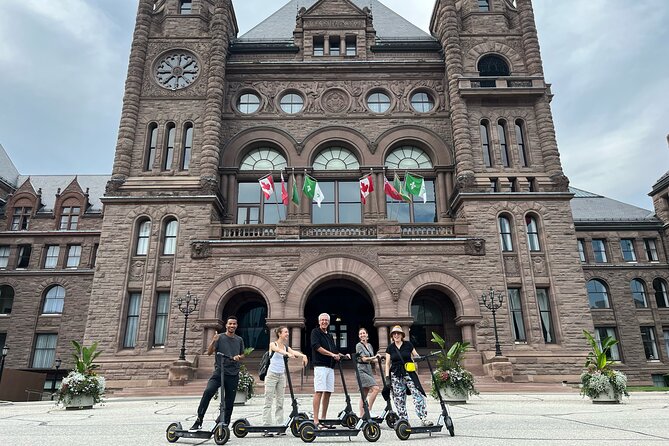
Next up is Convocation Hall, where the tour connects the hall’s origins and significance with the story of how it rose from the ashes of the 1890 fire. The stop also points out how the University honors graduates with the beautiful Alumni Plaza.
This is the kind of stop where you can almost see the past in the present. You’ll likely notice the hall’s structure and scale immediately, and the guide’s framing gives those details meaning.
What makes this stop feel special: it’s both history and ritual. Education has ceremonies, traditions, and symbols, and this is one of the places where the symbolism is physically present.
Possible drawback: because the stop is brief, if you want time for lingering photos or questions, keep your curiosity active. If you ask your question early, you’re more likely to get a complete answer before the group moves on.
Stop 6, Soldiers’ Tower: a WWI and WWII memorial you can walk up to

Then you reach Soldiers’ Tower, a monument dedicated to those lost during the First and Second World War. The tour describes it as a war memorial paying tribute to the brave souls who defended freedom.
This stop adds emotional weight and historical perspective to the route. It also gives you a chance to slow down mentally, because memorial spaces are meant for reflection, not rushing.
Why it’s valuable on a walking tour: it turns the campus-adjacent story into a wider Canada story. Instead of learning history in a classroom, you see it in stone and scale, right where the city moves around it.
Practical note: the best photos at memorials often happen when people respect the space. Keep it simple, take your picture if allowed, and then move on when the group does.
Stop 7, Philosopher’s Walk: art, music, and how a path shapes culture
After Soldiers’ Tower, you walk through Philosopher’s Walk, a path through the heart of U of T’s campus. The tour explains how it was built, what it was built on, and how it connects people to art, history, music, and culture.
This stop is one of the “quality of place” moments. A path might sound boring on paper, but the way the tour frames it makes it feel like infrastructure for culture. You understand why people stroll there, not just where they can stroll.
Why you’ll like it: it gives a visual rhythm to the tour. Instead of only stopping at major monuments, you also get a flowing section where you can look around, listen, and reset your attention.
Consideration: because you’re walking, comfy shoes matter. You are stopping frequently, but you’re also covering ground. If your shoes are your weak point, you’ll feel it here.
Stop 8, Koerner Hall: music culture, plus a real break
Along Philosopher’s Walk, you visit Koerner Hall, described as the crown jewel of the Royal Conservatory of Music. The guide shares its impact on culture and how it integrates newer architecture while preserving classic elements.
This is also where the tour allows for a washroom and snack break. That small detail is surprisingly important on a short tour. It means you don’t have to wait until later in the day when you might be too tired to explore.
If you want a quick way to judge whether the tour will stay fun for you, check this stop. Music stops tend to change the vibe from history-heavy to human and creative, and the break keeps the whole experience from feeling like nonstop sightseeing.
Potential drawback: if you need a longer rest, 10 minutes might not be enough. But for most people, it’s a smart reset window.
Final stop, Royal Ontario Museum architecture: outdoors only and a strong landing spot
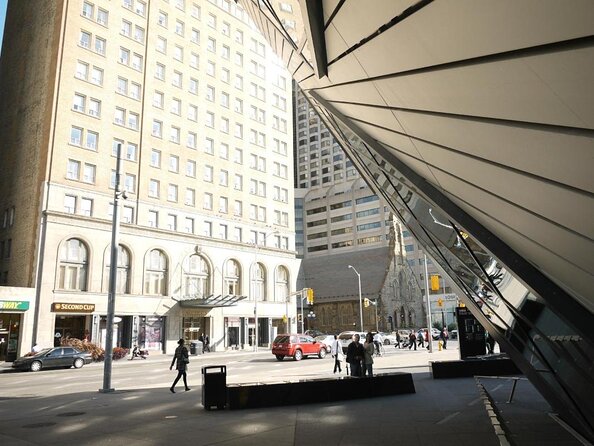
The tour ends at the Royal Ontario Museum (100 Queens Park). The key detail here is that the stop is outdoor only, focused on appreciating the building’s architecture.
This ending works because it’s a natural transition from learning to doing. After you’ve walked through civic and campus stories, the ROM gives you a visual “big museum” moment. Even if you do not go inside, it helps you recognize the scale and design language of one of Toronto’s signature cultural stops.
Why it’s a good final landing point: it sets you up to decide what you want next. If you’re museum-inclined, you can plan your entry later. If not, you at least have a strong destination anchor.
Price and value: $34.99 for 2 hours and a guide who actively helps
At $34.99 per person for about 2 hours, this tour sits in the practical middle of walking-tour pricing. It’s not the cheapest thing you can do, but it also isn’t expensive for a structured route with a local guide who focuses on history, photo help, and recommendations.
Value here comes from three places:
- Tight route, no wasted time: the stops are close enough to keep the day efficient.
- Small group size (max 15): you can ask questions.
- Photo assistance and local tips: these are the extras that turn sightseeing into a smoother day plan.
Plan for one extra cost: gratuities are not included, and the suggestion is $10 per person. If you’re the type who likes to tip thoughtfully for good guiding, this is straightforward. If you’re on a tight budget, it’s still easy to calculate your true total ahead of time.
If I had to summarize the value logic: you’re paying for a guide to translate the city while you’re walking, then handing you tips so your next steps are better.
What you should expect from the guide and group experience
This is a local English-speaking guide experience with a research-backed history and culture focus. The “small group” detail matters because it changes the tone of the tour. You’re more likely to get answers that fit what you care about.
The reviews point to guides who were funny and kind and willing to adjust to interests. Joel was called out for making people love Toronto, Tai got praise for being engaging and recommending places to eat, and Joshua was recognized for an excellent, fun approach. Even with different guides, the pattern is that the best moments tend to be interactive.
Language is listed as English, but one review flagged a language barrier at times. If you rely heavily on perfect clarity and you’re sensitive to accents, I’d treat the tour like a conversational experience, not a scripted one.
Who this tour is best for, and who might want a different format
This tour is best if you want a fast, structured orientation. I think it’s especially good for:
- First-time visitors who want to understand how Toronto fits together
- People who like history, but still want it delivered in short bursts
- Anyone who appreciates photo help and local next-step recommendations
It may not be ideal if you want very long stops or deep museum-level detail. Since each stop is brief, you’re mostly collecting highlights and context, not fully studying any one site.
Also, because it covers a series of landmarks primarily on foot, comfy walking shoes are a real must. The tour is labeled “most travelers can participate,” but your comfort still depends on your own stamina.
Final verdict: should you book the Toronto Discovery District walking tour?
If you want a smart way to spend two hours with a guide and leave with a better sense of Toronto, I’d book it. The route is well-chosen for orientation, the group is intentionally small, and the guide support for photos and questions is the kind of practical value that improves your whole day.
My caution is not about the content. It’s about execution at the start. One negative review described a guide not showing up and a refund being processed. That doesn’t mean it’s common, but it does mean you should arrive early and look for your group before the cold weather or crowds become a problem.
If you like history you can see, and you want an easy first loop that ends at a major museum, this is a good fit.
Recently listed around Toronto
- All-Inclusive Camp & Tube At Elora Gorge (2 Day)★ 5.0 · 4 reviews
- Canada eSIM | 3-30 days | Daily data | QR code★ 4.0 · 12 reviews
- Toronto Craft Brewery Tour★ 5.0 · 97 reviews
- Handcrafted Donuts of Toronto: A Sweet City Walking Tour★ 5.0 · 141 reviews
- Underground Toronto PATH Tour★ 4.5 · 6 reviews
- Pottery wheel class in Toronto Bay&Dundas★ 4.5 · 5 reviews
- Tour to Niagara Falls from Toronto★ 4.0 · 19 reviews
- Roundtrip Private Transfer from Toronto Airport (YYZ)★ 5.0 · 3 reviews
Walking Tours, compared.

Old Quebec City: Grand Walking Tour with Private Option
Read our review →
The Original Old Montréal Walking Tour by Guidatour
Read our review →
Old Montreal Small-Group Walking Tour | Max 10 | by MTL Detours
Read our review →
Old Quebec Classique Walking Tour with Funicular
Read our review →

Quebec: Crimes of New France Animated Walking Tour
Read our review →Browse the lists this tour appears in