

REVIEW · WALKING TOURS
The Sights of Banff: a Smartphone Audio Walking Tour
Banff tells its story through your phone. This offline smartphone audio walk uses a GPS map that triggers guide commentary as you get close to landmarks, from downtown heritage stops to the Bow River viewpoint. It is an easy way to understand why Banff looks the way it does, without joining a loud group.
I love how you get a real guide voice through the app, with clear stop-by-stop narration built around Banff landmarks. I also like the freedom to start whenever you want and stop when you want, since the tour is designed so you can jump in along the route.
One caution: the app can take a few minutes to feel natural, and if you are walking in harsh cold, you may need to slow down so you do not miss audio cues or button prompts.
In This Review
- Key highlights I think you will care about
- A smartphone guide that keeps talking as you walk
- Where you start on Banff Avenue, and how long it really takes
- Stop-by-stop: what you will see, and what to listen for
- 1) Buffalo Nations Museum, the Banff origin story opener
- 2) Banff Administration Building, big stone meets big meaning
- 3) Cascade Gardens, where Banff slows down on purpose
- 4) Banff Pedestrian Bridge, Bow River views plus a local name
- 5) Buffalo Street & Muskrat Street, the elevation marker puzzle
- 6) 514 Buffalo St, the Crandell Peck Cabin
- 7) Buffalo Street & Otter Street, an inukshuk sighting with context
- 8) 525 Buffalo St, the Powerstation story in plain language
- 9) Ken Madsen Path, a history walk without a long hike
- 10) 117 Grizzly St, the Tarry-a-while residence
- 11) Otter Street & Caribou Street, climate talk to match the season
- 12) The Luxton Home Museum, pioneers in one house (tickets extra)
- 13) Caribou Street & Banff Avenue, Brewster family comes to town
- 14) 204 Banff Ave, the four sentries sculpture
- 15) Box 3100, Cave and Basin on a mural
- 16) Banff Visitor Information Centre, where to plan your next days
- 17) St. Paul’s Presbyterian Church, a layered timeline
- 18) Banff Avenue & Elk Street, the fire monument stop
- 19) Caribou Street & Bear Street, an older lodge connection
- 20) Whyte Museum of the Canadian Rockies, Rocky Mountain culture and history (tickets extra)
- 21) Central Park, the “big pile of rocks” moment
- 22) Banff Park Museum, taxidermy past (tickets extra)
- 23) Banff Avenue & Buffalo Street, Dave Whyte block
- 24) 107 Banff Ave, Harmony Lane with river stone pillars
- 25) Rundle United (Ralph Connor Memorial United Church), the man behind the name
- 26) Beaver Street & Buffalo Street, the Superintendent’s Residence
- 27) Royal Canadian Legion Col. Moore Branch 26, cenotaph and remembrance
- Price and value: why $8.22 feels fair
- The app experience: where it can shine, and where you should be ready
- Winter reality check: the walking is easy, the weather might not be
- Who this is best for
- Should you book this smartphone audio walking tour?
- FAQ
- Do I need cell service during the tour?
- How long does the walk take?
- Can I start at any time?
- Is the tour private?
- Are attraction tickets included?
- Where does the tour start and end?
Key highlights I think you will care about

- Offline friendly audio, so you are not stuck hunting for signal
- Live GPS map with automatic play when you reach each point
- Flexible start and stop anywhere along the route, no rush schedule
- Low price for a self-guided guide experience, even if tickets are extra
- Trivia game at set moments to keep the walk from going on autopilot
- Mostly quick stops, with one longer garden segment to slow down a bit
A smartphone guide that keeps talking as you walk

This tour is built for a simple rhythm: you load it once, then the app quietly handles the sequencing. You get a live GPS map showing where you are and where to go next. When you get close to a stop, the commentary automatically plays. That means you do not have to keep tapping your screen every few steps, which is exactly what you want on a winter sidewalk or a busy downtown block.
The best practical feature here is that the audio can be used offline. You download on WiFi before you start, and during the walk the tour does not need mobile data. In Banff, where service can be patchy depending on where you are standing, that matters more than you might think.
There is also a location-based trivia game that fires after some commentary. After the audio finishes, you look at your device and tap your guess. It is not complicated, but it does give your brain a job besides just sightseeing.
More Walking Tours in Banff & Lake Louise
- The Banff Stargazing Tour – 2hr Walking Tour
★ 5.0 · 189 reviews - Banff: 4-Hour E-Bike and Walking Tour in Johnston Canyon
★ 4.7 · 67 reviews - Banff: Paranormal History Walking Ghost Tour
★ 4.7 · 46 reviews
Where you start on Banff Avenue, and how long it really takes
You begin at 12 Banff Ave, right in the heart of town, and the activity ends back at the meeting point. Expect a total time around 1 hour to 1 hour 30 minutes if you keep moving, and longer if you pause for photos or linger at buildings you find interesting.
The walking route is described as about 5 km return. Many stops are designed for a quick 5 minute moment, which makes this a great option on a travel day when you also want time for a hike, a soak, or dinner.
It is also a private tour in the sense that only your group uses the app on that booking. You are not sharing audio with strangers or dealing with anyone holding up the pace.
Two small things that help your comfort level:
- You can use your phone audio through the device speaker, headphones are optional.
- You should plan your “device count” carefully. The number of travelers you select is the number of devices that can download the tour.
Stop-by-stop: what you will see, and what to listen for
Below is the kind of route you will walk, with the main vibe at each place. Some stops are inside museums or historic buildings where admission is not included, so you might only get exterior views unless you pay separately.
1) Buffalo Nations Museum, the Banff origin story opener
You kick things off at the Buffalo Nations Museum. The audio frames Banff in past and present, pointing out historical buildings, sculptures, sights, and attractions. It also mentions major downtown garden landmarks later, so this first stop helps you understand what the route is trying to do.
Tip: if you want more than the audio, check whether you can access the museum area on your timing, since museum admission is not included.
A few more Banff days to compare
- Yamnuska Wolfdog Sanctuary Walk Ticket in Canada
★ 5.0 · 37 reviews - Town of Banff Highlights 2 Hour Walking Tour | Gratuity-Based
★ 5.0 · 18 reviews - Banff GHOST TOWN History Walking Tour + Transportation
★ 4.9 · 16 reviews - The BANFF NATURE Walk – 2hr Adventure
★ 5.0 · 11 reviews
2) Banff Administration Building, big stone meets big meaning
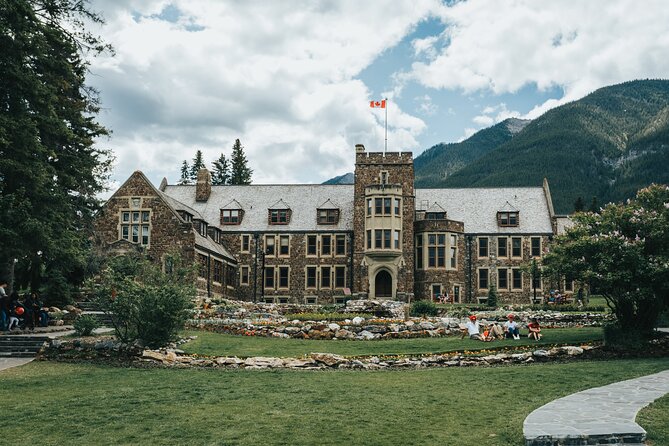
Next up is the Banff National Park Administration Building. The commentary is centered on the building itself, since it is the kind of place where you will want to look up, not just walk past. Even if you do not go inside, the stop is there to connect Banff’s growth to the park’s early administration.
This one includes admission free.
3) Cascade Gardens, where Banff slows down on purpose
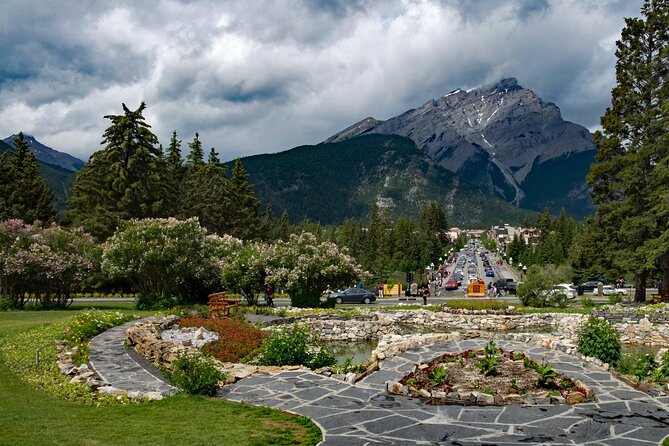
The route then shifts to the Cascade Gardens, a 4-acre park built in the 1930s with terraced gardens on a hillside. The audio highlights two points of interest: the Cambrian pavilion and the Devonian pavilion. This is your longer pause on the walk, set for about 15 minutes, and it is the stop that feels most “garden walk” compared with the urban heritage cluster.
Good to know: garden access is free here, so you get the full benefit even if you keep your schedule tight.
4) Banff Pedestrian Bridge, Bow River views plus a local name
From there you move to the Banff Pedestrian Bridge. The audio is tied to the view over the Bow River, plus a story about Mr. Banff. It is a short stop, but it is one of the easiest places to take a breath and get a skyline-and-water photo without leaving the downtown area.
5) Buffalo Street & Muskrat Street, the elevation marker puzzle
On Buffalo Street and Muskrat Street, the tour asks you to find an elevation marker embedded in the sidewalk, described like a coin. It then explains what it means. This is the kind of scavenger-style detail that makes an audio walk feel more interactive than just listening.
6) 514 Buffalo St, the Crandell Peck Cabin
At 514 Buffalo St, you are pointed toward the Crandell Peck Cabin, said to be one of Banff’s oldest buildings, built in 1907 by Edward Henry Crandell with materials sourced locally. If you like architecture and small historical details, this stop is worth your full attention even though it is scheduled at about 5 minutes.
7) Buffalo Street & Otter Street, an inukshuk sighting with context
The audio points out an inukshuk at the corner of Buffalo Street and Otter Street and explains what it is. It is quick, but it adds meaning to something people might otherwise treat as “just a statue.”
8) 525 Buffalo St, the Powerstation story in plain language
At 525 Buffalo St #521, the tour discusses the Banff Powerstation and how it helped power streetlights and homes in 1905. This is a useful reminder that Banff’s modern look was built through infrastructure decisions, not just tourism postcards.
9) Ken Madsen Path, a history walk without a long hike
You then head along Ken Madsen Path, where the audio shares more context about Banff’s history while you walk. Again, it stays short, so you are not committing to a long excursion, which makes it a good fit between other activities.
10) 117 Grizzly St, the Tarry-a-while residence
At 117 Grizzly St, the commentary points out the Tarry-a-while residence, home of Mary Schaffer Warren. The audio mentions her early explorations, writings, and paintings connected to the Canadian Rockies. If you have even a mild interest in art history or early travel writing, this is a surprisingly human-feeling stop.
11) Otter Street & Caribou Street, climate talk to match the season
At Otter Street and Caribou Street, the audio tells you about Banff’s climate. That can be useful right away, because the route stays downtown even when weather swings.
If you are visiting in shoulder season, this is also where you can decide whether to keep walking or warm up sooner.
12) The Luxton Home Museum, pioneers in one house (tickets extra)
You reach the Luxton Home Museum, an historic home giving a glimpse into pioneer family life and Banff over nine decades. This stop is about 5 minutes in the tour design, but it is one of the places where you might be tempted to spend longer if you pay to enter, since admission is not included.
13) Caribou Street & Banff Avenue, Brewster family comes to town
At Caribou Street and Banff Avenue, you hear about when the Brewster family arrived in 1886 and set up shop on this spot. This is one of the “why Banff works as a travel town” links, tying businesses to the story of what the town became.
14) 204 Banff Ave, the four sentries sculpture
At 204 Banff Ave, the audio points out the four sentries sculpture, described as a mainstay on Banff Avenue. This is a classic quick stop, but sculptures like this become memorable when the guide tells you what they represent.
15) Box 3100, Cave and Basin on a mural
At Box 3100, you will pass by a big mural on Banff Avenue depicting the Cave and Basin site. The tour uses that moment to tell the story of Cave and Basin. This is good for orientation if you plan to visit Cave and Basin separately, because the audio gives you context for what you are going to see.
16) Banff Visitor Information Centre, where to plan your next days
At the Banff Visitor Information Centre, the tour points you toward the place where you can get more details on what to do. This is not a “must see” museum stop, but it is practical, especially after you have the history vibe in your head and you want to connect it to your own itinerary.
17) St. Paul’s Presbyterian Church, a layered timeline
At St. Paul’s Presbyterian Church, the audio discusses the church built in 1930, while noting that its story began earlier with St. Paul’s church established in 1887. You get a sense of how Banff’s institutions evolved over time, not in one dramatic moment.
18) Banff Avenue & Elk Street, the fire monument stop
At Banff Avenue and Elk Street, you are directed to a stone fire-related monument. You sit, warm up, and listen to the monument’s meaning. Since it is set as a short pause, it works well as a “reset moment” during your walk.
19) Caribou Street & Bear Street, an older lodge connection
At Caribou Street and Bear Street, the tour points out the old Cascade lodge, home to the Banff Freemasons. It is quick, but it helps explain how Banff’s social and civic life shaped the town, not just the outdoors.
20) Whyte Museum of the Canadian Rockies, Rocky Mountain culture and history (tickets extra)
At the Whyte Museum of the Canadian Rockies, the audio describes the museum’s goal to preserve and make accessible Rocky Mountain history and culture. This is a “learn what the place is” stop, but admission is not included, so consider it a primer if you plan to enter later.
21) Central Park, the “big pile of rocks” moment
At Central Park, the commentary focuses on a big pile of rocks in the middle. It sounds funny, and it is meant to be memorable. This stop is a reminder that urban parks often contain history and stories, even when they look simple from a distance.
22) Banff Park Museum, taxidermy past (tickets extra)
At Banff Park Museum, you learn about the National Historic Site established in 1895, described as housing an exhibit of taxidermy mounted specimens of animals, plants, and minerals associated with the park. Admission is not included, so you may choose between a quick listening stop or adding a ticket later.
23) Banff Avenue & Buffalo Street, Dave Whyte block
At Banff Avenue and Buffalo Street, you spot the Dave Whyte block, described as one of the oldest remaining, largely intact commercial buildings in Banff. This is the kind of heritage stop that makes you notice storefront details you would otherwise walk right by.
24) 107 Banff Ave, Harmony Lane with river stone pillars
At 107 Banff Ave, the tour highlights Harmony Lane, a prominent commercial building built in rustic National Park style with river stone pillars. This is a good stop for photos because the stonework reads clearly even from street level.
25) Rundle United (Ralph Connor Memorial United Church), the man behind the name
At Rundle United (Ralph Connor Memorial United Church), the audio explains the man behind the church’s name. It even hints that the tour guide is doing a bit of impersonation to make the story stick, which matches the overall tone of an audio walk that tries to be fun, not stuffy.
26) Beaver Street & Buffalo Street, the Superintendent’s Residence
At Beaver Street and Buffalo Street, you learn about the Superintendent’s Residence and the responsibilities of the park superintendent who lived there. This is a great place to connect the Banff Administration theme you saw earlier to the people running the park.
27) Royal Canadian Legion Col. Moore Branch 26, cenotaph and remembrance
Finally, at the Royal Canadian Legion Col. Moore Branch 26, you see the Banff Legion and the cenotaph built out front in 1920. This is a closing stop that gives the walk a respectful weight.
Price and value: why $8.22 feels fair
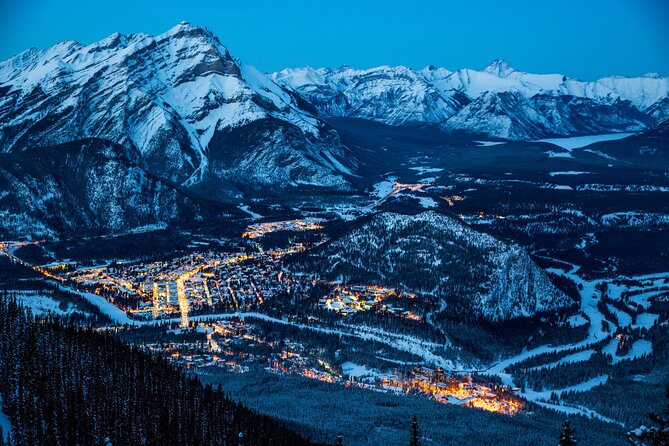
At about $8.22 per person, this tour is priced like a budget-friendly way to get guided storytelling without the big-ticket tour cost. You are paying for the smartphone guide experience, not for museum entries. Many stops are free points of interest, but a handful are explicitly marked with tickets not included.
So the value depends on your style:
- If you like learning as you walk and you are happy with exterior views at museums, you will feel like you got a bargain.
- If you want to go inside several ticketed stops, the total cost will rise, but you still benefit from the audio context before you buy those admissions.
There is also a value angle beyond the price tag. You avoid the tight schedule feeling that comes with group tours. The tour is designed so you can take as long as you like, and you can stop and start anywhere along the route.
The app experience: where it can shine, and where you should be ready
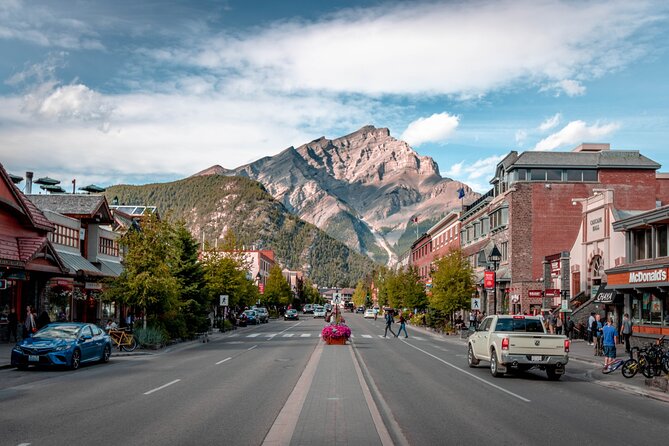
The big promise is smooth navigation: download first, then let GPS + auto-play handle the sequencing. The upside is that the walk does not feel like you are constantly fiddling with a map. The downside, based on feedback patterns people have shared before, is that a first-time audio walk can feel awkward at first.
If you try this, do two things:
- Give yourself a few minutes to get comfortable with the map screen before you start walking far.
- Keep your volume up enough to hear the commentary clearly, since audio can play through your device speaker.
One more realistic note: app performance and interface issues can happen, especially after updates. If the app acts weird, stay calm, recheck your map view, and be ready to restart the tour experience if needed.
Winter reality check: the walking is easy, the weather might not be

One review note that really matches Banff is simple: when temperatures drop hard, you will feel it immediately. If you are visiting around extreme cold, you might find it hard to keep your phone comfortable and active while you are rushing to stay warm. In that kind of weather, the best move is to treat the audio pauses as your “quick warm-up moments,” not as a reason to hurry.
If you can choose your season, the garden stop and the bridge viewpoint are easier to enjoy when the sidewalks are less slick and your hands are not numb.
Who this is best for
This tour fits best if you want:
- A low-cost guided walk that does not lock you into a group pace
- Offline narration so you can keep moving without data stress
- A tour format that works as a sampler, especially if you plan to return later to specific museums
It may be less ideal if:
- You hate smartphone-based navigation or you want zero screen interaction at all
- You expect every stop to include an indoor visit, since some places have admission not included
If you like short, meaningful stops over one long museum session, you will probably enjoy the pacing.
Should you book this smartphone audio walking tour?
Book it if you want a practical, budget-friendly way to learn Banff’s downtown story while you walk at your own pace. The offline GPS, the automatic commentary, and the quick “stop moments” make it a smart fit for first-time visitors, couples, and solo travelers who prefer freedom over fixed tour group schedules.
Skip it or be cautious if you know your phone navigation frustrates you easily, or if you are traveling in deep winter and you dislike stopping often to manage your screen and audio. In the right conditions, this is a good use of an hour, and it can help you plan the rest of your Banff days with more confidence.
FAQ
Do I need cell service during the tour?
No. You download the tour on WiFi before you start, and the app can be used offline during the walk.
How long does the walk take?
The duration is about 1 hour to 1 hour 30 minutes, depending on how much you stop and linger.
Can I start at any time?
You can start at flexible times, since the tour is available throughout the day during its operating window, and the experience is designed so you can use it at a time that works for you.
Is the tour private?
Yes. It is listed as a private activity, so only your group participates.
Are attraction tickets included?
No. Some stops are marked admission not included, including the Buffalo Nations Museum, Luxton Home Museum, Whyte Museum of the Canadian Rockies, and Banff Park Museum.
Where does the tour start and end?
It starts at 12 Banff Ave, Banff, AB, and ends back at the same meeting point.
Recently listed around Banff
- Half-Day Guided Via Ferrata Climbing Tour in Banff★ 5.0 · 30 reviews
- Private Horse-Drawn Sleigh Ride In Banff★ 3.0 · 5 reviews
- Private Airport Transfer: Banff, Canmore, Lake Louise to Calgary★ 5.0 · 3 reviews
- Banff |Canmore| Kananaskis to Calgary YYC Airport–Private Shuttle★ 5.0 · 50 reviews
- Calgary to Banff, Canmore, Lake Louise, Luxury Lexus TX★ 5.0 · 4 reviews
- Private Forest Bathing Experience Connect with Nature★ 5.0 · 5 reviews
- Park Distillery Tour with Whisky Tasting★ 5.0 · 4 reviews
- Elevated Private Experience: Adventure & Wellness in Banff★ 5.0 · 4 reviews
Walking Tours, compared.

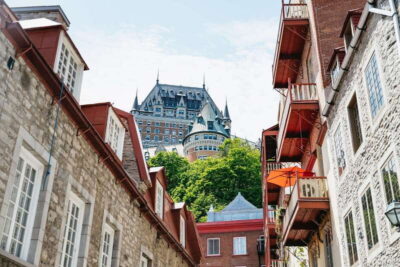
Old Quebec City: Grand Walking Tour with Private Option
Read our review →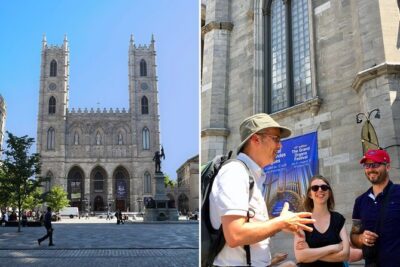
The Original Old Montréal Walking Tour by Guidatour
Read our review →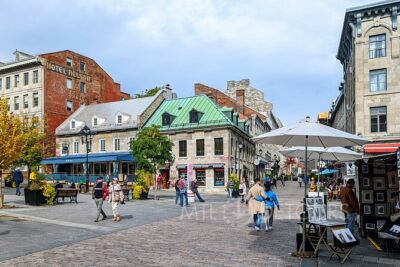
Old Montreal Small-Group Walking Tour | Max 10 | by MTL Detours
Read our review →
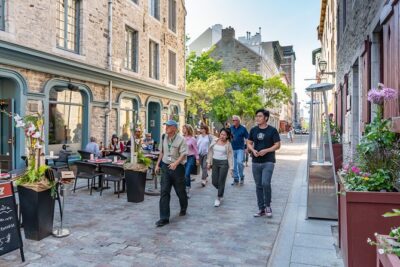
Old Quebec Classique Walking Tour with Funicular
Read our review →

Quebec: Crimes of New France Animated Walking Tour
Read our review →Browse the lists this tour appears in