
REVIEW · HISTORICAL TOURS
The Forks Historic Site: a Smartphone Audio Tour
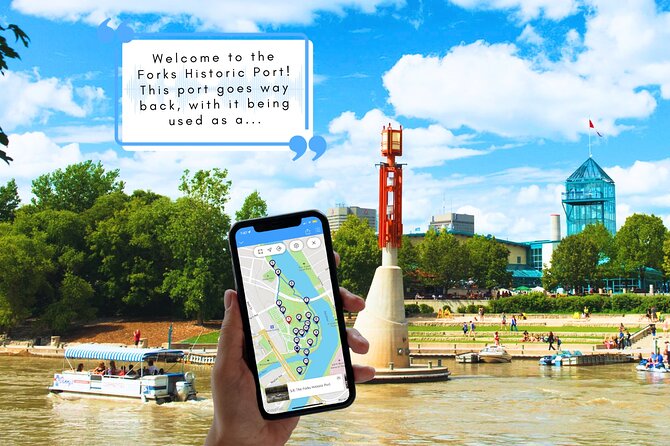
Winnipeg’s The Forks tells its story on foot. This smartphone audio tour guides you through the area’s turning points with a live GPS map and auto-playing commentary as you approach each landmark. I like that it’s built for freedom, not clock-watching.
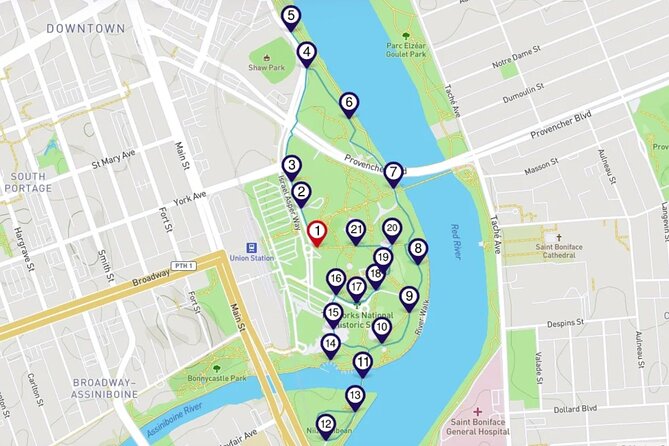
My other favorite part is the simple format: download once on Wi-Fi, then wander at your own pace for a roughly 2.5 km loop. You get history from Indigenous presence to fur trade and the rail era, plus modern-day places like museums, parks, and performance spaces.
One drawback to plan around: the audio can play from your phone speaker, so in busy spots you may want to use headphones and keep your phone volume sensible.
In This Review
- Key highlights at The Forks Historic Site (smartphone audio tour)
- Why this audio walk works so well at The Forks
- Price and value: what $6.71 gets you
- The big logistics: download on Wi-Fi, then go hands-on
- How the GPS and auto-audio actually guide your walk
- Stop-by-stop: the The Forks walking route in order
- Stop 1: The Plaza at The Forks
- Stop 2: Mahatma Gandhi Statue
- Stop 3: Canadian Museum for Human Rights
- Stop 4: Shaw Park
- Stop 5: Hive Five Sculpture
- Stop 6: Red River
- Stop 7: Esplanade Riel Pedestrian Bridge
- Stop 8: The Forks National Historic Site
- Stop 9: Manitoba Children’s Museum
- Stop 10: Oodena Celebration Circle
- Stop 11: Forks Historic Rail Bridge
- Stop 12: Niimaamaa
- Stop 13: Niizhoziibean
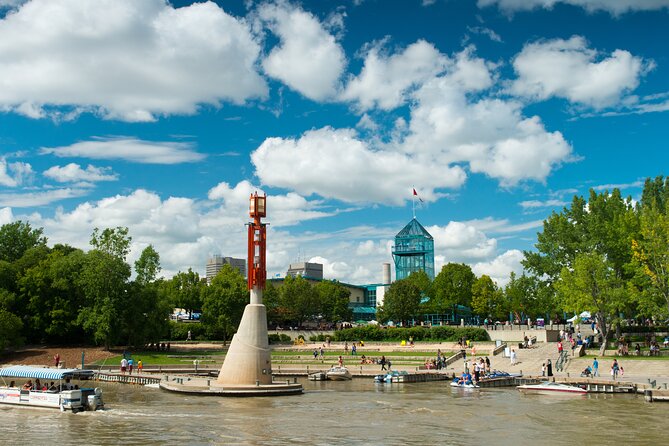
- Stop 14: Forks Historic Port
- Stop 15: The Forks Market
- Stop 16: Manitoba Theatre for Young People (MTYP)
- Stop 17: Johnston Terminal
- Stop 18: Public Orchard & Urban Garden
- Stop 19: Variety Heritage Adventure Park
- Stop 20: Path of Time
- Stop 21: CN Stage and Field
- Where to linger after the tour finishes
- Who this tour is best for, and who should skip it
- Should you book The Forks Historic Site smartphone audio tour?
- FAQ
- How long is the The Forks Historic Site smartphone audio tour?
- How much does it cost?
- Do I need mobile data during the tour?
- Are attraction tickets included?
- Do I need headphones?
- Can I get a refund if my plans change?
Key highlights at The Forks Historic Site (smartphone audio tour)
- Live GPS route that shows where you are and what comes next
- Auto-playing audio when you get close to each stop
- Self-guided walking loop that runs about 2.5 km
- Fast learning stops designed around short, easy-to-follow segments
- Family-friendly mix of history, art, playgrounds, and museums
- Flexible timing with no time pressure once you start
Why this audio walk works so well at The Forks
The Forks is Winnipeg’s natural meeting point, where paths, river views, and public spaces make walking feel like the whole point. This tour leans into that. Instead of a rigid group lesson, you get a sequence of short stops that you can stretch or tighten based on how you walk, how long you linger, and whether you want photos or just the facts.
The most useful part is that the tour frames the area as a long story, not a list of attractions. You’ll hear about early Indigenous presence, later fur traders, links to the railway, and then what the site looks like now. That “then and now” mix is what turns random sightseeing into a real sense of place.
The route also feels practical. It’s short enough to do comfortably in a single outing, and it includes major anchor sights you’d likely want to see anyway, like the Canadian Museum for Human Rights.
A few more Winnipeg days to compare
- Victoria Guided Food and History Tour
★ 5.0 · 2,015 reviews - Gastown Historic Walking Food Tour
★ 5.0 · 1,863 reviews - Vancouver: Gastown Historical Walking Food Tour
★ 4.8 · 539 reviews
Price and value: what $6.71 gets you
At $6.71 per person, the cost is low for a guided-style experience. You’re paying for one thing that’s hard to replicate on your own quickly: organized, stop-by-stop context delivered through your phone.
Value shows up in three ways:
- Time efficiency: the tour is designed to take about 1 hour 30 minutes to 2 hours.
- On-demand flexibility: you’re not tied to a start time once you’ve downloaded the tour in the app.
- Low extra costs: the tour notes admission is free for the listed stops, though it also says attraction tickets are not included (more on that later).
If you like city walks where you control the pace, this is a smart way to upgrade from wandering to learning without paying for a full live guide.
The big logistics: download on Wi-Fi, then go hands-on
This tour is built to run with minimal reliance on your mobile network. The included instructions recommend you download on Wi-Fi before you start. During the walk, you can follow the live GPS map without needing a signal or using data.
Here’s the practical mindset I’d use if I were planning your day:
- Start with a charged phone, because GPS and audio both work your battery.
- If you’re in a crowd, use headphones if you have them, since the audio can play through your device speaker too.
- Give yourself a minute or two to figure out what the map is telling you before the first stop, so you don’t feel rushed in the opening minutes.
Also note the language is English, and you’ll want that if you’re counting on the audio to guide you reliably through each point.
How the GPS and auto-audio actually guide your walk

This is the core of the experience. The tour uses a live GPS map to show:
- where you are,
- where the next stop is,
- when you’re close enough for audio to automatically play.
So instead of reading signage or constantly tapping through screens, you keep walking and let the tour trigger. That’s what makes the format feel smooth, especially at The Forks where paths can look similar.
Two small considerations you should know:
- Some stops are close together, so you’ll want to pay attention to the map prompt as you move between them.
- If you’re not comfortable using phone maps on the go, do a quick test before you start, like zooming and checking orientation.
The tour is also set up as private for your group, meaning it’s just you and whoever you select as additional travelers.
Stop-by-stop: the The Forks walking route in order
The tour is a self-guided audio walk around The Forks National Historic Site area. Plan for short pauses, then keep moving. You’ll spend about 5 minutes at each main stop.
Stop 1: The Plaza at The Forks
Start at The Forks Plaza and set the tone for your walk. This opening segment frames the area as Winnipeg’s thousand-year heart, explaining key turning points from early Indigenous people to later fur traders, then onward to links tied to the railway and what’s there today.
This first stop matters because it gives you a mental map of themes. Once you get that, everything else you see feels less random.
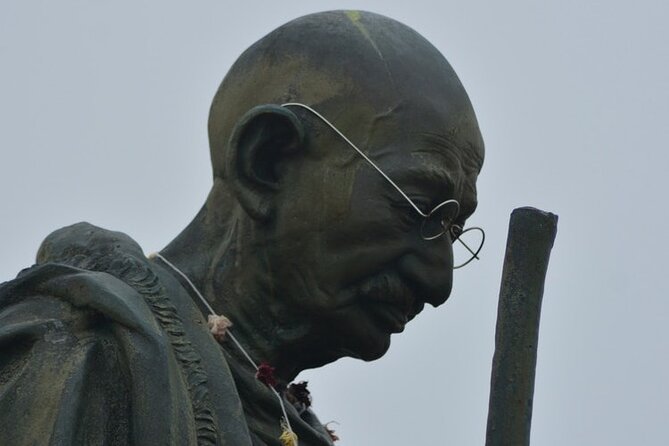
Stop 2: Mahatma Gandhi Statue
If the day is busy, you’ll see steady foot traffic. The statue is one of the easiest “anchor” visual moments on the route, and the audio helps you look at it with context instead of passing by quickly.
I’d treat this as a short reset point, a place to slow down, take a photo if you want, then keep your pace for the next museum stop.
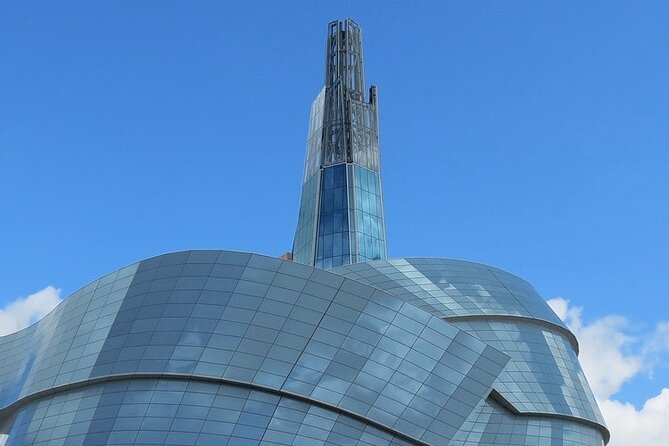
Stop 3: Canadian Museum for Human Rights
This is where the tour shifts from open-air public spaces into a major landmark. The audio points out the museum’s unusual shape, described as a tower-like form with a glass wrapping.
The helpful part is how this stop connects architecture to theme. Even if you only skim visuals on the outside, the commentary helps you understand what the building represents.
Stop 4: Shaw Park
You’ll cross to Shaw Park area with the stadium setting your orientation. The tour cues you to look from behind the scoreboard area, and the audio explains what the stadium is home to today.
This stop is a good reminder that The Forks is also a community sports and events zone, not just historic grounds.
Stop 5: Hive Five Sculpture
Right ahead, you’ll notice something unusual, five airplane wing shapes that appear to stick out of the ground. The tour names this as Hive Five and uses the sculpture as a jumping-off point to talk about how art and place mix at The Forks.
Even if you’re not an art person, I like this kind of stop because you’re forced to look closely for a minute, then the meaning follows.
Stop 6: Red River
Now you get the big geographic feature. The Red River sits to your left, and the audio focuses on the river’s origin and why it matters here.
This is where the walking history clicks. The Forks exists because water and transport shaped Winnipeg, so hearing the river story while you’re physically next to it makes the background feel real.
Stop 7: Esplanade Riel Pedestrian Bridge
The tour has you approach the Esplanade Riel pedestrian bridge and explains what it connects and why that pedestrian link is part of the modern-day experience at The Forks.
If you like perspective shifts, this stop is good. You get a quick view of how the area ties together across the river.
Stop 8: The Forks National Historic Site
The audio cues a detail you might miss: a semi-circular cement object along the riverbank, sometimes fully visible and sometimes partially submerged depending on water level.
That “watch how the river changes what you see” idea is why this stop feels worthwhile. It’s not just a monument, it’s a feature that changes with the season.
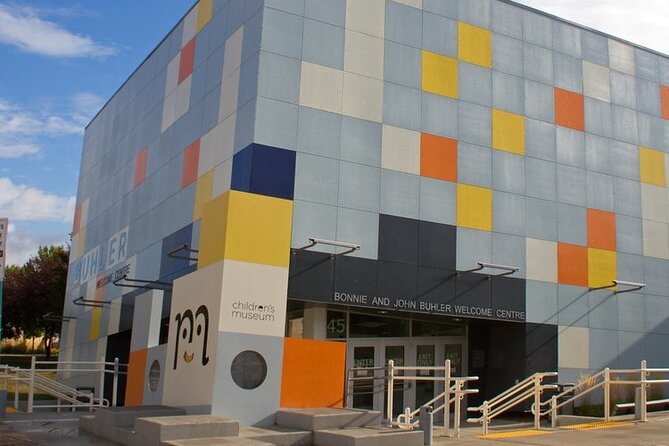
Stop 9: Manitoba Children’s Museum
This stop is a reminder that learning here is built for all ages. The tour pitches this location as fun learning, and the commentary sets you up to understand why it fits the broader family-friendly vibe of The Forks.
If you’re traveling with kids, this is one of the easiest “yes, let’s do this” stops on the route.
Stop 10: Oodena Celebration Circle
Oodena Celebration Circle is one of those places that makes sense as soon as you notice it. The audio calls attention to something different on your right and explains what this space is.
I like stops like this because it helps you connect public art and gathering spaces to the lived community, not just old dates.
Stop 11: Forks Historic Rail Bridge
This is a key history stop. The commentary explains the bridge’s origins going back to 1888, when it was built as a wooden train bridge to access the area.
This is where the tour’s “turning points” theme becomes obvious. You’re looking at the literal transport infrastructure that helped shape Winnipeg’s growth.
Stop 12: Niimaamaa
Niimaamaa is presented as a giant sculpture you can’t miss. The audio notes the name and explains what it means in the local language.
I’d treat this stop as a slow-look moment. A sculpture like this works best when you pause long enough to actually notice shape, scale, and placement.
Stop 13: Niizhoziibean
You enter the Niizhoziibean trail area, and the audio gives you the language meaning. It says Niizhoziibean means two rivers in Ojibwe, given to honor Winnipeg’s… (the audio continues with that context).
Even if you don’t catch every word, the name meaning alone helps you read the space. It turns the trail from “path” into “message.”
Stop 14: Forks Historic Port
The tour points you toward the Forks Historic Port. The audio explains its long use as a landing spot for arrivals by water, tying the port to Winnipeg’s transport story.
This is one of those stops that feels quietly powerful, because ports are where big changes start. You’re standing where people came and goods moved.
Stop 15: The Forks Market
The large building near you gets the spotlight at this stop. The commentary frames Forks Market as the place that sees the most visitors, and it explains how the market began.
This is a good place to either grab a snack or simply reset. Since the tour returns to The Forks Market as the meeting point, it’s a natural moment to decide whether you’re done or you want extra time at the end.
Stop 16: Manitoba Theatre for Young People (MTYP)
The tour brings you to the Manitoba Theatre for Young People, also known as MTYP. The audio explains the organization’s start, noting it was established in 1965 under an earlier name.
This stop is a clever way to show that Winnipeg’s community identity includes arts and youth education, not only museums and monuments.
Stop 17: Johnston Terminal
You’ll spot the beige brick Johnston Terminal with red-paned windows. The tour notes its long presence dating back to the early days of the area, and the audio explains its role.
This is a good “industrial to civic” bridge in your mind. Terminals and warehouses often become public landmarks later, and The Forks is one of those places.
Stop 18: Public Orchard & Urban Garden
This segment focuses on trees around you and explains that they’re a special bunch. The audio connects the orchard and garden to the idea of using space for living plants right in the heart of the city.
I like this stop because it breaks the pattern of history, then art, then history again. It grounds you in present-day use of the grounds.
Stop 19: Variety Heritage Adventure Park
Here the audio points out a colorful playground with interesting features. The commentary explains that the park was created as part of the area’s community offerings.
If you’re walking with kids or you just like playful architecture, this is where the route feels most relaxed.
Stop 20: Path of Time
The tour calls attention to a circular stone area that looks slightly enclosed. Inside, the audio points out what you’ll find, connected to how time and events are interpreted here.
Even without a museum ticket, the structure of the stop turns the ground itself into an exhibit.
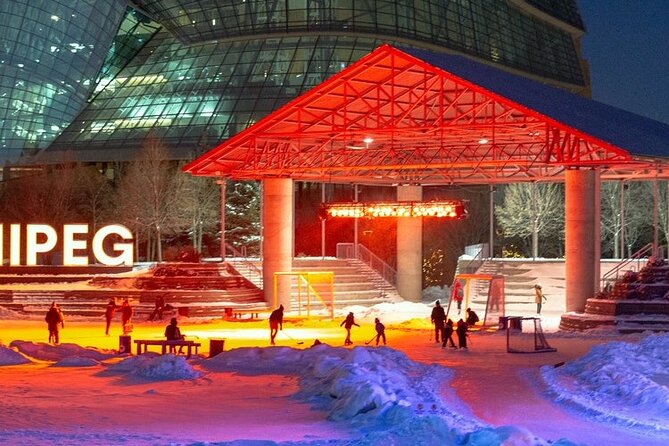
Stop 21: CN Stage and Field
You finish by spotting the stone stage with a red roof, the CN Stage and Field. The audio explains what the site has been the setting for, tying performances and public events back into The Forks identity.
This final stop helps you wrap the walk with the present. You’ve heard the past, seen the art and landscapes, and now you land on a place where people gather.
Where to linger after the tour finishes
The tour ends back at the meeting point at The Forks Market. Since the walk is self-guided and you’re not on a strict time slot, I recommend you plan a small buffer for lingering, browsing, or grabbing something to eat before you call it a day.
Also, if you notice nearby areas you want to explore more, the format gives you permission to slow down. This is one of those outings where spending an extra 20 minutes feels like part of the experience, not wasted time.
Who this tour is best for, and who should skip it
This smartphone audio tour is a great match for:
- first-timers to Winnipeg who want a structured intro to The Forks,
- history-curious walkers who like learning in short bursts,
- families who need a mix of museums, public spaces, and playful stops,
- anyone who doesn’t want to join a timed group schedule.
It may not be ideal if:
- you dislike using your phone for navigation,
- you need a human guide to answer questions on the spot,
- you plan to walk with very poor phone audio situations (for example, you don’t have headphones and it’s crowded).
Should you book The Forks Historic Site smartphone audio tour?
I’d book it if you want an easy, low-cost way to understand The Forks beyond postcard photos. The route gives you major landmarks, then connects them with a theme you can carry through the whole walk. The live GPS and auto-playing audio reduce friction, which matters when you’re walking and taking in street-level details.
Skip it only if you strongly prefer a live guided lecture, or if you know you’ll struggle with phone maps. For most people who like independent travel, this is a practical way to turn a pleasant stroll into a story you can actually remember.
FAQ
How long is the The Forks Historic Site smartphone audio tour?
The tour is listed as about 1 hour 30 minutes to 2 hours.
How much does it cost?
The price is $6.71 per person.
Do I need mobile data during the tour?
The tour instructions say you should download on Wi-Fi before. It also notes that no signal is required and no data is used during the tour.
Are attraction tickets included?
Attraction tickets are listed as not included. The tour also indicates each listed stop has admission ticket free notes, but tickets themselves are still marked as not included.
Do I need headphones?
Headphones are listed as not included, but audio will play from your device speaker too (so headphones are optional).
Can I get a refund if my plans change?
Yes. There is free cancellation. You must cancel at least 24 hours in advance for a full refund.
Recently listed around Winnipeg
- Private City Tour in Winnipeg★ 4.5 · 36 reviews
- Winnipeg: 2-Hour City Trolley Tour★ 4.8 · 169 reviews
- Classic Churchill Polar Bear Experience★ 5.0 · 59 reviews
Historical Tours, compared.




Evening Gourmet Tour 5 Course Dinner – History and Food in Old Quebec City
Read our review →


Browse the lists this tour appears in