
REVIEW · HISTORICAL TOURS
Sports, Street Skateboarding, Economics, History & Culture
Skateboarding, finance, and film, all in one walk. In about 90 minutes, I love how Duncan connects everyday downtown corners to bigger stories, from Nathan Phillips Square and the Toronto Sign area to the city’s modern street scene.
Two things I really like here are the mix of topics that rarely share a sidewalk, and the practical way the route helps you read Toronto as you go. You get the PATH system explained, plus the point of its wayfinding tech, so you spend less time guessing and more time noticing.
One consideration: this is a walking tour that depends on good weather, so if conditions are rough, you may have to switch dates (or get a refund if the tour is canceled).
In This Review
- Key highlights you will care about
- A Toronto walk that moves between sports, screens, and street life
- From Queen Street West to Nathan Phillips Square and the Toronto Sign
- Bay Street Corridor, Suits filming, and Meghan Markle’s press reality
- The PATH system: why it matters and how it changed after the pandemic
- Financial District economics: what keeps the city running
- Street skateboarding in downtown Toronto: from trick spots to today’s climate
- Brookfield Place: architecture, the NHL Situation Room, and sports business
- Legends Row outside Scotiabank Arena: Maple Leafs legacy and Raptors momentum
- Value and timing: why $11.22 for 90 minutes can be a smart buy
- What’s included, and what you should do after the tour
- Pacing, comfort, and who this tour suits best
- Should you book this Toronto walk?
- FAQ
- How long is the tour, and what is the price?
- Where does the tour start and end?
- What sights and themes does the tour cover?
- What is included, and is gratuity included?
- Is the tour offered in English, and is it a mobile ticket?
- What happens if the weather is poor?
Key highlights you will care about
- A 90 minute downtown loop that hits major landmarks plus off-to-the-side stories without feeling rushed
- Bay Street pop culture with the Suits lobby filming location and the Meghan Markle press and safety angle
- The PATH explained including how closure during the pandemic changed business and how wayfinding helps now
- Street skateboarding in downtown Toronto from early trick filming on urban architecture to the current climate
- Brookfield Place sports infrastructure including the NHL Situation Room in the southwest tower
- Legends Row and Raptors Way with hockey history outside Scotiabank Arena and the Kawhi Leonard era turning points
A Toronto walk that moves between sports, screens, and street life
Downtown Toronto can feel like a pile of landmarks you either race through or ignore. This tour slows that down and gives you a way to connect dots, sports to economics, pop culture to urban design. You’ll cover a lot of ground on foot, but the stories keep you oriented, so it doesn’t turn into random sightseeing.
The biggest value is that the themes actually overlap. You’re not just hearing dates and names. You’re learning how the city functions, how people use it, and why Toronto keeps reinventing itself, whether that’s attracting media productions, supporting skateboarders, or building sports business around game day.
You also get a local guide who makes the route feel personal. Duncan is the kind of person who answers questions, adapts when you’re curious, and sprinkles in small details that make the stops click faster.
More History Tours in Toronto
- Toronto: Dark History Nighttime Walking Tour
★ 4.7 · 273 reviews - Toronto: Distillery District Historic Walking Tour
★ 4.8 · 267 reviews - Toronto Local Beer Tour: 2 Beers at 2 Unique & Historical Pubs
★ 5.0 · 154 reviews
From Queen Street West to Nathan Phillips Square and the Toronto Sign
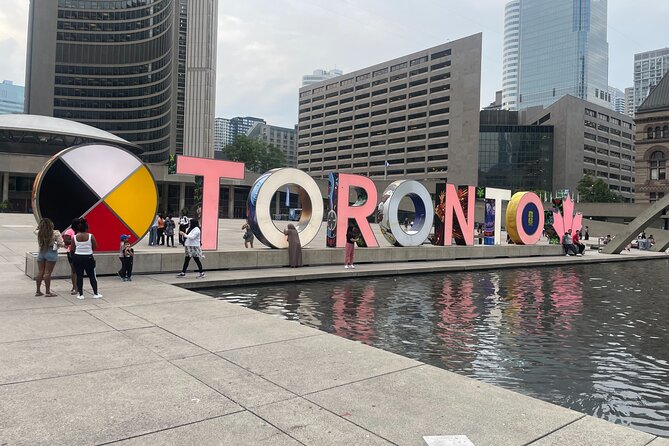
You meet at 100 Queen St W, right where downtown’s grid starts to feel real. From there, the tour builds momentum toward Nathan Phillips Square, one of those places you hear about before you ever visit.
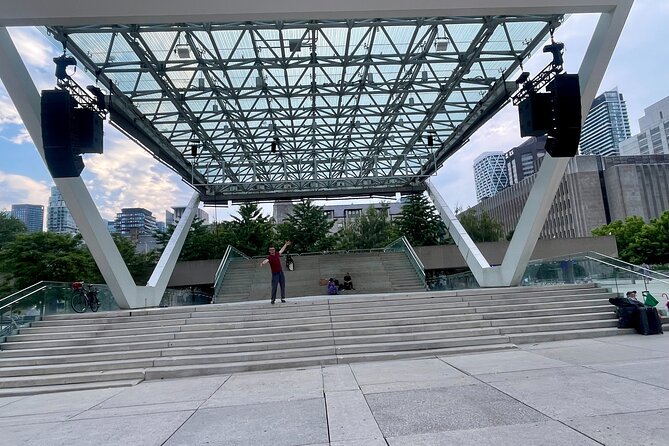
At Nathan Phillips Square, you’ll learn how it represents the city in two ways at once: history and everyday public space. The square is also tied to major Canadian event culture, and you’ll hear how it hosted the largest event in Canadian history. That’s the big headline story, but what makes it practical is how it helps you understand why people gather here year after year.
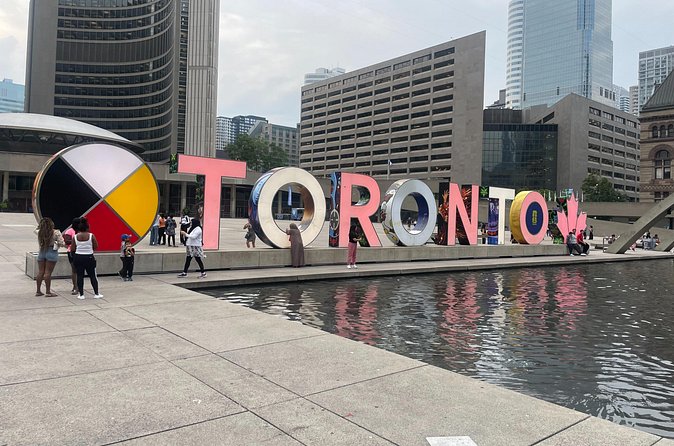
You’ll also focus on the Toronto Sign by the ice rink area. It’s one of those visuals that people photograph without thinking about its role, so getting the context helps. One extra cultural stop you may notice nearby is the Reconciliation Garden next to Nathan Phillips Square, which adds a modern layer to the area’s meaning.
Practical note: this section sets the tone early, so dress for walking and bring a layer. You’ll likely do more time outside than you expect, even with later indoor-friendly parts.
Bay Street Corridor, Suits filming, and Meghan Markle’s press reality
One of the most fun parts of the route is the Bay Street Corridor section, where the tour turns pop culture into a real place you can stand on. You spend about 10 minutes here, and the learning style is simple: you walk to a recognizable location, then you get the behind-the-scenes story.
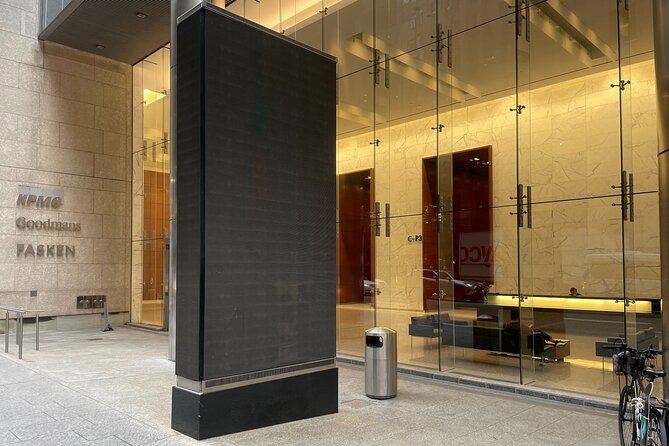
You’ll learn about the Suits lobby location and how it became part of the show’s public identity. The tour also connects that location to Meghan Markle, who starred as a paralegal. The details matter because they’re not just trivia, they’re about filming logistics and the relationship between production and the public.
This stop covers her encounters with press, fans, and safety while filming at the location. That’s a useful angle, because it shows how Toronto becomes a set, and what it costs in terms of coordination and disruption. You’ll also hear about other film productions filmed at the location, and the challenges Toronto’s film industry faces right now, which makes the glamour feel grounded.
If you like cities that show how entertainment is made, this is the payoff stop. It’s short, but it gives you a strong “I can’t believe I never noticed that” feeling.
The PATH system: why it matters and how it changed after the pandemic
Toronto’s downtown foot traffic has a secret weapon: the PATH. Part of this tour walks through it, and you’ll learn why it grew, what it does for people day to day, and what changed when the pandemic hit.
You’ll get the history of the PATH and how its closure affected businesses. Then the tour brings you into the post-pandemic hybrid world, where fewer people are commuting in the same way, and storefront traffic doesn’t return to old patterns automatically. That’s not just interesting. It changes the economic reality of the area you’re walking through.
You’ll also see how the PATH uses wayfinding technology to help people navigate. This matters for you even if you’re not lost. Wayfinding is part of why a city like Toronto stays usable in winter and during busy weeks, and understanding it makes your own self-guided walking easier later.
This is also a relief stop if the weather is cold. Even when you’re still outside, the tour’s mix of streets and covered sections helps you pace without constantly checking the forecast.
A few more Toronto days to compare
- Old Town Toronto History Walking Tour
★ 4.5 · 122 reviews - Toronto Old Town Food & History Walking Tour
★ 4.6 · 94 reviews - Toronto: Niagara Falls & NOTL Heritage Town Guided Day Tour
★ 4.8 · 28 reviews - Historic Brothels of Old Toronto Walking Tour
★ 5.0 · 23 reviews
Financial District economics: what keeps the city running
After film and navigation, the tour shifts into economics. You learn about the history and evolution of Canada’s Financial District and why it’s so important to the Canadian economy.
You also hear about how many people are employed in the District, which is the kind of detail that makes the area feel less abstract. It’s easy to think of downtown finance as offices and banks. This tour frames it as a large employment engine, with ripple effects that touch retail, transit, and services.
A bonus from the route style is that you’re not only getting straight economics. You might also pick up stories tied to distinctive downtown landmarks, like the Law Society building and its fence. That kind of detail can feel small, but it’s often what helps you remember what you saw.
If you’re into culture and city structure, this portion turns “business district” into “human scale business district,” where you understand what drives activity and why that activity shapes the look and pace of the streets.
Street skateboarding in downtown Toronto: from trick spots to today’s climate
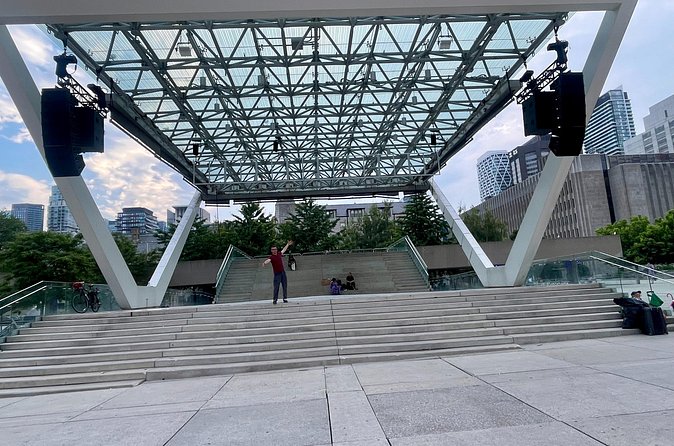
This is the section that makes the tour feel like it’s truly about street culture, not just famous buildings. You’ll learn the history and evolution of street skateboarding in downtown Toronto.
The focus is on how professional skateboarders got their careers started by filming skateboard tricks on urban architecture. That’s the core idea: Toronto’s downtown spaces are part of skateboarding history because the city provides the shapes skateboarders need, ledges, rails, stairways, and the kind of textures you can train on.
Then the tour brings you to the present climate for street skateboarding in downtown Toronto. The tone here helps you connect the past to the current reality, like how public space rules and crowd patterns influence what’s possible.
One of the smartest parts of this section is that it isn’t treated as a separate world. It’s shown as part of downtown culture, tied to urban design and to how people use the city beyond office hours. Even if you don’t skateboard, you’ll walk away understanding why skateboarders care about specific spots and how cities respond over time.
Brookfield Place: architecture, the NHL Situation Room, and sports business
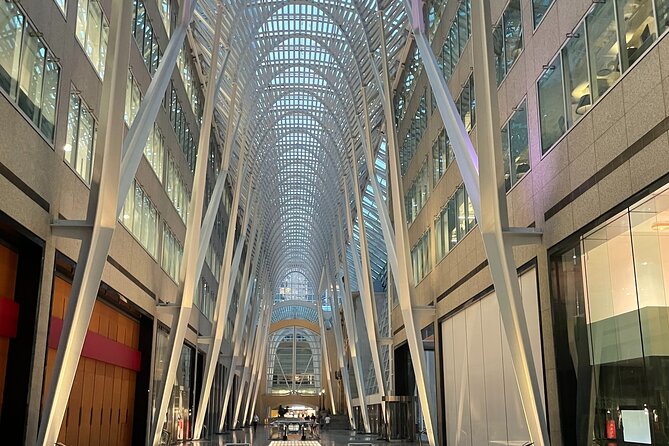
The tour next moves to Brookfield Place, and you spend about 20 minutes here. This stop is architecture plus sports operations, and it works because the guide links building design to real use.
You’ll learn the history of Brookfield Place and what makes its architecture distinctive. Then you get the sports business angle through the NHL Situation Room, which is located in the southwest tower.
This detail changes your perspective. Instead of thinking of the NHL as just games and highlight reels, you’re reminded of the infrastructure behind the scenes. Situation Rooms are about coordination and information flow, and learning that this is based in Brookfield Place gives you a new mental map of downtown sports power.
If you’re a hockey fan, this is a strong stop. If you are not, it still works, because it’s a story about how major sports organizations need physical spaces and communications support to operate at scale.
Legends Row outside Scotiabank Arena: Maple Leafs legacy and Raptors momentum
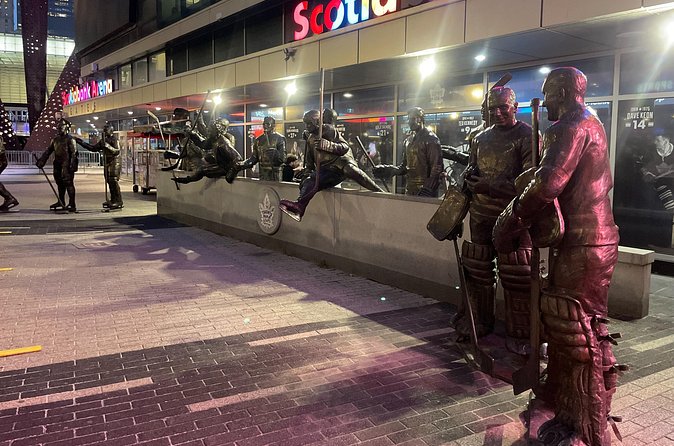
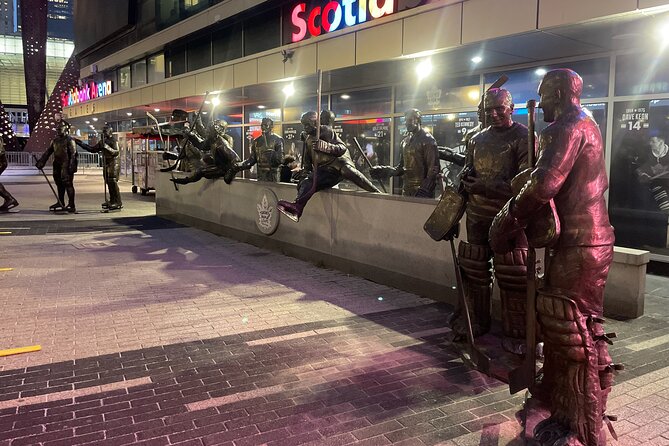
The tour ends at Legends Row on Raptors Way outside Scotiabank Arena. This is a great ending point because it’s instantly recognizable, and it ties both hockey and basketball into one sports landscape.
You’ll learn about the history of Legends Row and the artist who created the sculpture. The theme centers on former National Hockey League Toronto Maple Leafs players. Seeing those names in a public space outside the arena is a reminder that sports identity is built in layers, not just on ice.
Then the tour shifts to Toronto Raptors history, including the team’s acquisition of NBA superstar Kawhi Leonard and the run to win the 2019 NBA Finals. You’ll also hear about renaming Bremner Street to Raptors Way, which is a simple fact that explains how cities use naming to lock in identity.
Finally, the tour tackles a real challenge: how an only-Canadian NBA team works to attract and sign top NBA talent. That part is worth paying attention to because it frames Toronto sports as both international and local at the same time.
You finish the walk with more than photos. You finish with a sense of how Toronto sells itself as a sports city, and how that story gets built into streets, public art, and corporate spaces.
Value and timing: why $11.22 for 90 minutes can be a smart buy
At $11.22 per person for about 1 hour 30 minutes, this tour is priced like a bargain compared with the amount of ground and story time you’re getting. The math is simple: you’re paying for a guided route that combines several downtown “systems,” streets, PATH, sports venues, and film locations.
Also, the tour’s style is high impact for the price. It includes free-admission segments at key stops like Bay Street Corridor and Brookfield Place, so you’re not paying extra just to reach the good parts.
Another value signal is how often people book it ahead. It’s commonly booked about 13 days in advance, so if you’re traveling during peak weeks, you’ll want to lock in sooner rather than later.
One important detail: gratuity or tip is not included. If you think Duncan’s stories landed, plan to tip as you would for any guided walking experience.
What’s included, and what you should do after the tour
The tour includes two practical extras that make it easier to keep enjoying the city after you’re done walking.
First, you get a Google Map of Duncan’s Toronto Recommendations for food, drink, and dessert. That’s the kind of tool that saves you from wandering hungry after a tour ends, especially in a downtown area where options are everywhere and good picks are hard to filter.
Second, you get travel advising in Toronto at the end, where Duncan helps you plan and gives recommendations. That’s useful because Toronto planning is rarely one question, it’s a chain of decisions, where to eat, how to get around, and what to prioritize based on your own interests.
If you want the best day after this tour, I’d do this in your first or second day in the city. You’ll start to recognize landmarks, paths, and sports venues, and then your self-guided wandering gets easier fast.
Pacing, comfort, and who this tour suits best
This is a walking tour with about 1 hour 30 minutes on the move. It’s not listed as extreme, but downtown streets add up. Wear comfortable shoes with decent grip, and bring a light layer even if it looks sunny, because winter mornings and lake-effect weather can shift quickly.
Group size is capped at 25 travelers. That usually means you’re not stuck listening to a guide over a wall of chatter, and you can ask questions without feeling like you’re shouting into the void.
Because the tour covers sports, street skateboarding, economics, and film location culture, it’s a good match if you like Toronto as a living city. You don’t need to be a hardcore hockey fan, either. The sports content is paired with city context, like why certain buildings matter and how public space reflects identity.
Service animals are allowed, and the tour is offered in English. It’s also near public transportation, which helps if you’re planning a tight itinerary.
Should you book this Toronto walk?
Book it if you want a downtown Toronto tour that feels like street culture plus city systems, not just big-name monuments. The best reason to go is how the guide ties together unexpected themes, Suits filming stories, PATH navigation and pandemic change, street skateboarding history, and sports infrastructure from Brookfield Place to Scotiabank Arena.
Skip it if your idea of a tour is mostly museum-style indoor stops, or if you prefer a quiet, purely scenic walk with minimal topic swapping. This one is story-led, and the topics move quickly on purpose.
If you’re planning ahead, book early since it’s commonly scheduled about two weeks out. And on the day, keep your schedule flexible enough for the good-weather walking style. When it runs, it’s a smart way to learn Toronto’s pulse in about 90 minutes.
FAQ
How long is the tour, and what is the price?
The tour lasts about 1 hour 30 minutes and costs $11.22 per person.
Where does the tour start and end?
You start at 100 Queen St W, Toronto, ON M5H 2N2, Canada. You end at 19 The PATH – Maple Leaf Square, Toronto, ON M5J 2J8, Canada, at Legends Row on Raptors Way outside Scotiabank Arena.
What sights and themes does the tour cover?
The tour focuses on downtown Toronto history and culture, including Nathan Phillips Square and the Toronto Sign, the Bay Street Corridor with the Suits lobby and film production stories, a portion of the PATH (including how it changed during the pandemic), the Financial District, street skateboarding history and today’s climate, Brookfield Place and the NHL Situation Room, and Legends Row plus Raptors history.
What is included, and is gratuity included?
The tour includes a Google Map of Duncan’s Toronto Recommendations for food, drink, and dessert, plus travel advising in Toronto at the end. Gratuity or tip is not included.
Is the tour offered in English, and is it a mobile ticket?
Yes, the tour is offered in English, and it uses a mobile ticket.
What happens if the weather is poor?
This experience requires good weather. If it is canceled due to poor weather, you will be offered a different date or a full refund.
Recently listed around Toronto
- All-Inclusive Camp & Tube At Elora Gorge (2 Day)★ 5.0 · 4 reviews
- Canada eSIM | 3-30 days | Daily data | QR code★ 4.0 · 12 reviews
- Toronto Craft Brewery Tour★ 5.0 · 97 reviews
- Handcrafted Donuts of Toronto: A Sweet City Walking Tour★ 5.0 · 141 reviews
- Underground Toronto PATH Tour★ 4.5 · 6 reviews
- Pottery wheel class in Toronto Bay&Dundas★ 4.5 · 5 reviews
- Tour to Niagara Falls from Toronto★ 4.0 · 19 reviews
- Roundtrip Private Transfer from Toronto Airport (YYZ)★ 5.0 · 3 reviews
Historical Tours, compared.


Evening Gourmet Tour 5 Course Dinner – History and Food in Old Quebec City
Read our review →

Browse the lists this tour appears in