
REVIEW · SEA-TO-SKY & SQUAMISH TOURS
Sea to Sky Highway Self-Guided Driving Audio Tour
Cars move, stories follow. This self-guided Sea to Sky Highway driving audio tour is interesting because you get location-triggered narration for a scenic corridor packed with Indigenous history, waterfalls, and mountain viewpoints, all without waiting for a group. I also like that it works with offline maps, so you are not stuck hoping for cell service.
Two more things I really like: it is easy to pair with your car audio (Bluetooth, USB, or AUX) so you can listen hands-free through the speakers, and you can go at your own pace, starting and pausing whenever you want. One possible drawback is that if you want a tour that forces frequent stops and long explanations at each one, this is more of a drive-and-listen plan, with optional hikes you decide on along the way.
In This Review
- Key highlights you’ll care about
- Sea to Sky from the driver’s seat, not a bus
- Price and value: $16.99 per group for lifetime access
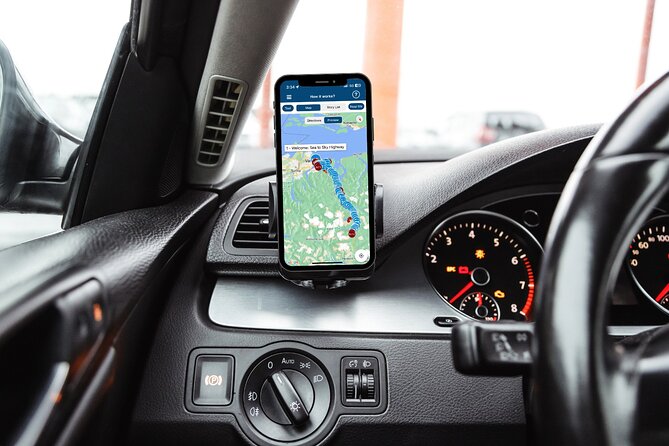
- How it actually works: offline download, app password, hands-free audio
- Lost Lagoon and the Lions Gate Bridge: Vancouver myths plus real naming history
- Cypress Provincial Park and St. Mark’s Summit: choose your hike level
- Sea to Sky Highway itself: the ancient footpath story you’ll remember
- Crystal Falls Road, Anvil Island, and Watts Point: the stops people skip
- Murrin Provincial Park plus Shannon Falls: easy walks, big payoff
- Stawamus Chief Trail and the Chief itself: choose expert legs or drive-by views
- Eagle Run Vista Point, Edith Lake, and Alice Lake: lakeside calm with stories attached
- Tantalus lookout and Cheakamus River: mythology and modern controversy
- Rubble Creek Trail option, Daisy Lake naming, and finishing at Whistler Creek
- Who should book this Sea to Sky audio drive
- Should you book this audio tour?
- FAQ
- How long does the Sea to Sky Highway self-guided driving audio tour take?
- How much does the tour cost and is it per person?
- Do I need a cellular signal to use the audio?
- Are entry tickets or attraction passes included?
- Where does the tour start and end?
- Can I cancel and get a full refund?
Key highlights you’ll care about
- Offline-ready audio with location-triggered playback, no signal needed after download
- Good value per car, not per person, with lifetime access and no expiry date
- A real route plan over 75 miles with 90+ audio stories to cover
- Iconic stops like Shannon Falls and Stawamus Chief plus lesser-known roadside moments
- Flexible walking options, from quick boardwalks to demanding summit hikes
Sea to Sky from the driver’s seat, not a bus
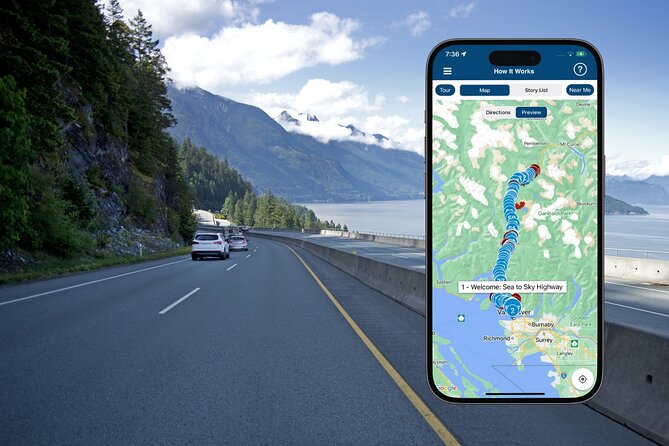
This tour is built for one simple goal: make the Sea to Sky Highway drive feel like you have a guide in the passenger seat. You are covering a long stretch, about 75 miles, and the audio stories are designed to trigger as you move through the route. The whole thing usually takes about 2 to 3 hours, but that timing is very flexible because you choose how many stops and walks you do.
The approach feels practical. Instead of a rigid schedule, you get short chapters tied to the road and then you decide if you want to step out for a look, take a short walk, or keep rolling. That matters on this corridor because the views pull you in different directions, and the best moment is often the one that happens when you actually slow down.
Compare these Sea-to-Sky and Squamish tours in Vancouver:
- From Vancouver: Whistler & Sea to Sky Gondola with Shannon Falls
★ 5.0 · 1,640 reviews - Whistler and Sea to Sky Gondola Tour + Shannon Falls
★ 5.0 · 882 reviews - Whistler & Sea to Sky Gondola Day Trip from Vancouver
★ 4.5 · 725 reviews
Price and value: $16.99 per group for lifetime access
At $16.99 per group (up to 4), this is priced like a “one purchase, one car” add-on rather than a per-person admission. If you are traveling as a couple, a family, or a small friend group, that is where the value starts to make sense fast.
Also, you get new lifetime access, no expiry. That is not a small detail. It means you are not just buying a single afternoon. If you come back to Vancouver or Whistler later, you can reuse the same audio tour on another trip, or replay parts you liked.
The only cost to think about is time and what you choose to do at stops. The audio itself is included, but attraction tickets and entry passes are not included, so things like paid attractions would be on you if you decide to go.
How it actually works: offline download, app password, hands-free audio

This is a self-guided experience, so the setup step is the difference between smooth listening and fiddly frustration.
After booking, you get an email and text with setup instructions and a password. You then download the audio tour using Action’s Tour Guide App while you are in strong Wi‑Fi or cellular. After that, it is supposed to work offline. Once you are on site, you open the app, enter the password, and launch the tour version that matches your planned starting point and direction.
For audio quality, you have a simple win: use Bluetooth, USB, or AUX to connect your phone to the car stereo. If you are using Apple CarPlay, audio playback is compatible, and the tour is designed to play automatically as you reach each audio point. In plain terms, it is set up so you can keep driving, look out the window, and still get the story.
Practical tip: if you are planning to walk at a stop, consider switching to headphones so you can keep listening without turning your car on and off.
Lost Lagoon and the Lions Gate Bridge: Vancouver myths plus real naming history
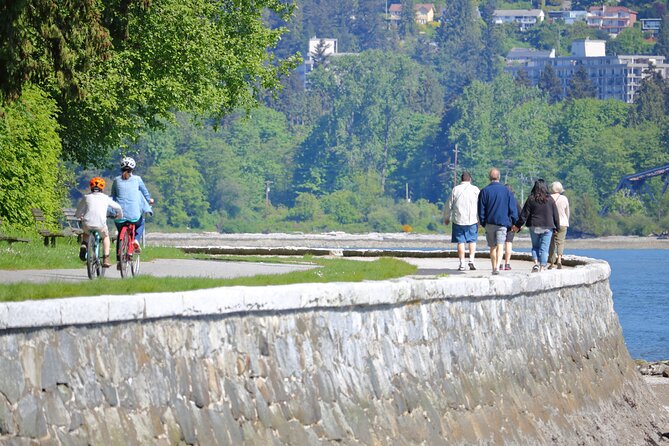
One of the best things about this tour is how it mixes “big skyline” sights with story-level details. You start with Lost Lagoon in Stanley Park, and you do not just get a generic description. You learn that the place name connects to Indigenous Canadian poet Emily Pauline Johnson and her poem of the same title. Even if you only get a quick look, naming history changes how you see a spot.
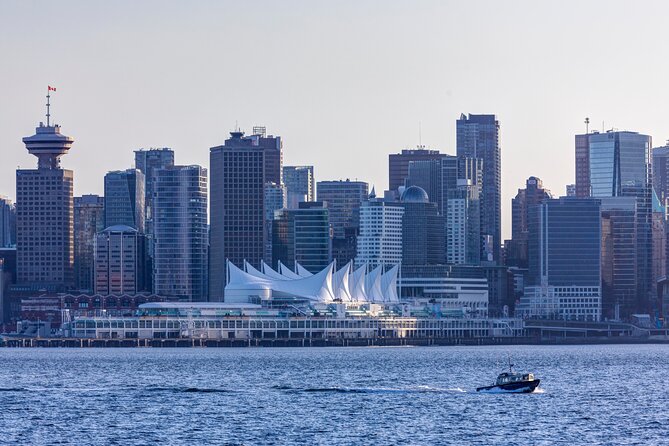
Then the tour guides you toward crossing Burrard Inlet on the Lions Gate Bridge and tells you where the name comes from. The two leftmost peaks ahead are the reference point, and the description even includes the playful comparison to twin lions from Trafalgar Square. That kind of mental hook is useful. It helps you actually recognize what the narration is pointing out.
If you are the type who likes to take a moment for photos, these early road-and-water moments are good for that. They also work well if you have limited time, because the audio gives you context without requiring a long stop.
A few more Vancouver days to compare
- Vancouver Half-Day Whale Watching Adventure with Free Photos
★ 5.0 · 5,000 reviews - Big Bus Vancouver Hop-On Hop-Off Sightseeing Tour
★ 3.5 · 3,028 reviews - Victoria & Butchart Gardens Tour with Ferry from Vancouver
★ 4.5 · 2,703 reviews - Vancouver: Covered Whale Watching Adventure with Free Photos
★ 4.8 · 2,260 reviews
Cypress Provincial Park and St. Mark’s Summit: choose your hike level
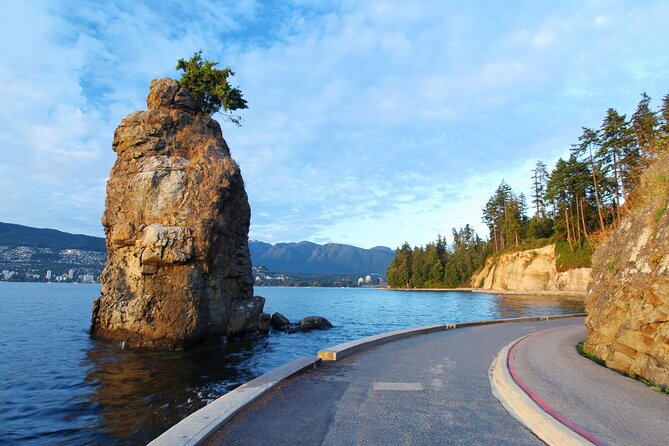
Soon you hit the Cypress Provincial Park area, where you get a fork in the road. You can take a detour if you want more scenery, or you can choose an actual hike: St. Mark’s Summit.
The important thing here is the scale. The detour is described as about ten miles one way, and St. Mark’s Summit is a seven-mile round trip hike, rated intermediate, with most people taking four to five hours. That is not a “quick legs stretch” walk. If your goal is a 2 to 3 hour tour, this is the kind of choice that can turn it into a half day or more.
So here is how I would think about it. If you want mountain payoff and you are comfortable with an uphill hike, St. Mark’s Summit can be a highlight. If you are not, keep it simple, enjoy the views you can reach from the road, and stay on schedule for the rest of the corridor.
Sea to Sky Highway itself: the ancient footpath story you’ll remember
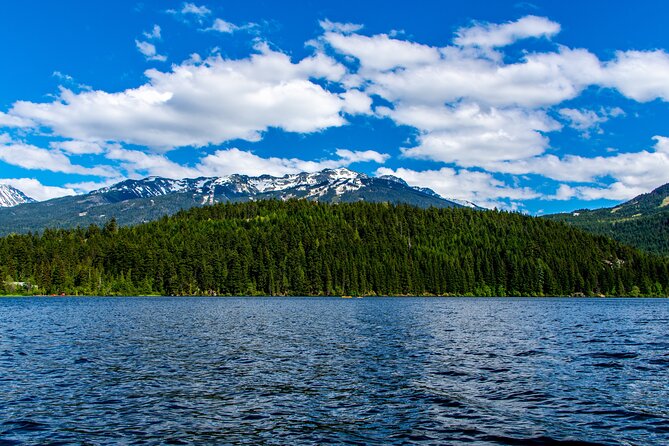
When you reach the heart of the drive, the audio shifts from landmarks to deeper context. You are on the famous Sea to Sky Highway, and the narration adds a detail most people miss: beneath today’s route was an ancient footpath used by the Squamish and Stó:lō Nations, connecting communities and supporting trading.
That single story changes the tone of the whole day. Instead of thinking of the road as just a scenic drive, you start to see it as part of an older travel corridor. It also makes the roadside views feel more meaningful, because you know people moved through this region long before the current highway existed.
A good way to use this part of the tour is to slow down slightly when you reach overlooks or viewpoints. The audio wants you to be present, not just pass by.
Crystal Falls Road, Anvil Island, and Watts Point: the stops people skip
This tour includes a couple of roadside moments that many people might drive past without noticing.
First up is Crystal Falls, described as a lovely waterfall many visitors miss. The narration suggests taking the next exit if you want to see it, or continuing straight if you are focused on time. Either way, having it on your route means you are not stuck with only the biggest, most famous waterfalls.
Next, you get Anvil Island, with a story tied to the Squamish view of the island and the serpent Sínulhkay̓, said to live on the highest peak and threaten people below. Stories like this can feel dramatic, but the value is that they place the island in a cultural landscape, not just on a map.
Then there is Watts Point Volcanic Centre, which reframes the mountains around you. The narration points out that the area is made largely of volcanic rock and explains that Watts Point marks where volcanic material erupted from. It also gives a clear reassurance: it has not erupted in about 90,000 years, and it is not expected to erupt again soon. That kind of science story is perfect on a drive, because it connects what you see with why it looks the way it does.
Murrin Provincial Park plus Shannon Falls: easy walks, big payoff
Not every stop requires effort. Murrin Provincial Park is a good example. You are given the choice of a short loop around the lake, about 1.5 miles, or a more challenging option: Jurassic Ridge Trail, a 2-mile loop climbing nearly 700 feet for panoramic views. Even if you do not pick the harder trail, the lake loop is enough to break up a long drive.
Then the tour guides you to Shannon Falls Provincial Park, with an attention-grabbing fact: the waterfall is about 1,000 feet tall and is described as the third tallest in British Columbia. There is also a practical detail that helps you plan: a boardwalk runs around the base, and it takes about 20 minutes to hike to the falls.
This is one of those stops where it helps to keep expectations realistic. You are getting a dramatic waterfall, but the walking is still manageable for most people. If you are traveling with mixed hiking ability, this is a strong choice because you can do the boardwalk and still be back in the car quickly.
Stawamus Chief Trail and the Chief itself: choose expert legs or drive-by views
When the narration mentions Stawamus Chief, it gives you the “serious hike” option and also a simpler alternative.
For expert hikers, you can access Stawamus Chief Trail, which climbs about 2,300 feet to the top of The Chief. That is a long, steep goal. If you are not prepared for that, you can continue driving straight and still get a strong view of the mountain as you pass.
The audio adds a specific piece of climbing history too: the first person to summit is named Ed Cooper, and the story says it took him four weeks. That detail makes the mountain feel like a place with human effort behind it, not just a photo background.
If you are planning your time, decide early which version you want:
- If hiking is your focus, plan for the time needed for a climb like that.
- If you want a scenic drive with a few short walks, keep it at the viewpoints and enjoy the mountain scale from the road.
Eagle Run Vista Point, Edith Lake, and Alice Lake: lakeside calm with stories attached
As you continue, the tour keeps mixing viewpoints with gentle nature breaks.
You come to Eagle Run Vista Point, and the narration suggests slowing down. You get panoramic views, and there is a chance to spot an eagle. The key detail is practical: getting there may require a 5 to 10 minute detour, so it is easy to add without wrecking your schedule.
Then the route shifts to Edith Lake, where the park is described as dominated by four lakes: Alice, Edith, Fawn, and Stump. The audio notes that many of the naming origins are lost, but gives extra attention to Edith Lake’s story as an exception. Even when you do not know the names, those stories make the water feel connected to people, not just scenery.
Next is Alice Lake Provincial Park, which is designed for leg-stretching. The standout walk here is the Four Lake Trail, described as an easy 4-mile loop that passes the four lakes, typically doable in under three hours. If you have already done Shannon Falls and a viewpoint, this is a great “next step” hike because it is long enough to feel like a hike, but still positioned as manageable.
Tantalus lookout and Cheakamus River: mythology and modern controversy
This stretch of the audio leans into two different ways of understanding a place, myth and current events.
At Tantalus lookout, you get the big visual: Mount Tantalus, listed at 2,608 meters from base to summit. Then the name gets linked to Greek mythology, describing Tantalus as a son of Zeus, with a mortal mother. The point is not that mythology helps you measure altitude, it helps you remember the name and the vibe of the peak.
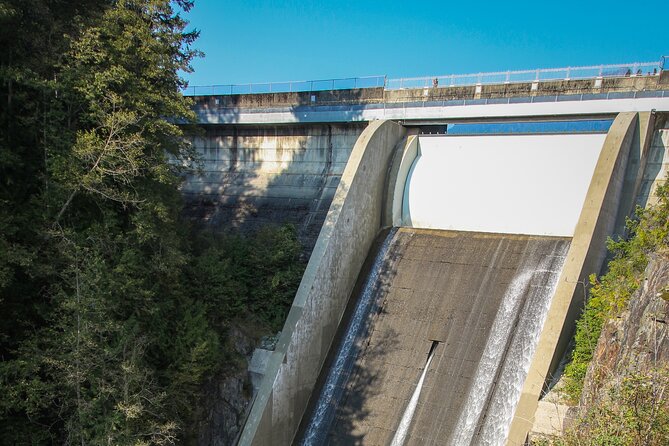
Then you drive alongside Cheakamus River and you get a heads-up about the Cheakamus Hydroelectric Dam. The narration says it has been around since 1957 and notes it has recently been the source of controversy. That is one of the more honest touches in the tour, because it does not present every local feature as purely scenic and problem-free.
If you like your road trips with a little “why do people argue about this” context, this is where the tour becomes more than just scenery.
Rubble Creek Trail option, Daisy Lake naming, and finishing at Whistler Creek
The audio tour also includes optional detours for people who are ready to go further than the main stops.
One example is Rubble Creek Trailhead, where the narration warns it is brutally challenging, about a 15-mile trail to Black Tusk Mountain, and described as an all-day commitment. The advice to not do it on a whim is straightforward, and it is exactly what you should listen for in any self-guided route where you might be tempted by a bold detour.
Then you reach Cheakamus Hydroelectric Dam as a place you can turn right to visit, or keep going if you are sticking to the core route.
Later, the tour points out Daisy Lake, named by Joseph William Mckay, described as being of Metis descent. The audio also gives a careful note that Metis can refer to historic Metis communities in Manitoba or more broadly to mixed European and Indigenous heritage. Again, this is useful because it is the kind of cultural detail that makes place names feel less random.
Finally, you end the story arc near Whistler Creek, described as the original base for Whistler Mountain skiing, with only a single six-person gondola at the start. The contrast is dramatic: the audio notes that today Whistler has 79 lifts. That gives you a clean “from then to now” finish before you return to the Whistler Visitor Centre, where the tour ends.
Who should book this Sea to Sky audio drive
I think this works best if you want:
- A self-paced drive where you can stop only when you care
- A mix of iconic highlights (waterfalls, viewpoints, major mountains) plus smaller moments like Crystal Falls
- Clear, short narration that helps you understand what you are seeing without needing a full guidebook
- An audio setup that plugs into your car easily
If you are someone who wants a guide to manage the details for you, schedule you tightly, and lead you through multiple long stops, this may feel lighter than you want. But if you like the flexibility of driving, and you enjoy learning as you go, this tour is a strong fit.
Should you book this audio tour?
Yes, if you are doing the Sea to Sky Highway corridor anyway, this is one of the best ways to get more meaning out of the same drive. The reasons are simple: it is good value per car, the audio is designed to be hands-free and offline-ready, and the stories add texture to both big sights and easy stops like boardwalk waterfalls.
I would skip it only if you know you do not enjoy listening to narration while driving, or if your day is packed with so many other plans that you would not have time for the 2 to 3 hour flow. Otherwise, it is an easy add-on that makes the views stick.
FAQ
How long does the Sea to Sky Highway self-guided driving audio tour take?
It typically takes about 2 to 3 hours to complete.
How much does the tour cost and is it per person?
It costs $16.99 per group, up to 4 people.
Do I need a cellular signal to use the audio?
No. You download the tour while you have strong Wi‑Fi or cellular, and it works offline afterward.
Are entry tickets or attraction passes included?
No. Attraction passes, entry tickets, or reservations are not included.
Where does the tour start and end?
It starts at the Whistler Visitor Centre and ends at the same location: 4230 Gateway Drive, Whistler, BC.
Can I cancel and get a full refund?
You can cancel up to 24 hours in advance for a full refund. If you cancel less than 24 hours before the start time, it is not refunded.
Recently listed around Vancouver
- Vancouver Top Attraction Highlights Tour Private With Capilano★ 4.5 · 3 reviews
- Private Transfer From Vancouver Airport to Vancouver Downtown★ 5.0 · 7 reviews
- Vancouver to Whistler – Private Transfer – One Way★ 5.0 · 4 reviews
- Whistler Sea 2 Sky Gondola, Shannon Falls Small Group Max 12 Tour★ 5.0 · 6 reviews
- YVR Layover – Vancouver City Sightseeing Private Tour★ 5.0 · 7 reviews
- Wild Whale Watching Experience – Open Air Vessel★ 5.0 · 158 reviews
- Whistler: Sea to Sky Gondola Shannon and Brandywine Falls Tour★ 5.0 · 16 reviews
- Whistler 1-Day Tour from Vancouver (Chn&Eng)★ 4.0 · 6 reviews
Sea-to-Sky & Squamish Tours, compared.
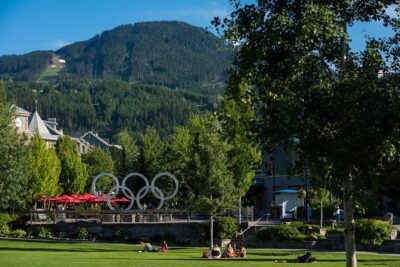
Whistler & Sea to Sky Gondola with Shannon Falls
Read our review →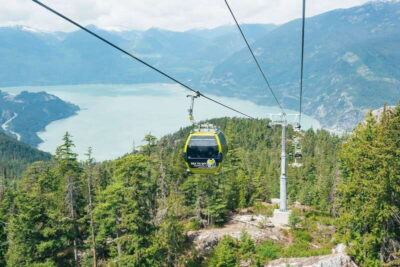
Whistler, Sea to Sky Gondola, and Shannon Falls Day Trip
Read our review →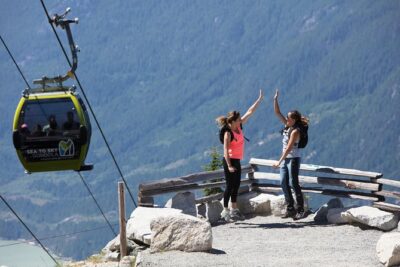
Whistler and Sea to Sky Gondola Tour + Shannon Falls
Read our review →
Whistler & Sea to Sky Gondola Day Trip from Vancouver
Read our review →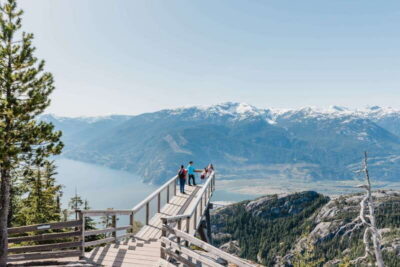

Vancouver City Centre to-or-from Whistler or Squamish (One-way)
Read our review →Browse the lists this tour appears in