
REVIEW · WALKING TOURS
Private 2-Hour Walking Crime Tour in Toronto
Crime has a street-level map here. This private walking tour uses stories from Toronto’s past, told by former detective-guides, to turn familiar landmarks into clues about rebellion, cruelty, and shocking cases. You get a darkly fun way to see the city, while also learning how law and society changed over time, from the early days to today.
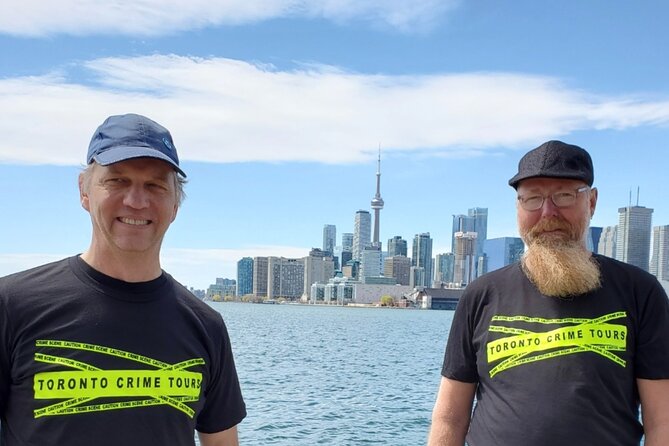
Two things I really like are the real-police perspective and the way the tour is built to be customized to your group. Guides such as Phil and Bob (plus Dave, in some cases) bring firsthand experience from Toronto Police Services, so the talk feels grounded in procedure, not just gossip. Also, the pace is brisk but doable, with at least one group clocking about 6,500 steps without trouble.
One consideration: this is a macabre tour, and some topics are intense, so it is not for everyone who wants only light sightseeing. You also need to be comfortable walking for about two hours, and Toronto weather can matter.
In This Review
- Key points to know before you go
- Entering Toronto’s crime timeline, one landmark at a time
- Logistics that actually matter: meeting point, timing, and walking pace
- What to bring
- Stop-by-stop: murders, riots, courts, and street-level justice
- CF Toronto Eaton Centre: a 1977 murder that triggered a downtown cleanup
- Yonge Street: the Year Of The Gun, and violence that hits bystanders
- Yonge Street again: riots from 1837 to the G20 era
- The Path: how mental illness shaped the criminal justice system
- Downtown: the disappearance of Ambrose Small in 1919
- Courthouse Square in Old Toronto: last public gallows in Canada
- Old Toronto: Bert Massey and the murder trial called the trial of the century
- Old Toronto: the Boyd Gang, bank heists, and escapes from Don Jail
- St. Lawrence Market: the Jarvis Duel in 1817
- Dundas and Jarvis area: a gangland slaying and the reality called The Corner
- Old Toronto: a clown-versus-fire company riot that changed policing
- The Village: serial targeting, denial of links, and the hard discovery of victims
- Old Toronto park: topless sunbathing, legality, and morality
- Distillery Historic District: Gooderham and Worts, whiskey, and the idea of a ghost
- Distillery Historic District, part two: bootlegging in 1922
- The real value: why retired detective stories feel different
- Is it worth $28.21 per person?
- Who this tour is perfect for
- When it might not be your thing
- Should you book Toronto Crime Tours?
- FAQ
- How long is the private walking crime tour in Toronto?
- How much does the tour cost?
- Where does the tour start and end?
- What time does the tour begin?
- Is this tour private?
- Do I need to print a ticket?
- Are service animals allowed?
- Do I need to be able to walk for a certain amount of time?
- What should I bring?
- What happens if the weather is poor?
Key points to know before you go
- Private and customizable for your group, so you are not stuck with a one-size script.
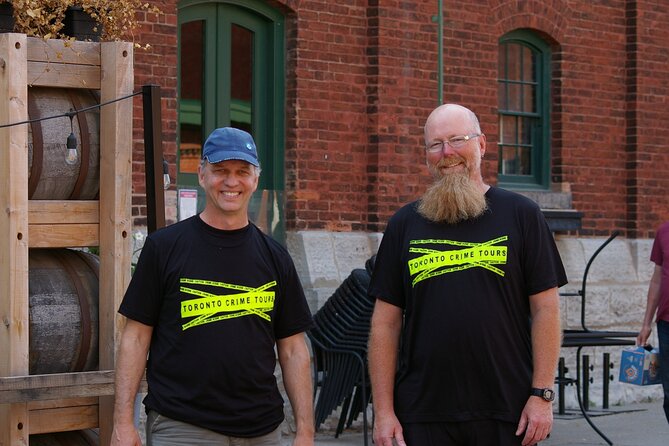
- Former detective guides (Phil, Bob, Dave) who connect crime stories to how policing worked.
- A focused, stop-by-stop format that keeps the tour moving and your attention engaged.
- Built around classic Toronto sites, from Yonge Street to Old Town and the Distillery District.
- Expect a proper walk, so plan for comfy shoes and bring your own water.
- Good weather is required, with an option to reschedule or get a full refund if conditions fail.
Entering Toronto’s crime timeline, one landmark at a time
Toronto looks polished from a distance. Up close, it has always had conflict, corruption, and sharp turns that shaped how the city functions. That is what makes this tour work: you are not just hearing spooky stories. You are walking through places where rules were tested, communities got scared, and institutions had to respond.
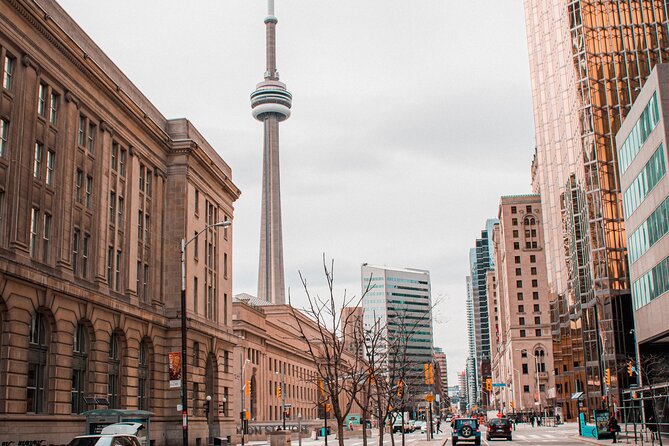
The tour runs a little over two hours (about 2 hours 15 minutes). It is private, meaning only your group participates, and it starts at 250 Yonge St. It ends around 55 Mill St in the Distillery Historic District, so you finish near one of the city’s most strollable areas.
More Walking Tours in Toronto
- Show me the City! A Small Group Walking Tour of Toronto
★ 5.0 · 621 reviews - Toronto Distillery District Walking Tour
★ 5.0 · 327 reviews - Toronto: City Highlights Walking Tour | 3-Hour
★ 4.6 · 306 reviews
Logistics that actually matter: meeting point, timing, and walking pace
Start time is 1:00 pm, and you will want to arrive a few minutes early so you are not rushing. The tour uses a mobile ticket, and confirmation comes at the time of booking. It is also near public transportation, which helps if you are coming in from farther away.
The walk itself is the main “gear check.” You will be on your feet for most of the time, and the tour is designed for people who can comfortably walk for about two hours. Bring comfy shoes and plan for a brisk pace. One group reported around 6,500 steps, which is a reminder that this is more active than a museum tour.
What to bring
- Wear comfy shoes.
- Bring your own beverage, especially on warm days. Bottled water is not included.
Stop-by-stop: murders, riots, courts, and street-level justice
This tour jumps across centuries. Each stop is short, but the stories are the kind that change how you look at the street you are standing on. Expect quick scene-setting, then the crime, then the wider social impact.
A few more Toronto days to compare
- Old Town Toronto Highlights 3 Hour Walking Tour | Gratuity-Based
★ 4.5 · 290 reviews - Toronto: Dark History Nighttime Walking Tour
★ 4.7 · 273 reviews - Toronto: Distillery District Historic Walking Tour
★ 4.8 · 267 reviews - Ghost Tour of Toronto Original Haunted Walk
★ 4.5 · 185 reviews
CF Toronto Eaton Centre: a 1977 murder that triggered a downtown cleanup
You start near the CF Toronto Eaton Centre, where a 1977 case involving the shocking murder of a 12-year-old shoeshine boy turned the city on its ear. The most useful part of this stop is the cause-and-effect angle. It is not only about the crime, it is also about how fear and public attention can pressure authorities to clean up a struggling downtown core.
This makes a big difference for you because it frames the rest of the tour. You start to see how Toronto repeatedly tries to solve problems by changing the visible parts of the city.
Yonge Street: the Year Of The Gun, and violence that hits bystanders
On Yonge Street, the stories shift to the violence of 2005, when the city faced a wave often associated with the Year Of The Gun. Then you hear about Boxing Day tragedy, a streetgang shootout where a 15-year-old girl was caught in crossfire.
The takeaway here is sobering but important. You see how crime is not always a clean story of villains and victims. Sometimes it is a chain reaction that sweeps in people who thought they were just going about normal life.
Yonge Street again: riots from 1837 to the G20 era
You revisit Yonge Street for a wider historical sweep, linking the Upper Canada Rebellion in 1837 with the G20 riots of 2010. It is a reminder that civil unrest is not a modern invention. Different eras have different politics, but the emotional mechanics can look similar: crowds form, authority reacts, and the city’s rules get tested.
This is also a good lesson for you if you like connecting past to present. The route helps you feel the continuity without turning history into a lecture.
The Path: how mental illness shaped the criminal justice system
Next comes a shift in subject: the Mentally Ill and how the criminal justice system treated them. Even if you know little about Toronto’s legal past, this part is valuable because it challenges the idea that crime equals only bad behavior. It frames mental health as a key part of how people were handled, labeled, and processed.
If you are hoping for pure entertainment, this stop can feel heavy. If you are interested in how systems work, it is one of the most thought-provoking segments.
Downtown: the disappearance of Ambrose Small in 1919
Downtown you hit one of Toronto’s classic unsolved mysteries, the 1919 disappearance of wealthy theatre owner Ambrose Small. Disappearances are tricky, and that is what makes them compelling. You are not walking through an easily closed case. You are walking through a city that still holds questions.
For your planning, this is one of those stops where you might want to pause, look around, and let the story reshape the surroundings. The landmark setting matters here.
Courthouse Square in Old Toronto: last public gallows in Canada
At Courthouse Square, the tour moves into capital punishment territory, pointing out the last public gallows in Canada. You hear about the bizarre list of crimes that carried death sentences, including thefts so small they sound unbelievable to modern ears, like stealing turnips or stealing cattle.
This stop helps you understand why the city’s legal culture felt different back then. It is not just about violence. It is about how society defined punishment and what it thought deterrence should look like.
Old Toronto: Bert Massey and the murder trial called the trial of the century
Then comes the trial of the century in 1915: the murder of Bert Massey, tied to the wealthy Massey Ferguson empire. This is where crime history intersects with power. You are no longer in a case that feels small. You are dealing with wealth, public attention, and the way high-profile cases can shape trust in institutions.
For you, the value is perspective. Cases like this can affect headlines, legal strategy, and how the public expects justice to look.
Old Toronto: the Boyd Gang, bank heists, and escapes from Don Jail
You then get one of Toronto’s most notorious names, the Boyd Gang. The talk covers their numerous bank heists and their escape story, the kind that gets retold because it sounds improbable. The focus includes their escape twice from Don Jail.
This part is also where you can enjoy the storytelling craft. The guide is not just saying what happened. The guide helps you understand why these stories grew legs: sensational media, fear, and the public craving for clear villains.
St. Lawrence Market: the Jarvis Duel in 1817
At St. Lawrence Market, the story turns to the Jarvis Duel in 1817, described as the last such duel in Toronto. Duels are a different kind of violence, tied to honor culture and how conflict used to be resolved when formal systems felt slower or inadequate.
This stop adds texture to the tour. You see that crime and punishment were not always just courts and cells. Sometimes they were rituals with their own rules.
Dundas and Jarvis area: a gangland slaying and the reality called The Corner
In Old Town you hear about Canada’s first gangland slaying in 1939 and the sordid state of what became known as The Corner, at Dundas and Jarvis. The useful angle here is that the tour does not treat this like an isolated incident. It connects violence to an area’s conditions and reputation.
If you like sociological stories, this is your moment. You can literally look around and try to imagine how the streets earned that label.
Old Toronto: a clown-versus-fire company riot that changed policing
Another unusual stop in Old Toronto: a riot between circus clowns and the Hook and Ladder fire company in 1855. The story explains how that incident helped lead to revamping the structure of the Toronto Police, and it says that influence still exists 166 years later.
I like this kind of stop because it breaks the pattern. It reminds you that public safety systems are built through messy history, not just careful planning.
The Village: serial targeting, denial of links, and the hard discovery of victims
In The Village, the tour discusses a serial killer targeting gay men. The police initially said there was no proof or links among victims, and then later eight victims were found buried in a ravine.
This section is emotionally intense and also historically important. It forces you to confront how institutions handle patterns, and what it costs when communities feel dismissed.
Old Toronto park: topless sunbathing, legality, and morality
Then you get a more unusual, lighter-toned topic, topless sunbathing in the park and the question of whether it was illegal or immoral. This stop works because it shows crime and conflict are not always about physical violence. Sometimes they are about social boundaries, enforcement, and what society decides is acceptable.
It is a reminder that what counts as deviance changes over time.
Distillery Historic District: Gooderham and Worts, whiskey, and the idea of a ghost
In the Distillery Historic District you shift to industry and the shadow side of prosperity. In 1832, whiskey making expands rapidly with Gooderham and Worts. Then the story turns toward the ghostly idea of whether Wort’s ghost still lingers.
This is where you get a change of atmosphere. You are walking through a place that feels like an open-air museum, but the tour keeps it grounded in real business and the kinds of tensions that come with fast growth.
Distillery Historic District, part two: bootlegging in 1922
Finally, the Distillery gets a rougher past with bootlegging in 1922. It is a fitting finish. You end where Toronto’s old industries and night-time economies meet, and you can look at the brickwork and buildings with a more adult understanding.
The real value: why retired detective stories feel different
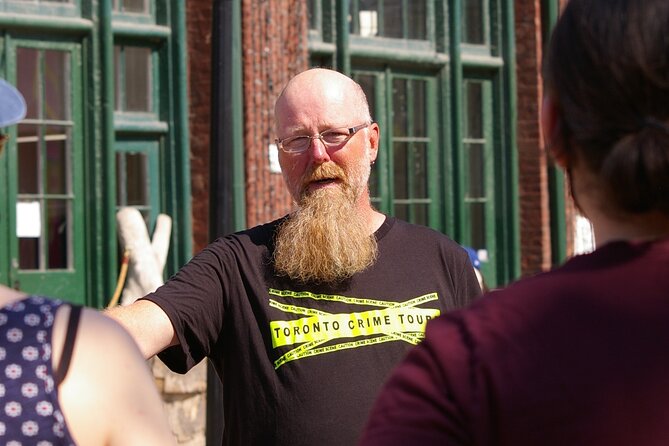
A lot of crime tours can become pure spectacle. This one tends to work because the guide’s background is tied to how police actually operate. That changes the tone in small ways you feel right away, like how the guide explains procedures, relationships between investigations and public pressure, and how communities can influence what gets prioritized.
The best part is that you are learning social history, not just memorizing case names. You start to notice themes: institutional response, fear cycles, punishment trends, and how public attention shapes outcomes.
Is it worth $28.21 per person?
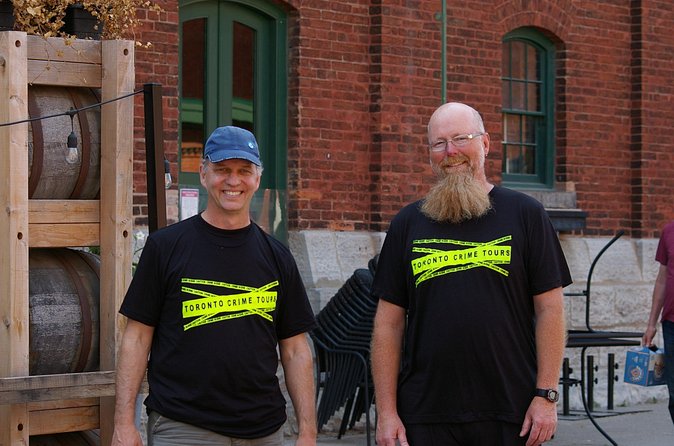
At $28.21 per person for a tour that runs about 2 hours 15 minutes, the value depends on what you want.
If you enjoy walking, and you like your history with edge, the price is reasonable. You get a private format and a dedicated guide with real policing experience, which usually costs more than standard group tours. Also, the route covers a lot of ground, and the stories connect city landmarks to real consequences.
If you want gentle, purely sightseeing-focused Toronto, you might feel the price is too high for darker material. But if you like learning how a city became what it is, this price lands in a sweet spot.
Who this tour is perfect for

This tour is a great fit if you are:
- Interested in history, society, and the macabre.
- Visiting Toronto and want an angle most people miss.
- Local and curious about your city’s legal and social turning points.
- Comfortable walking for about two hours and standing for short stops.
It can also work well for small groups who want a more personal pace. The customizable nature is useful if your group has specific interests, like courtroom history or riots.
When it might not be your thing
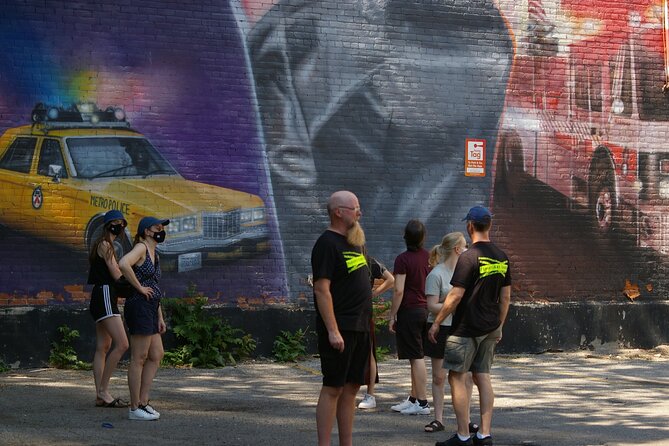
Be realistic about the tone. Crime stories can be intense, and you should expect darker themes. Also, if you have mobility issues, this is not described as a sit-down or low-walking experience. The tour clearly requires you to walk for the full duration.
Should you book Toronto Crime Tours?

Yes, if you want Toronto with sharp edges and you like stories that connect crime to how society and policing evolved. The retired detective guides add credibility, and the route strings together major sites in a way that feels more like understanding a living city than collecting trivia.
Skip it if you want a light, family-only outing, or if the idea of murders, riots, and unsolved mysteries makes you uncomfortable. Otherwise, bring water, wear good shoes, and get ready to see Toronto differently when you step back onto Yonge Street.
FAQ
How long is the private walking crime tour in Toronto?
It runs about 2 hours 15 minutes.
How much does the tour cost?
The price is $28.21 per person.
Where does the tour start and end?
It starts at 250 Yonge St, Toronto, ON M5B 2L7, and ends at 55 Mill St, Toronto, ON M5A 3C4 in the Distillery District.
What time does the tour begin?
The start time listed is 1:00 pm.
Is this tour private?
Yes. It is a private tour/activity, and only your group participates.
Do I need to print a ticket?
No. It uses a mobile ticket.
Are service animals allowed?
Yes, service animals are allowed.
Do I need to be able to walk for a certain amount of time?
Yes. Most travelers can participate, but you must be able to walk for about 2 hours.
What should I bring?
Bring your own beverage, especially on warm days, since bottled water is not included.
What happens if the weather is poor?
This experience requires good weather. If it is canceled due to poor weather, you will be offered a different date or a full refund. You can also cancel for a full refund if you cancel up to 24 hours in advance.
Recently listed around Toronto
- All-Inclusive Camp & Tube At Elora Gorge (2 Day)★ 5.0 · 4 reviews
- Canada eSIM | 3-30 days | Daily data | QR code★ 4.0 · 12 reviews
- Toronto Craft Brewery Tour★ 5.0 · 97 reviews
- Pottery wheel class in Toronto Bay&Dundas★ 4.5 · 5 reviews
- Handcrafted Donuts of Toronto: A Sweet City Walking Tour★ 5.0 · 141 reviews
- Underground Toronto PATH Tour★ 4.5 · 6 reviews
- Tour to Niagara Falls from Toronto★ 4.0 · 19 reviews
- Roundtrip Private Transfer from Toronto Airport (YYZ)★ 5.0 · 3 reviews
Walking Tours, compared.
Old Quebec City: Grand Walking Tour with Private Option
Read our review →
The Original Old Montréal Walking Tour by Guidatour
Read our review →
Old Montreal Small-Group Walking Tour | Max 10 | by MTL Detours
Read our review →
Old Quebec Classique Walking Tour with Funicular
Read our review →
Quebec: Crimes of New France Animated Walking Tour
Read our review →Browse the lists this tour appears in