
REVIEW · WILDLIFE
People Water Land- Indigenous Cultural and Wildlife Tour
Whales and First Nations stories share the same boat. This Indigenous-owned People, Water, Land tour pairs Salish Sea wildlife time with real Homalco history from a First Nation guide, often with moments like cedar weaving and songs. You also get a small group set up, so the tour feels personal instead of like cattle herding.
One key thing to consider is the walking. Plan on 2 to 3 kilometers on uneven ground and climbing stairs during the land portion, so bring sturdy shoes and go at your own pace.
In This Review
- People, Water, Land: what makes it special
- Salish Sea wildlife plus Homalco history at the same time
- Campbell River to the water: how the boat ride really feels
- Stop on the Salish Sea: whales, birds, and marine life on the move
- Aupe (Church House) on the island: where the stories get specific
- Cultural moments you might experience: cedar, food, and song
- Wildlife viewing tips that actually help
- Guided by Homalco people: what that changes for your experience
- What you’re paying for, and how it fits value
- Weather and scheduling: how to plan your day on Vancouver Island
- Who should book this People, Water, Land tour
- Should you book this tour?
- FAQ
- How long is the People, Water, Land tour?
- Where does the tour start in Campbell River?
- How big is the group?
- What wildlife might I see on the Salish Sea portion?
- Who runs the tour and what language is it in?
- Is the tour physically demanding?
- What happens if weather is poor?
People, Water, Land: what makes it special
- 100% Indigenous-owned Homalco Wildlife & Cultural Tours, so the stories are delivered by people connected to the place
- A covered, heated boat with both indoor and outdoor seating, which matters when the coast is chilly
- Wildlife spotting with a First Nation guide at the window, not just random scanning for fins
- Time at Aupe (Church House), Homalco First Nation’s last village site, where you hear what happened there and what’s planned next
- Cultural moments you may experience on land, including cedar weaving, forest food samples, and songs
- Maximum group size of 12 travelers, which helps everyone hear and see
Salish Sea wildlife plus Homalco history at the same time
This tour works because it refuses to treat wildlife and culture like two separate boxes. On the water, you are not only looking for whales, you are hearing how the Homalco community understands the sea and the land around Aupe (Church House). Then, once you step onto the island, the stories shift from legends and history to what daily life and community rebuilding look like in the present.
I also like how the tour keeps it human-scale. With a max of 12 travelers, it is easier to ask questions, and your guide can pace the experience to what you are actually seeing. When orcas or humpbacks show up, the group usually focuses fast, not after a long lecture or a delayed schedule.
A few more Vancouver Island days to compare
- Victoria Whale and Wildlife Cruise
★ 5.0 · 1,729 reviews - Cowichan Bay Half Day Whale & Wildlife Adventure
★ 5.0 · 393 reviews - Victoria Marine Wildlife Tour
★ 5.0 · 267 reviews
Campbell River to the water: how the boat ride really feels
You start at 1003B Island Hwy, Campbell River, BC, and the tour returns you to the same spot. The boat is covered and heated, with indoor seating plus an outdoor area for the people who want maximum views. That mix matters, because even in good weather, the coast can turn cool quickly.
You will also get a real sense of operating as a working vessel, not a slow sightseeing cruiser. Captains and pilots here are focused on positioning the boat well, and you might notice the flow of spotting from one angle to another as conditions change. If you want photos, keep in mind the motion and spray, especially on the open sections.
Practical tip: sound can be tricky while the boat is moving. A few guests note it can be hard to hear the guide from the front area, so pick your seat based on what you prefer, quiet listening indoors or maximum sightlines outside.
Stop on the Salish Sea: whales, birds, and marine life on the move
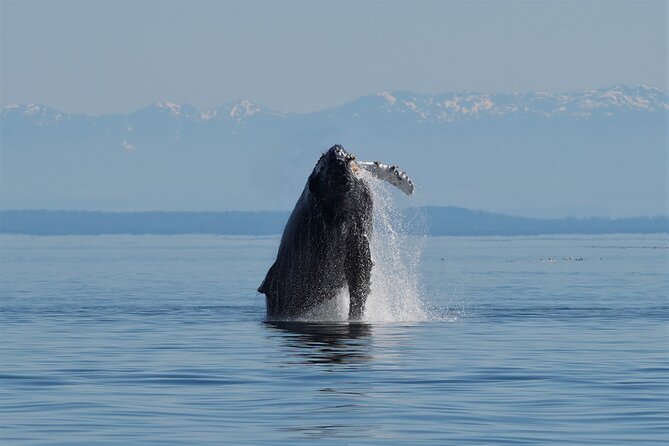
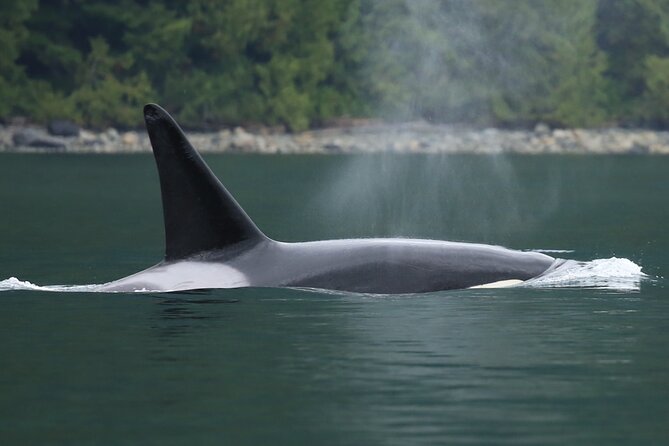
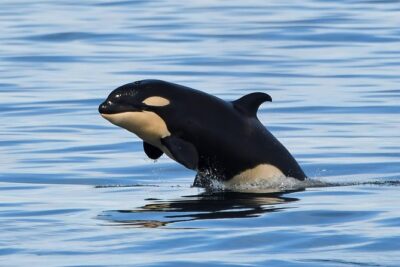
The centerpiece of the experience is a 2-hour Salish Sea boat segment where the skipper and First Nation guide scan for wildlife. This is where you go after humpback whales, orcas, dolphins, and sea lions, plus you may also spot things like porpoises, seals, and bald eagles. Wildlife is never guaranteed, but the range is broad, and the guide spotting style is part of the value.
I like that the wildlife search is paired with narration that connects animals to place. It turns whale watching from a pure sighting game into an understanding game, even if you only catch a few minutes of the story at a time. You also get small “watch with intention” moments, like when the guide points out where to look next or what signals to watch for before a whale surfaces.
If you are sensitive to splashes, plan accordingly. You might get saltwater spray, so keep your camera protected when you are not actively shooting.
Aupe (Church House) on the island: where the stories get specific
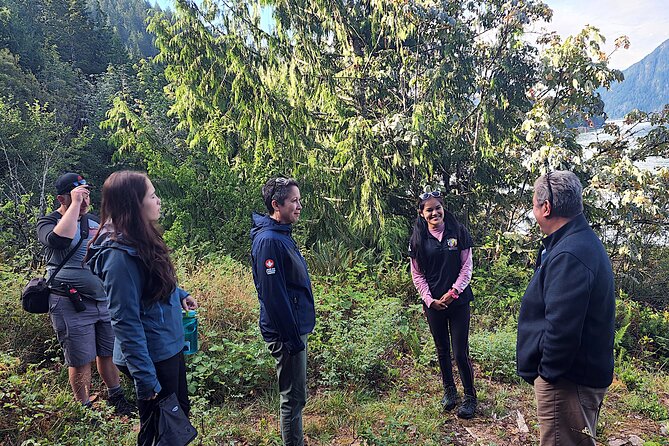
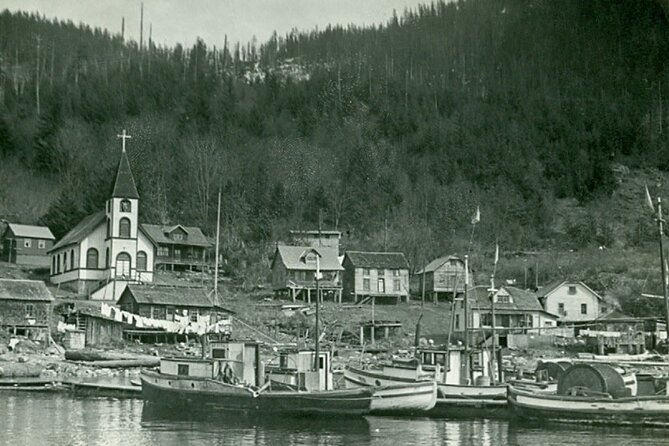
After the time on the water, you transition to Aupe (Church House), described as Homalco First Nation’s last village site. This is the part that turns the tour into more than a wildlife outing. You are walking through the area with a guide who can connect what you see to family memory, community history, and the ongoing meaning of the site.
The physical experience is also real. Reviews and tour notes point out that you will walk 2 to 3 kilometers on uneven ground and climb stairs. The distance is not extreme, but footing matters, and loose rocks show up in at least some seasons. Wear shoes with grip, and bring a willingness to step slowly.
At Aupe, you may see remnants of village buildings and experience short paths past those traces and onward into the forest. There is also a newer dock setup, described as treated timber and concrete, which helps you transition onto land more smoothly. The goal here seems to be respectful access, not just a quick photo stop.
A different day out in Canada:
- Great Bears of Bute: Grizzly Bear Viewing & Indigenous Cultural Tour
★ 5.0 · 336 reviews - Vancouver Island Half-Day Whale Watching Tour – Telegraph Cove
★ 5.0 · 333 reviews - Victoria Sunset Whale-Watching Cruise
★ 5.0 · 281 reviews - Vancouver Island Zodiac Whale Watching Adventure – Telegraph Cove
★ 5.0 · 281 reviews
Cultural moments you might experience: cedar, food, and song
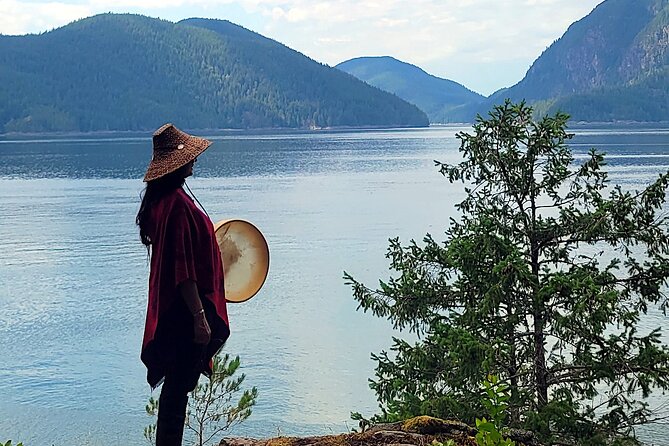
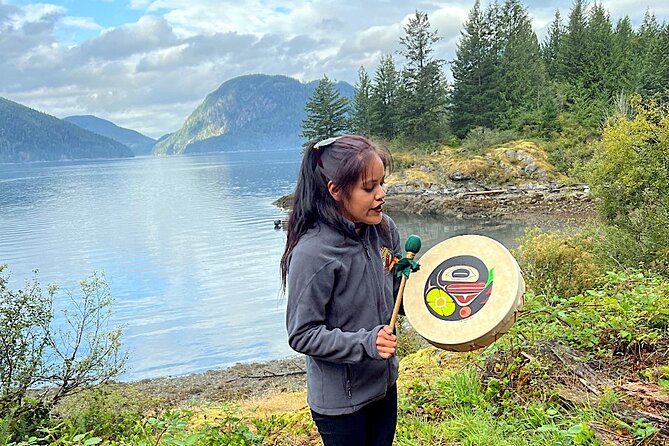
This tour is not only facts. The culture shows up through lived practice. Some guests describe weaving cedar wood and tasting forest food, which makes the experience feel grounded instead of staged. If that sort of hands-on moment is important to you, this is a strong match.
Songs and ceremonial moments also show up in the stories. For example, guests mention an honour song at a lookout point, including tribute to murdered and missing Indigenous girls and women. Other notes include singing about women in the red dresses. Even if you do not catch every word, the emotional weight comes through because you are hearing it in the place where it belongs.
I find this combination of quiet listening and active seeing to be one of the best “why” reasons to book. The whale watching sells the ticket, but the on-land cultural moments are often what people remember later.
Wildlife viewing tips that actually help
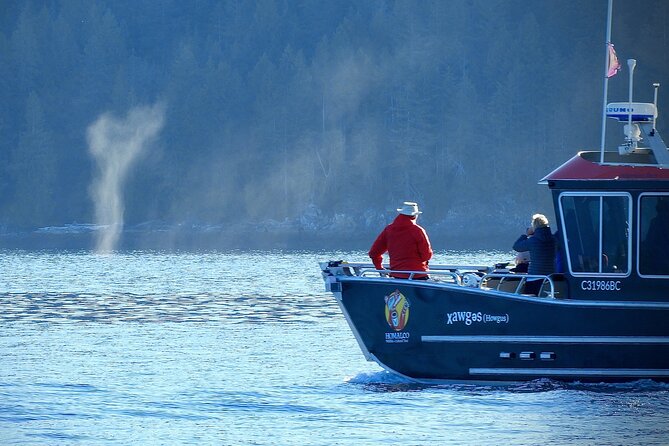
Even with strong guides, whale watching on Vancouver Island is still weather and timing dependent. But you can stack the odds in a practical way.
First, dress for being on the coast, not for a city outing. This includes layers, a rain layer if needed, and footwear that can handle uneven ground. Some guests also suggest sun protection like a hat, because conditions can shift from overcast to bright.
Second, choose a seat that matches your priorities. Indoors is warmer and helps you hear the guide more easily, while outdoors is best for direct spotting and less barrier to photos. If you are prone to motion sickness, the heated covered interior is usually your friend.
Third, bring binoculars if you have them, even though binoculars are offered. If you do not bring your own, take theirs, because it helps when you get a quick surface and then the whale disappears.
Guided by Homalco people: what that changes for your experience
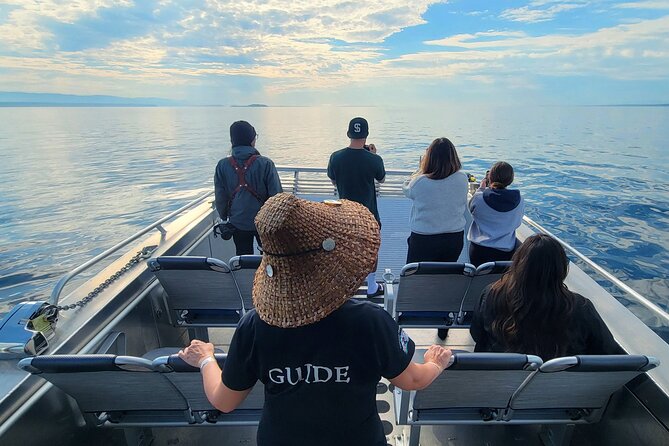
The most praised aspect here is simple, the guides bring the place to life. Names that come up across experiences include Janet, Cassie, and Guy, along with other team members such as Mark, Wayne, Ron, Steve, and Casey. You may not get the same guide names as other people, but the consistent point is that you are learning from Homalco community members.
That matters because you hear legends and history with context, not as a disconnected script. The guides can connect what you see, the animals, the water, and the shoreline, to stories that help explain why people care about stewardship and continuity.
I also appreciate the tone. The best parts are often the moments that feel personal, including guides sharing family experiences, singing, or explaining the future plans for the site. That sense of past meeting present is what makes the tour feel authentic rather than purely informational.
What you’re paying for, and how it fits value
At $269.83 per person for about 5 hours, this is not a cheap activity, but it also is not priced like a private charter. The value comes from three things you can actually feel during the day.
You are paying for a small group cap of 12, which keeps attention on you instead of on the clock. You are also paying for an Indigenous-owned company with First Nation storytelling built into the itinerary, not tacked on at the end. Finally, you are paying for a real whale watching style of operation, with a covered heated boat, wildlife search, and cultural time at Aupe.
If your goal is only to tick off whales, you might find cheaper wildlife outings. If your goal is wildlife plus place-based culture, this is priced in a way that reflects that bigger experience.
Weather and scheduling: how to plan your day on Vancouver Island
This tour requires good weather, which is typical for coastal wildlife. If conditions are poor, you should expect your operator to offer a different date or a full refund. It is still smart to build your Vancouver Island schedule with flexibility, because whale watching is not a set-and-forget plan.
Timing also matters because the day is built around seeing what the sea gives you. With a structure that includes a boat segment and time on the island, you need to be ready for changing views and changing plans. Think of it as a guided half-day that adapts to the coast.
Who should book this People, Water, Land tour
This tour is a strong fit if you want a balance. You like animals, but you also want the story behind them. You care about Indigenous-led interpretation, and you are comfortable that the day may include emotional or meaningful cultural moments.
It is also a good match if you prefer small groups. With a maximum of 12 travelers, the experience tends to feel more conversational. That matters if you have questions, or if you want to listen closely without shouting over crowds.
You might want to think twice if you do not handle walking on uneven ground or climbing stairs well. The tour notes are clear that most people can participate, but you should be honest about your ability to manage the land portion.
Should you book this tour?
If your ideal Vancouver Island day includes whales and real Homalco stories, I think this is an easy yes. You are getting a compact schedule that combines wildlife time on the Salish Sea with meaningful time at Aupe (Church House), led by Indigenous guides.
Book it especially if small group size and culture-first guiding matter to you. If you are worried about uneven footing, bring solid shoes and plan your pace, and you will be in good shape.
FAQ
How long is the People, Water, Land tour?
It runs for about 5 hours.
Where does the tour start in Campbell River?
The meeting point is 1003B Island Hwy, Campbell River, BC V9W, Canada. The tour ends back at the same meeting point.
How big is the group?
This tour has a maximum of 12 travelers.
What wildlife might I see on the Salish Sea portion?
The tour looks for humpback whales, orcas, dolphins, and sea lions, and you may also see bald eagles and more.
Who runs the tour and what language is it in?
It is offered by Homalco Wildlife & Cultural Tours, and it is offered in English.
Is the tour physically demanding?
You must be able to walk 2 to 3 kilometers on uneven ground and climb stairs.
What happens if weather is poor?
This experience requires good weather. If it is canceled due to poor weather, you will be offered a different date or a full refund.
Recently listed around Vancouver Island
- Victoria BC – Coast & Castle Tour by E-Bike★ 5.0 · 5 reviews
- West Coast Wildlife Rainforest Waterfall and Beaches★ 5.0 · 10 reviews
- Wildlife, Waterfalls, Caves, Old Growth on Vancouver Island★ 4.5 · 6 reviews
- Half-Day Victoria to Cowichan Valley Wine Tour with Tastings★ 5.0 · 107 reviews
- Victoria Vistas and Views Progressive Food Tour★ 4.5 · 6 reviews
- Salish Sea Whale Watching Tour in Campbell River★ 5.0 · 90 reviews
- Victoria City Highlights E-Bike Tour – Hoods & Legends★ 5.0 · 8 reviews
- One-Way High-Speed Passenger Ferry: Victoria, BC to Seattle, WA★ 4.0 · 76 reviews
Wildlife, compared.
Banff Highlights & Wildlife | Award-Winning Small Group Adventure
Read our review →
Jasper National Park: Evening or Morning Wildlife Watch Tour
Read our review →
Jasper Wildlife & Sightseeing Tour with Maligne Lake Cruise
Read our review →
Wildlife and Sightseeing Tour with Maligne Cruise
Read our review →
Cowichan Bay Half Day Whale & Wildlife Adventure
Read our review →Browse the lists this tour appears in