
REVIEW · CITY TOURS
Montreal: 2-Hour Private Complete Hidden City Experience
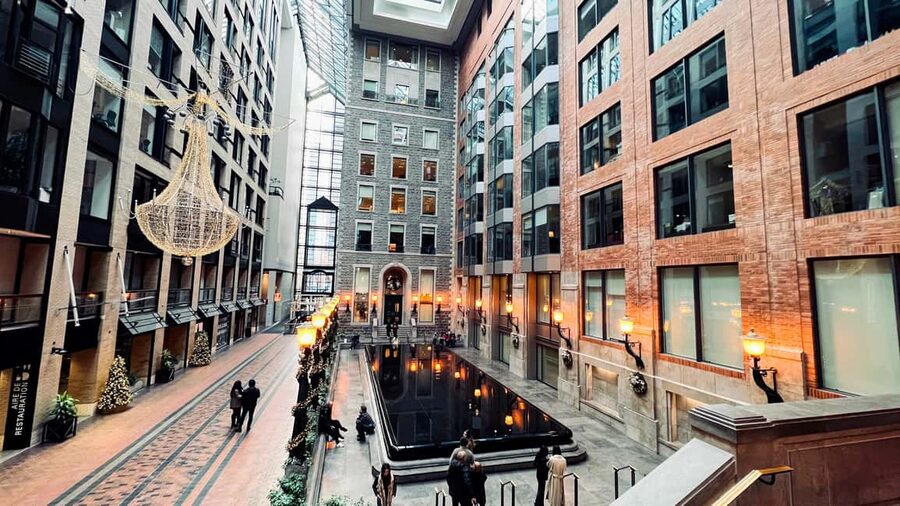
Montreal’s underground feels like a second city. I love how this private tour turns the RÉSO into something you can actually navigate, with a guide who explains the history and points out what most people miss. I also like the way you connect real downtown landmarks through indoor corridors, not random side streets, so the whole walk feels intentional. One drawback to consider: it’s a walking tour and it is not suitable for wheelchair users or people with mobility impairments.
If you’ve only seen Montreal from the surface, this tour gives you a new map in your head. You’ll spot hidden passageways, shopping galleries, and cultural spaces, plus the kinds of murals or installations that make the underground feel more human than utilitarian. A second plus is that the experience works on gloomy days too, including rain, since you’re mostly inside.
You meet at Tim Hortons at 1508 Rue de Bleury, and you stay on a tight 2-hour route. Your guide, Gustavo Trindade, is known for being engaging and flexible, including helping with photos at the right moments. Come in comfortable shoes, bring water, and bring a camera so you can remember what you found.
In This Review
- Key points to know before you go
- Entering the RÉSO, Montreal’s Underground City With a Story
- How the Tour Really Feels in 2 Hours: Private, Focused, and Easy to Follow
- The Start at 1508 Rue de Bleury, Where the Underground Begins
- From Place Montreal Trust to Eaton Centre: Retail Corridors as City Life
- Place Ville Marie and Gare Centrale: Work and Transit in One Connected Flow
- Place Bonaventure, Trade Centres, and the Meeting Points of Downtown
- Palais des Congres and Place des Arts: Where Culture Lives Indoors
- Complexe Desjardins: The Final Link and What You’ll Remember
- What to Bring and How to Make the Most of the Underground
- Price and Value: Is $101 Worth It?
- Should You Book This Private RESO Tour?
- FAQ
- How long is the Montreal 2-hour private hidden city tour?
- Where does the tour start?
- Is this a private tour?
- What languages are available for the live guide?
- Are food and drinks included?
- Is the tour wheelchair accessible?
Key points to know before you go
- A guided route through Montreal’s RÉSO network: it’s about connections, not just walking around.
- History that explains why it exists: you learn how it changed daily routines.
- Hidden passageways plus shopping and cultural spaces: you see art, not just corridors.
- Iconic downtown stops, linked underground: major sites connect through the system.
- Gustavo Trindade brings energy and flexibility: including photo help.
- Rain-friendly by design: a smart pick when the weather is bad.
Entering the RÉSO, Montreal’s Underground City With a Story
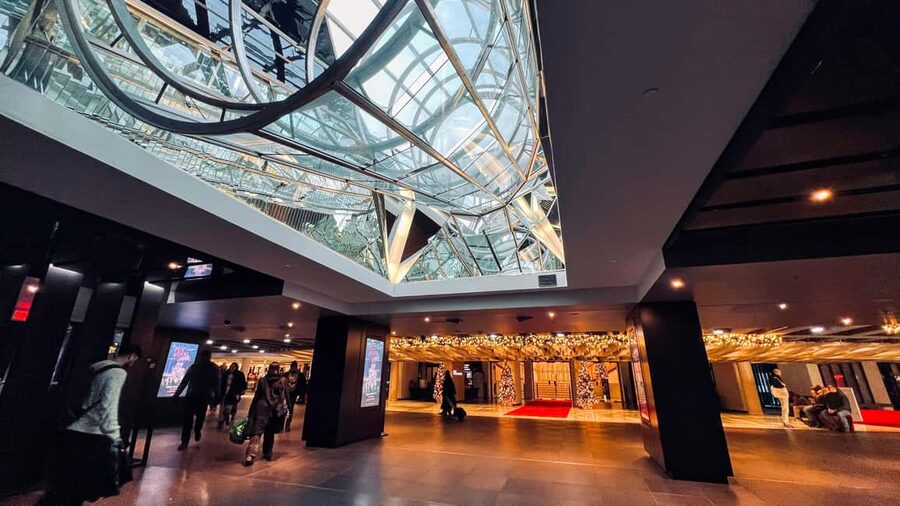
The Montreal underground is not only a winter shortcut. On this tour, you learn why locals treat the RÉSO like part of the city’s everyday rhythm: it’s a network of links that matter for work, shopping, and culture.
What I like most is that the guide frames the experience as more than a walk-through attraction. You get the history behind its construction and how it has withstood time, then you see how those design choices still shape what people do day to day. The underground isn’t presented as a museum. It’s shown as something living, with restaurants, hotels, offices, and direct access to public transportation.
You’ll also start noticing how quickly the underground changes your perspective. Indoors, you stop thinking in blocks and start thinking in routes: one passage leads to a corridor, that corridor leads to a gallery, and suddenly you’re at a major downtown landmark without ever stepping outside. That shift alone is worth the price for many people, because it helps you understand Montreal like a local planner would.
One more reason this feels different: the tour highlights hidden artworks, murals, and installations. Underground spaces often get treated as plain infrastructure. Here, you’re encouraged to look at the creativity inside the system, which makes the whole experience more memorable.
A few more Montreal days to compare
- Montreal: Guided Bus Tour
★ 4.4 · 3,064 reviews - Montreal: Hop-On Hop-Off Double-Decker Bus Tour
★ 4.1 · 2,760 reviews - From Montreal: Quebec City and Montmorency Falls Day Trip
★ 4.5 · 2,669 reviews
How the Tour Really Feels in 2 Hours: Private, Focused, and Easy to Follow
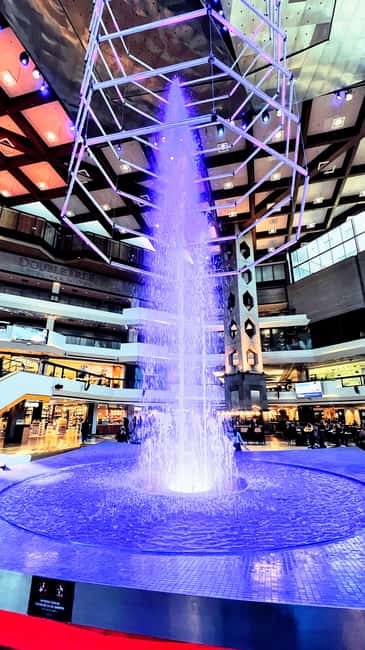
This is a private group tour, so the pacing is steadier and the attention is direct. You’re not trying to keep up with a crowd while also reading signs and figuring out where the corridors go. Instead, you get guided turns, timing that makes sense, and enough context that every link feels connected.
The route is built around downtown stops, but the key is how you travel between them. You’ll pass major hubs and landmarks that sit at the surface, then see how the RÉSO connects them underground. That is the whole point of a “complete hidden city” experience: you leave with a mental map you can use later, even if you never remember the names of every corridor.
Because it’s only 2 hours, you avoid the common problem of “great tour, too long.” You get a satisfying overview without turning into a long endurance test. Still, plan for real walking. The tour emphasizes comfortable shoes for a reason, and it is not suitable for wheelchair users. If you have mobility concerns, you’ll likely want to skip this one.
As for timing, you’re meeting at 1508 Rue de Bleury and beginning right from the downtown core. No hotel pickup is included, so you’ll want to arrive a little early and get your bearings fast, inside the Tim Hortons building at the address given.
The Start at 1508 Rue de Bleury, Where the Underground Begins
Before you go underground, you get the one practical advantage that makes the whole tour easier later: you start from a clear, identifiable point.
You meet inside Tim Hortons at 1508 Rue de Bleury. From there, your guide takes you into the downtown links and explains what you’re about to see, so you don’t feel like you’re just following a person down a hallway. You’re learning the logic of the place while you’re there, which makes the network click.
If you’re taking photos, this is also where you set your camera habits for the rest of the walk. Underground lighting can be uneven, and the most interesting spots tend to be at corners, doorways, and small cultural details. Gustavo’s approach is friendly and flexible, including offering to help take photos at standout moments, so you can actually get pictures without rushing.
Once you’re moving, the tour starts giving you what you came for: the feeling that the underground is a “hidden” city with its own art and character, even though it’s connected to the places you already recognize on the surface.
From Place Montreal Trust to Eaton Centre: Retail Corridors as City Life
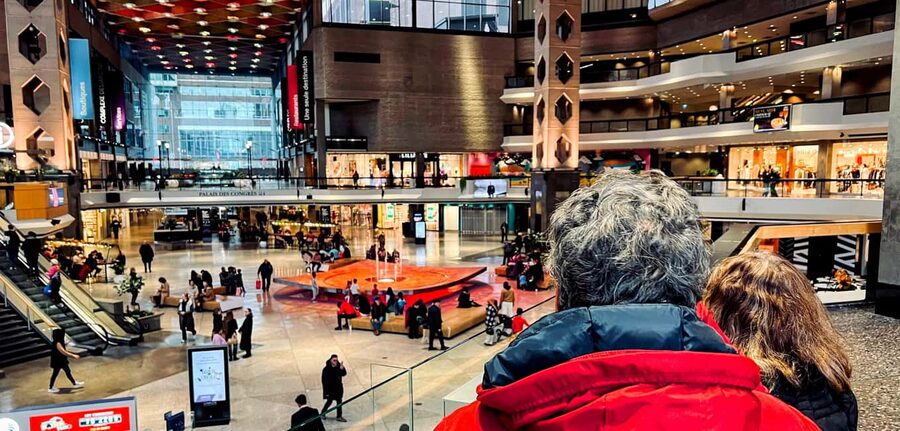
One of the first things you’ll notice on the way is how often the RÉSO turns into shopping. You pass through big downtown connectors and you see how the underground makes retail part of daily travel, not a detour.
You’ll make your way toward Place Montreal Trust and then on to the Montreal Eaton Centre area. These are the kinds of stops where the underground starts to feel like a practical daily system. The point is not only that you can shop underground. It’s that the city has built major connections so people can move and meet inside, sheltered from the weather.
This is also where the guide’s story matters. History lessons are more useful when they tie directly to what you can see. You’ll learn about how the RÉSO’s construction transformed everyday life, and you’ll be able to point to the evidence as you walk: the underground route leads you from a landmark to a landmark, with commerce along the way.
Possible drawback here is simple: shopping corridors can feel busy during peak times, since you’re moving through major downtown zones. Even when the group is private, you still share space with normal city traffic. If you’re sensitive to crowds, wearing a steady pace and following your guide closely helps.
A different day out in Canada:
- Montreal Mile End Authentic Food Tour with 7 Delicacies Tastings
★ 5.0 · 2,598 reviews - Quebec City and Montmorency Falls Day Trip from Montreal
★ 4.0 · 2,437 reviews - The Original Old Montréal Walking Tour by Guidatour
★ 4.5 · 2,217 reviews - Old Montreal Small-Group Walking Tour | Max 10 | by MTL Detours
★ 5.0 · 2,088 reviews
Place Ville Marie and Gare Centrale: Work and Transit in One Connected Flow
After the retail-focused stretches, the tour pivots into a different Montreal mood: transit and major downtown movement. You pass by Place Ville Marie and then head toward Gare Centrale, and the contrast is part of the value.
At this stage, you see what makes the RÉSO more than a shopping mall maze. It connects spaces people use for getting to work, getting around, and catching transportation. That’s why locals treat it like part of their rhythm, not just a place to visit once.
Gare Centrale is one of those “you recognize it from the surface” hubs. Seeing it from the underground connectors helps you understand something important: the RÉSO is built to reduce friction between major places. You’re not just escaping outside cold. You’re getting efficient routes that keep daily life moving.
For many visitors, this is the moment the underground city becomes real in your mind. You stop thinking of it as an attraction and start thinking of it as infrastructure that has shaped movement and routines for years.
Keep expectations grounded, though. This is still a 2-hour walking experience, and you’re there to pass by large downtown nodes, not to go deep into long museum stops. If you want lots of time sitting down, this tour may feel like it’s moving at a good pace rather than a slow wander.
Place Bonaventure, Trade Centres, and the Meeting Points of Downtown
Next, you pass by a sequence of downtown business and event areas, including Place Bonaventure, Centre de commerce mondial, and World Trade Centre Montréal. Even if you never go into those buildings, the underground network around them shows how seriously Montreal designed connections for big-city activity.
This portion of the tour helps you understand the scale. You’re not just linking a few malls. You’re seeing how the system links major districts, including places tied to conventions, trade, and big downtown meetings. That’s why the RÉSO is often described as the world’s largest underground city. The size is visible once you start moving through the links and realize how many recognized downtown landmarks connect through this network.
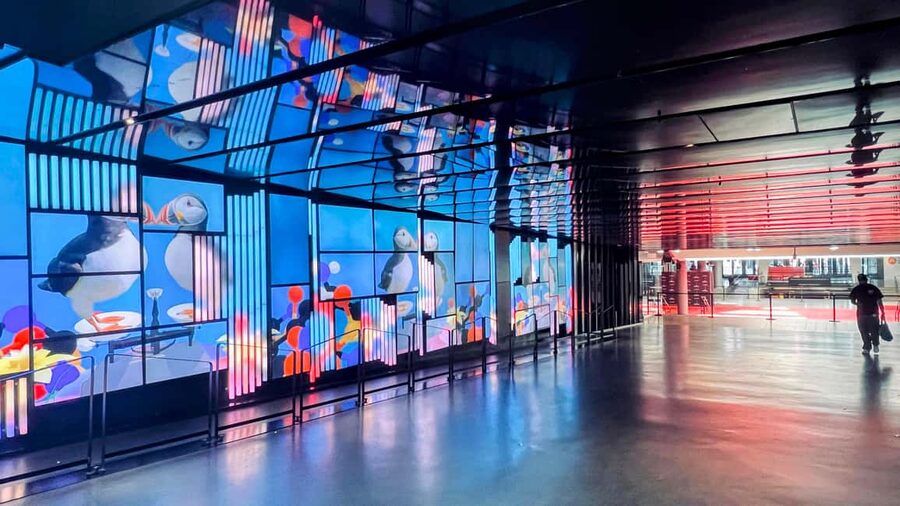
This is also where the cultural side continues to show up in unexpected ways. The highlights include murals, installations, and cultural spaces, and in practice those details often appear near where people gather, wait, or pass time indoors. You’re guided to notice these moments so the underground doesn’t feel repetitive.
If you’re traveling with someone who prefers action to explanations, this section still works. You’ll be walking from one major downtown name to another, and the route gives you visual proof that the network is built for real life. If you’re traveling with someone who wants stories, Gustavo’s explanations give the buildings context without turning the tour into a lecture.
Palais des Congres and Place des Arts: Where Culture Lives Indoors
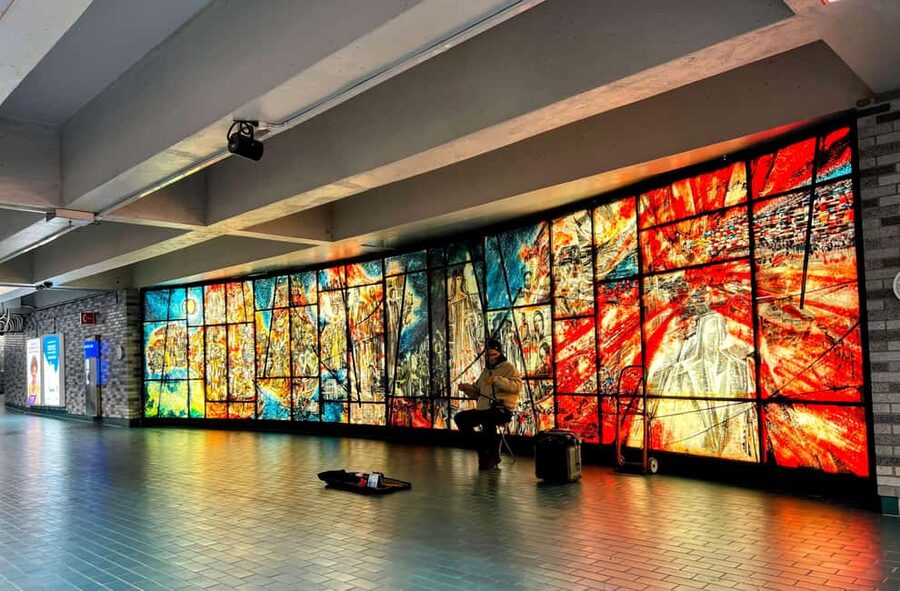
At the cultural portion of the walk, you start noticing how the underground doesn’t only serve practical errands. You pass by Palais des Congres de Montreal and then reach Place des Arts, Montreal’s cultural centre.
These stops matter because they show a core idea: the RÉSO includes cultural spaces, not just corridors and retail. When a city plans a system this interconnected, people are more likely to use it for more than commuting. That is how daily life changes over time, and it’s also why the underground feels like a true city within the city.
What you’ll appreciate here is the way the guide points out details like murals, installations, and hidden artworks. These elements are part of what turns an underground passage into a place with personality. You’re encouraged to look up, look around, and notice the creative choices built into the infrastructure.
A small consideration: if you strongly prefer outdoor sightseeing, this tour will feel like it keeps you indoors for 2 hours. That’s intentional, and it’s a selling point in rain or winter, but it is still an indoor-focused experience. If the weather is spectacular and you want maximum daylight, you might choose a surface walking tour instead. Otherwise, the underground culture stops are exactly the kind of surprise you came for.
Complexe Desjardins: The Final Link and What You’ll Remember
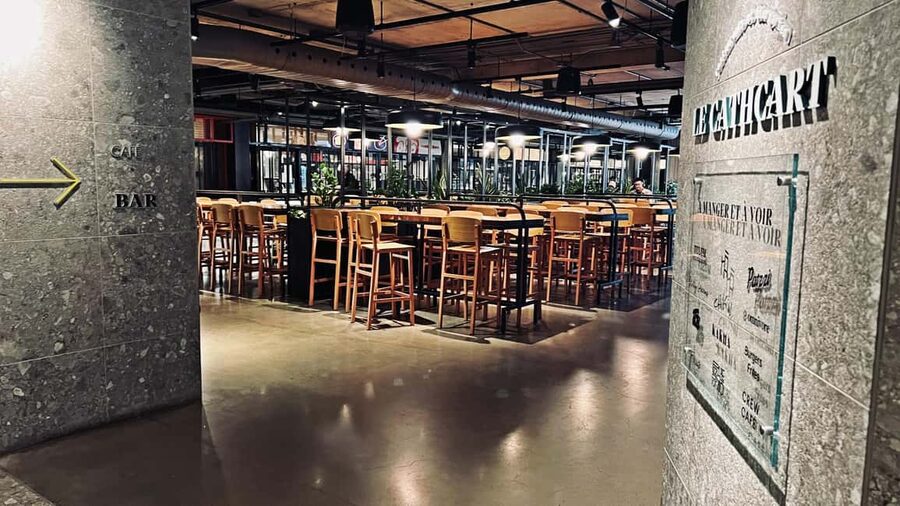
You end your route near Complexe Desjardins, another major downtown hub in Montreal’s connected core. By the time you reach this area, the tour’s structure starts to pay off.
Now, you’re not just seeing isolated spaces. You’re seeing how the underground stitches together commerce, transit, offices, hotels, and culture. The RÉSO becomes a network you can understand in one glance, not a confusing set of corridors.
This is also where the guide’s style sticks with you. Gustavo is described as engaging and flexible, and that shows in how the tour balances stories with the walk itself. You’ll get the right amount of information without feeling overloaded, and you’ll have time to take photos at interesting points along the way.
When the tour finishes, you’ll likely want to test what you learned. Even if you don’t memorize every turn, you’ll understand how to find the “next big landmark” connections inside the system. That’s the real value: knowledge you can use on your own later, even during a short trip.
What to Bring and How to Make the Most of the Underground
This tour is practical, so your prep should be too. Here’s what matters most for a smooth, comfortable 2 hours:
- Comfortable shoes: you’ll be walking through connected indoor areas, and you want your feet happy.
- Camera: there are hidden artworks, murals, and installations worth photographing.
- Water: food and drinks are not included, so hydration is on you.
Because the tour is not suitable for wheelchair users or people with mobility impairments, it’s smart to think about your own movement comfort before booking. If you can handle indoor walking and changes in level, you’re probably fine. If you need step-free routes and lots of accessibility support, you’ll want a different format.
Also note the simple rules: alcohol and drugs are not allowed. If you’re tempted to carry snacks, remember that food and drinks aren’t part of the tour, so plan according to your own needs.
Finally, language matters. The live guide speaks English, French, Spanish, and Portuguese, so you can choose the language that keeps the story clear.
Price and Value: Is $101 Worth It?
At $101 per person for a 2-hour private experience, the price is not “cheap,” but it is reasonable for what you’re buying.
You get: a 2-hour guided tour, access to hidden passageways and shopping galleries, and visits to iconic downtown landmarks connected through the network. You’re also getting focused explanations about the RÉSO’s history and how it transformed daily life. In other words, you’re paying for guided navigation plus interpretation, not just entry to a space you could walk around alone.
Could you wander around Montreal’s downtown and guess your way into some underground links? Sure. But you would miss the “why.” This tour is built to help you understand the system’s purpose, then show it through real connections to major landmarks.
The private format also changes the value. You get a more flexible experience, and Gustavo’s style includes extra effort like photo help at the right spots. That’s the kind of detail that makes a short tour feel worth it, because it creates memories, not just movement.
If you’re on a tight schedule, the 2-hour time window is a plus. If you want a slow, open-ended explore-everything day underground, you might spend less on a self-guided walk. But if you want a smart, guided introduction that leaves you understanding the network, this is a solid buy.
Should You Book This Private RESO Tour?
I’d book this if you want a fast, guided way to understand Montreal beyond its street-level sights. It’s a great fit for rainy days, first-timers who want a map of downtown connections, and anyone curious about how cities solve everyday problems. I also think it works well for families who want a guide to help with photos and keep kids and adults engaged.
I would skip it if you need an accessible, step-free route or if you dislike walking. Also skip it if you mostly want outdoor views and don’t care about indoor art, corridors, and cultural spaces.
If your goal is to leave Montreal with a real sense of how people move through the city every day, this 2-hour private RÉSO experience gives you exactly that.
FAQ
How long is the Montreal 2-hour private hidden city tour?
The tour lasts 2 hours.
Where does the tour start?
You meet inside the Tim Hortons building at 1508 Rue de Bleury, Montréal, QC H3A 0B4.
Is this a private tour?
Yes, it is a private group tour.
What languages are available for the live guide?
The live tour guide is available in English, French, Spanish, and Portuguese.
Are food and drinks included?
No, food and drinks are not included.
Is the tour wheelchair accessible?
No, it is not suitable for wheelchair users or people with mobility impairments.
Recently listed around Montreal
- Montreal: 3-Day Toronto, Niagara Falls, Thousand Islands★ 4.7 · 5 reviews
- Old Montréal Small-Group Christmas Tour★ 4.4 · 39 reviews
- Sherbrooke: Nordic Spa Thermal Experience★ 4.7 · 9 reviews
- Ottawa: Helicopter Ride with Live Commentary★ 5.0 · 130 reviews
- From Montreal: Quebec City Day Trip with Ice Hotel Entry★ 4.8 · 126 reviews
- Port of Montreal Glass Tower Entry★ 4.4 · 129 reviews
- Paranormal Investigation – Old Sainte Antoine Cemetery★ 3.5 · 3 reviews
- Outdoor mini golf in Montreal★ 4.9 · 13 reviews
City Tours, compared.

Half-Day Trip to Montmorency Falls and Ste-Anne-de-Beaupré from Quebec city
Read our review →
Old Quebec City: Grand Walking Tour with Private Option
Read our review →

Quebec City and Montmorency Falls Day Trip from Montreal
Read our review →Browse the lists this tour appears in