
REVIEW · WORKSHOPS
Leather belt making workshop
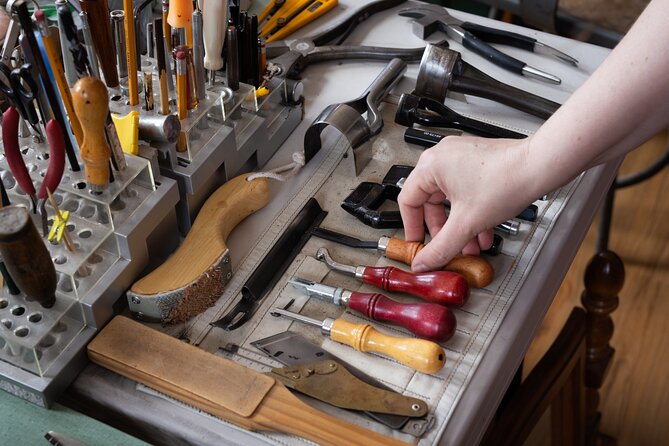
Leather belt making sounds fancy, then it turns practical fast. In the workshop at Flechr by Kimberly Fletcher in Montreal’s Plateau Mont-Royal area, you learn the real basics of leathercraft, and you make your own belt through guided, hands-on steps.
Two things I like a lot. First, the class is intimate, with a maximum of 4 travelers, so you are not stuck watching someone else work. Second, the instruction style comes through in the reviews as patient and funny, and that matters because leatherwork has moments that feel awkward until someone shows you the right way. One thing to consider: you’ll use tools, including a few hammer blows, so it is not a great fit if you are highly sensitive to noise.
Flechr runs in English, the session is about 2 hours 30 minutes, and it is aimed at beginners. If you want a hands-on souvenir that is also useful, this is a strong option.
In This Review
- Key things that make this workshop worth your time
- Where the workshop is, and how to plan your arrival
- The 2.5 hour flow: what you do during the class
- Leather selection: why this step changes everything
- Cutting and shaping: the part that feels awkward, then clicks
- Assembling the belt: turning pieces into something wearable
- Finishing techniques: how your belt becomes yours
- Your instructor, Kimberly Fletcher, and why her teaching style matters
- Small group size, and the learning advantage it gives you
- Noise and comfort: one practical thing to know before you go
- Is the value here really worth it?
- Who should book this leather belt workshop?
- Should you book Flechr by Kimberly Fletcher?
- FAQ
- How long is the leather belt making workshop?
- Where does the class meet in Montreal?
- Is the workshop offered in English?
- Do I need prior leatherworking experience?
- Is there a noise consideration?
- What is the age recommendation and group size?
Key things that make this workshop worth your time
- Small group learning (max 4 travelers), so you can ask questions while you work
- Beginner-friendly leathercraft, from choosing material to finishing your belt
- Guidance from Kimberly Fletcher, including a calm, encouraging teaching style
- A real build process, cutting, shaping, assembling, then finishing for durability
- English instruction for easy participation
- Tools and a couple of hammer hits, plan for some noise
Where the workshop is, and how to plan your arrival
This belt-making workshop meets at 5450 Rue de Bordeaux, Montréal, QC H2H 2A8. The location sits in Plateau Mont-Royal, one of Montreal’s most walkable, café-and-streets neighborhoods. That matters because you can easily pair this with a food stop before or after, without needing a complex plan.
You also do not need to stress about getting there with a car. The class is near public transportation, and you’ll be able to get yourself to the studio without turning the day into a logistics project. If you’re traveling from somewhere farther out, I suggest you give yourself a small buffer so you arrive settled. Leatherwork is hands-on, and you will learn faster when you are not rushing in right before you start measuring and cutting.
Finally, keep the time in mind. The workshop is about 2.5 hours, so treat it like an active class, not a quick activity. You’ll want to schedule it when you are alert and ready to focus, especially if you’re coming from sightseeing.
A few more Montreal days to compare
- Montreal: Guided Bus Tour
★ 4.4 · 3,064 reviews - Montreal: Hop-On Hop-Off Double-Decker Bus Tour
★ 4.1 · 2,760 reviews - From Montreal: Quebec City and Montmorency Falls Day Trip
★ 4.5 · 2,669 reviews
The 2.5 hour flow: what you do during the class
The workshop is built around the steps you actually need to make a leather belt, not just a talk about leathercraft. In other words, you do the work. The session covers the basics from start to finish, including selection, shaping, assembly, and finishing.
Here is what the class structure means for you in real life:
1) You’ll start with leather selection. This is one of those beginner topics that sounds boring until you realize it affects how the belt feels and how it wears. Learning what to look for helps you avoid the classic mistake of picking leather that is too soft, too stiff, or just the wrong type for a belt.
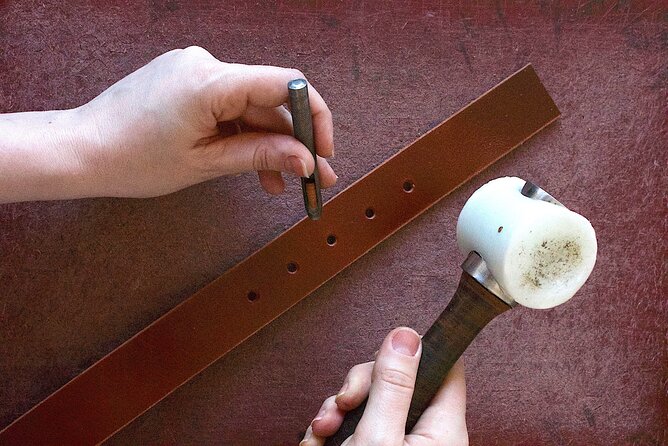
2) Then comes cutting and shaping. This is where your measurements and your technique suddenly matter. Leather is forgiving in some ways, but it also punishes sloppy prep. The teacher’s role is to help you get the piece to the shape you need without overthinking it.
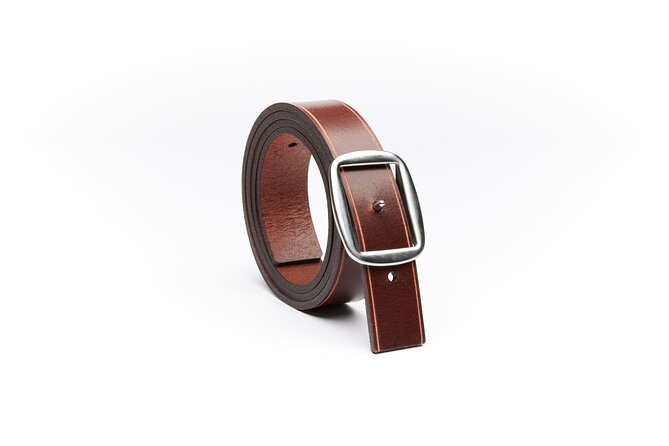
3) After that you’ll assemble the belt. Assembly is less about fancy moves and more about doing the right steps in the right order. Done correctly, it is what turns a flat piece of leather into something that will function as a belt.
4) Finally, you’ll focus on finishing. Finishing is how your belt becomes durable and looks intentional, not improvised. This is also where you can make your belt feel like it’s yours.
Because the class is small, you’re more likely to get the kind of immediate feedback that helps you correct small issues before they become big ones. That is a big part of why the experience earns a 5 out of 5 rating, with a perfect recommendation rate in the available reviews.
Leather selection: why this step changes everything
Leathercraft beginners often think the hard part is cutting. For a belt, the hard part starts earlier: choosing leather that behaves the way you need.
In this workshop, you learn the basics of how to select the right type of leather. Here’s why that matters for your finished belt:
- Leather thickness affects how your belt folds and how it holds its shape.
- Leather softness affects how it creases.
- Finishing choices affect how the belt ages and how your belt looks after real use.
Even if you have never held leather before, you’ll get a guide through the idea that different leathers act differently. That turns your project from a one-time activity into a skill you can use again later.
This is also where I think the value is strongest. Many craft experiences teach you the fun part and skip the practical part. This one includes the choices that determine whether your belt works well, not just whether it looks nice in an initial photo.
Cutting and shaping: the part that feels awkward, then clicks
When you get to cut and shape, plan for a bit of the learning curve. Leather does not behave like paper, and that is normal. Your edges matter. Your marks matter. Your layout matters.
With small class sizes, you should be able to get help quickly if something feels off. The instruction style is described in the reviews as patient and humorous, which is exactly what you want here. If you can laugh at the first misstep, you are more likely to learn the correct method right away.
Practical tip for you: slow down mentally when measuring and marking. Most beginner mistakes come from rushing, not from being clumsy. Leatherwork rewards careful prep. Once you start cutting, you’ll feel more confident because you’ll know what you’re aiming for.
A different day out in Canada:
- Montreal Mile End Authentic Food Tour with 7 Delicacies Tastings
★ 5.0 · 2,598 reviews - Quebec City and Montmorency Falls Day Trip from Montreal
★ 4.0 · 2,437 reviews - The Original Old Montréal Walking Tour by Guidatour
★ 4.5 · 2,217 reviews - Old Montreal Small-Group Walking Tour | Max 10 | by MTL Detours
★ 5.0 · 2,088 reviews
Assembling the belt: turning pieces into something wearable
After you shape the leather, you move into assembling the belt. This step makes the project feel real. Before assembly, you have parts. After assembly, you have a belt structure that you can picture using.
This phase tends to teach you three useful things:
- Order matters. Do the steps in the wrong order and you can create problems that are annoying to fix.
- Fit matters. Even small alignment issues can show up later when you wear it.
- Durability matters. Assembly choices affect how sturdy the belt will feel over time.
The workshop is designed to show the basics clearly, so you are not left guessing. And again, with a maximum of 4 travelers, you’re not stuck hoping the instructor notices your question from across the room.
Finishing techniques: how your belt becomes yours
The last part is finishing, and this is where your belt can stop looking like a school project and start looking like a real accessory.
You will learn finishing techniques that help the belt become durable and unique. Even without getting too technical, the lesson is that finishing is not just appearance. It also protects the work and makes the belt more suited to daily handling.
If you like personalization, this is the zone. Finishing decisions can affect the look, the feel, and how your belt shows wear. It’s the stage where your choices turn into something you can actually take pride in.
And because the class includes finishing, you leave with a more complete outcome than you would if you only made part of the belt. That matters for motivation. There is a big difference between doing a small component and completing a usable item.
Your instructor, Kimberly Fletcher, and why her teaching style matters
The workshop is led by Kimberly Fletcher. Based on the reviews, the teaching style is a key reason people rate this so highly. The standout themes are patience and humor, which sounds like soft stuff, but it’s practical.
Leatherwork includes moments where you might do something slightly wrong and need a quick reset. If the instructor is calm and encouraging, you learn faster and you feel less afraid to try again. Humor also helps you avoid getting tense with tools, especially when you hit a step that feels tricky.
That is a real quality-of-instruction advantage, and it’s why this class has strong results with beginners.
Small group size, and the learning advantage it gives you
A maximum of 4 travelers might not sound like a lot, but it changes the whole vibe of the class. You are more likely to:
- get closer attention while you cut and assemble
- get faster answers to questions
- move at a comfortable pace without feeling left behind
It also tends to make the session feel less like a factory line and more like a guided craft workshop. You can ask for clarification and actually use the feedback immediately on the piece in front of you.
If you’ve ever done a larger class where you barely see the instructor, this is the opposite. For a hands-on craft like leatherworking, that intimacy is a genuine value add.
Noise and comfort: one practical thing to know before you go
There is an important note for planning: the class has high sensitivity to noise, and it includes a few hammer blows to help create the belt. Even if you are okay with noise, I’d still treat this as an active workshop where tools are part of the process.
If you are sensitive, consider whether you can manage a short burst of loud moments. Service animals are allowed, and most travelers can participate, but the noise note is the one you should take seriously because it is a direct part of the craft.
Dress-wise, you want to be comfortable and ready for hands-on work. Leathercraft can be tactile and messy in small ways, so wear something you do not mind getting a bit of workshop texture.
Is the value here really worth it?
The reviews rate this class 5 out of 5 and say it is well worth the price of admission. Even without knowing your budget number, you can judge the value based on what you get.
I see this as high value for three reasons:
- You learn the full process, not just a demo. Selecting leather, cutting, assembling, and finishing are all included.
- You get personalized guidance thanks to the small group size.
- You create a useful item, a wearable belt you made yourself.
If you’re the kind of traveler who likes taking home something that is not just a photo, this is a good match. It’s also a nice choice if you want a break from typical Montreal sightseeing, because you’ll be doing something hands-on and mentally engaging.
On the other hand, if you hate noise, or you want a relaxed, quiet experience, the hammer blows might be a dealbreaker.
Who should book this leather belt workshop?
This workshop is a great fit if you:
- are a beginner who wants a real craft foundation
- want a small-group class with guided feedback
- like practical souvenirs you can actually use
- enjoy learning by doing, not watching
It is recommended for ages 13 and over, and it is offered in English. If you’re traveling with limited time in Montreal, the 2 hours 30 minutes duration is manageable as a single activity block.
If you’re traveling as a group of friends, remember it caps at 4 people, so your scheduling options might be limited depending on dates. Still, the small size is part of the appeal.
Should you book Flechr by Kimberly Fletcher?
Book it if you want a short, focused workshop where you learn leathercraft basics and finish a belt through guided, hands-on steps. The strong reviews make sense: a small class, a patient instructor teaching beginners, and a process that actually results in something wearable.
Skip it if you are very noise-sensitive due to the hammer blows, or if you want something more passive. For everyone else, it’s one of the more memorable ways to spend a chunk of time in Montreal, because you leave with a skill and a handmade result, not just a story about where you went.
FAQ
How long is the leather belt making workshop?
The workshop lasts about 2 hours 30 minutes.
Where does the class meet in Montreal?
You meet at 5450 Rue de Bordeaux, Montréal, QC H2H 2A8, Canada. The activity ends back at the meeting point.
Is the workshop offered in English?
Yes, the workshop is offered in English.
Do I need prior leatherworking experience?
No. The class is designed for beginners and covers the basics with guidance.
Is there a noise consideration?
Yes. There is high sensitivity to noise, and a few hammer blows are necessary during the belt making process.
What is the age recommendation and group size?
The recommended age is 13 years and over, and the class has a maximum of 4 travelers.
Recently listed around Montreal
- Full Day Family Bike Rental★ 5.0 · 17 reviews
- Enchanting Old Montreal , A private walking tour with Ruby Roy★ 5.0 · 3 reviews
- Winter Express: Old Montreal Highlights Walking Tour★ 5.0 · 119 reviews
- Mont Tremblant Winter Day Trip from Montreal★ 5.0 · 5 reviews
- Montréal Downtown and Underground City Private Walking Tour★ 5.0 · 47 reviews
- Imaginarium Museum in Montreal★ 5.0 · 3 reviews
- Montreal Premium Driving Tour with River Cruise and Notre Dame★ 4.5 · 164 reviews
- Experience Montréal Axe Throwing Adventure★ 5.0 · 3 reviews
Workshops, compared.

The Bagel Class presents : Montreal Bagel Making Workshop!
Read our review →
8 Iconic Stops. 12 Comfy Seats. See Banff’s Best in First Class.
Read our review →
Athabasca Falls: Class 2 White Water Rafting Adventure
Read our review →
Athabasca Canyon Run Family Rafting: Class II Plus Rapids
Read our review →
Sunwapta Challenge Whitewater Rafting: Class III Rapids
Read our review →
Cooking Class & Tasting with Michelin-Trained Chef
Read our review →
Class 3 Sunwapta River Rafting Adventure in Jasper
Read our review →
Quebec: Cuivres A. Gilles – (Free Entry) Fee for Workshop
Read our review →Browse the lists this tour appears in