
REVIEW · JASPER TOURS
Jasper: Planetarium Indoor Dome Experience
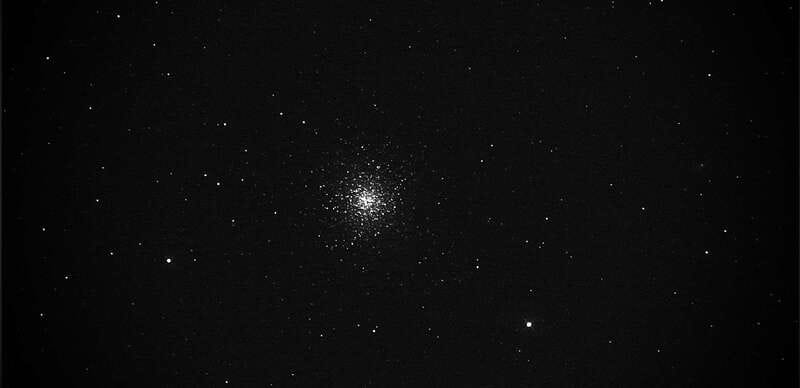
Jasper nights are famous, but this one starts indoors. The Jasper Planetarium Dome Experience is a 35-minute, guided show that pairs sky science with Jasper National Park themes, all in a climate-controlled theatre. I love how the presentation focuses on real sky objects (planets, nebulas, star clusters), not just pretty images. I also like that you get a live Q&A at the end, so you can ask the stuff you actually wonder about.
The main thing to watch is expectation level. If you want a long, observational astronomy session outside with actual telescope time, a short planetarium show might feel too brief.
In This Review
- Key points to know before you go
- Why Jasper’s planetarium feels special, even though it is indoors
- Price and timing: is $34 worth it for 35 minutes?
- Where you check in at Jasper Park Lodge, and why timing matters
- Before the show: what you can bring, and what the rules remove
- Inside the 42-seat dome: how the show is paced and why it works
- Aurora Borealis over Jasper, plus the far edge of the universe
- Rocky Mountain glaciers from space: a Jasper twist on astronomy
- Indigenous constellations: the local sky story you do not want to miss
- Q&A with the astronomy guides: where you get your real answers
- Rules and etiquette in the dome: keep it smooth for everyone
- Who should book this, and who might be disappointed
- Should you book the Jasper Planetarium Dome Experience?
- FAQ
- FAQ
- How long is the Jasper Planetarium Dome Experience?
- How much does it cost?
- Where do I check in for the tour?
- Is there free parking?
- Is the dome theatre wheelchair accessible?
- Is a live guide included?
- Are phones or photography allowed inside?
- Is food and drink allowed during the experience?
- Is there a cancellation policy?
Key points to know before you go
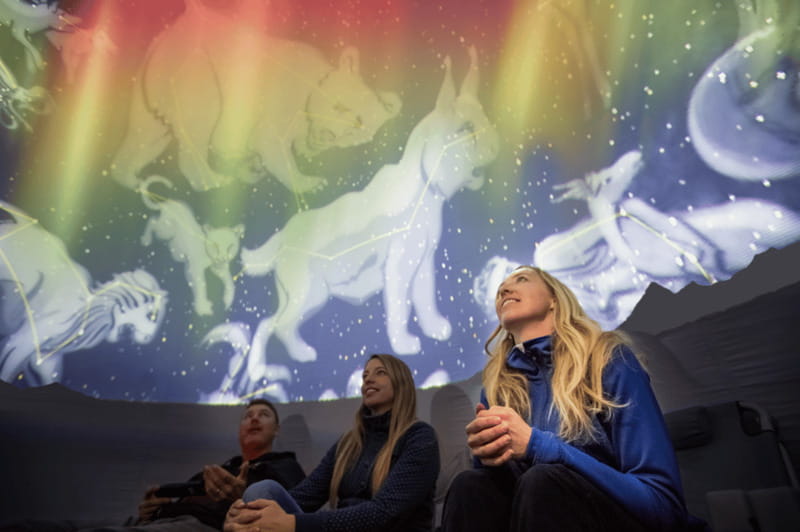
- 42-seat dome theatre: Small enough that the guide can talk to you, not just at you.
- Aurora Borealis over Jasper: You get a northern lights view over mountain-peaks visuals, without gambling on weather.
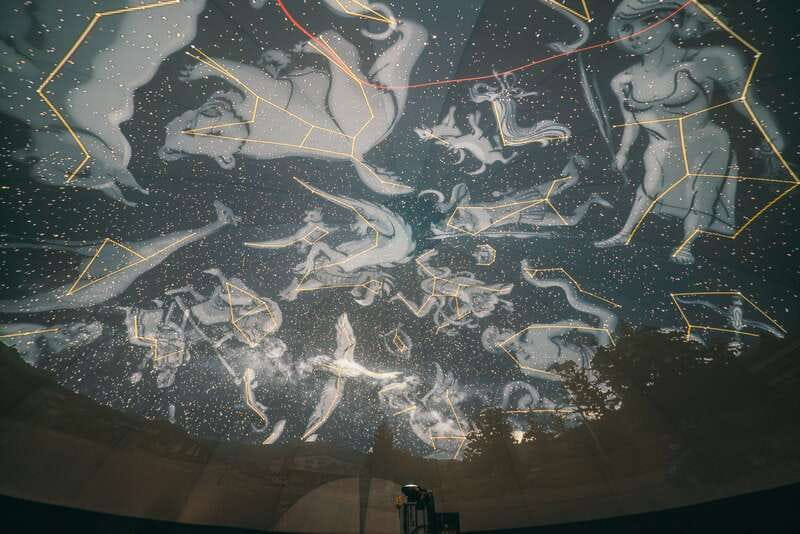
- Indigenous constellations: You’ll learn local constellation connections alongside standard astronomy.
- Planets, nebulas, and far star clusters: The show spans from nearby worlds to deep-space scale.
- Q&A after the dome sequence: Good for clarifying what you saw and how it connects to the real sky.
- Strict do-not list for phones and photos: Plan on enjoying the show without recording it.
Why Jasper’s planetarium feels special, even though it is indoors
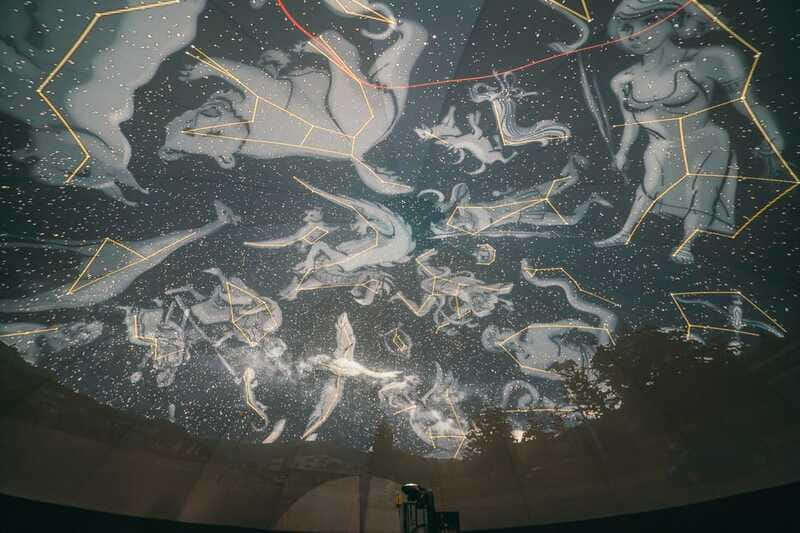
A planetarium can be a lot of things: a fast visual loop, a classroom lecture, or a cozy way to learn your way around the night sky. This one is built around Jasper and around the feeling of going from Earth’s familiar patterns into the universe’s big scale, then back again.
What makes it feel more than standard theatre is the way the content is framed. You are not just watching space images. You are moving through concepts like planets, nebulas, and far star clusters, and you are also connecting them to the Jasper night you came to see. That matters because it turns the show into a mental map. After 35 minutes, you are more likely to recognize what you are looking at when you step outside later.
The other difference is the guide-led tone. The experience is designed as an interactive journey with local astronomy guides, and the show ends with questions. In a small dome, that Q&A tends to feel more personal, which is exactly what you want when the universe feels too huge to even start asking good questions.
A few more Jasper days to compare
- Jasper: Columbia Icefield Skywalk and Ice Explorer Ticket
★ 4.6 · 2,444 reviews - Jasper: Columbia Icefield Skywalk
★ 4.3 · 916 reviews - Jasper National Park: Maligne Lake Cruise With Guide
★ 4.7 · 896 reviews
Price and timing: is $34 worth it for 35 minutes?
At $34 per person for about 35 minutes, this is not a bargain price, and it is not trying to be. The value comes from three things that fit together: a small theatre setup, a guided narrative, and the specific themes tied to Jasper National Park.
First, you are getting a climate-controlled night-sky experience. In Alberta, the outdoor sky can be gorgeous but unpredictable. Indoors, you are not losing time to cold, wind, or clouds. Second, the show includes structured learning: planets and deep-space objects, plus Indigenous constellation knowledge. Third, you get a live moment to ask questions after you come down from the dome visuals.
So, who should feel good about the price? If you want a smart introduction to the night sky that also makes space for local context, it is a strong use of your evening. Who might hesitate? If you are hunting for a long, hands-on astronomy session or you dislike short-format presentations, you may feel like it is over quickly.
Where you check in at Jasper Park Lodge, and why timing matters
Your tour starts at the Main Lodge of Fairmont Jasper Park Lodge, and the dome theatre is steps away. Check in at the Planetarium Retail Desk inside the Main Lodge at Jasper Park Lodge. Once you enter the lodge, walk straight past the front desk, and look for the retail desk in the SW corner of the lobby, across from the Emerald Lounge.
This part is simple, but it is time-sensitive. You must check in 15 minutes before tour departure, and latecomers are not admitted because it disrupts the tour for everyone else.
Also plan for parking variation. If you drive, you can park in any available parking lot (P2, P3, or P4). P2 is the closest to the Jasper Planetarium, but you might end up in P3 or P4 depending on availability. I would rather you arrive early with a little buffer than sprint through the lobby feeling stressed.
Before the show: what you can bring, and what the rules remove
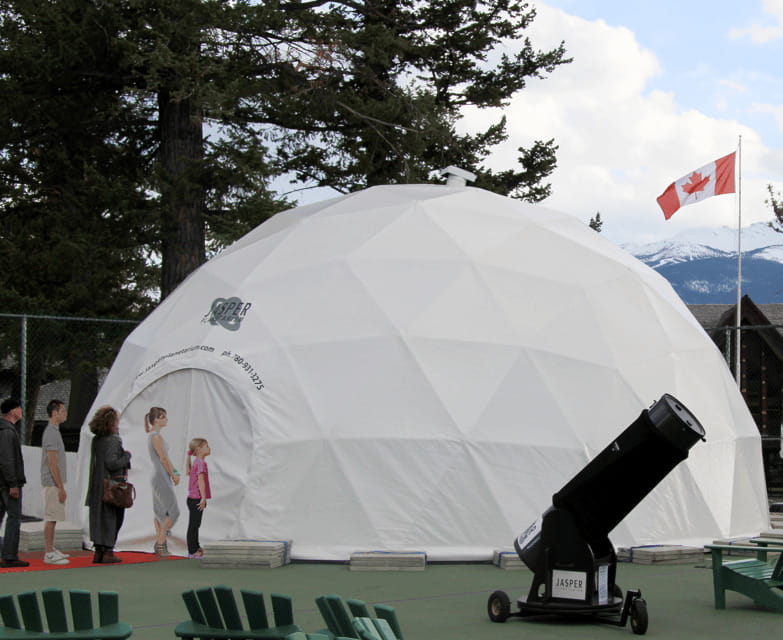
The experience has a clear aim: keep the dome dark and the focus on the sky visuals and guide narration. That is why there is a long do-not list.
Here are the big ones that affect your comfort:
- No flash photography
- No photography inside
- No audio recording
- No cellphones
- No food and drinks
- Smoking, vaping, alcohol, and drugs are not allowed
- Pets are not allowed (assistance dogs are allowed)
That might sound strict, but it is practical. In a dark dome, cameras and bright screens ruin the effect for everyone. Cellphones are especially disruptive because they pull attention and light back into the room.
There is also a safety and age suitability note: this is not suitable for children under 4 years. If you are traveling with very young kids, you will want to plan something else for that age group.
On the plus side, the experience is wheelchair accessible. If you need accessibility support, this is a good sign that the venue is designed for more guests than just the able-bodied.
A different day out in Canada:
- Jasper Evening Wildlife Tour
★ 4.5 · 710 reviews - Jasper National Park: Evening or Morning Wildlife Watch Tour
★ 4.6 · 691 reviews - Jasper Wildlife & Sightseeing Tour with Maligne Lake Cruise
★ 5.0 · 603 reviews - Rafting Adventure on the Kicking Horse River
★ 5.0 · 590 reviews
Inside the 42-seat dome: how the show is paced and why it works
The dome theatre seats 42 people, which changes the vibe compared to a huge cinema. You are not lost in a crowd. The guide can keep the room connected, and the narrative is built around interactive moments.
The experience lasts about 35 minutes, which means every segment has to earn its place. That is a benefit if you want an evening activity that does not swallow your whole night. It is also a consideration if you are looking for a deep, slow astronomy lesson. This show is designed for momentum: the universe feels big, then it gets explained, then it gets connected back to what you can recognize later.
You can expect the dome to take you through multiple scales:
- starting with familiar sky ideas,
- moving into objects like nebulas and far star clusters,
- and then zooming into Jasper-themed visuals like the aurora.
Then the best part for many people is the wrap-up. You descend back to Earth, and that is when the Q&A starts. In other words, the show does not just end. It turns into conversation.
Aurora Borealis over Jasper, plus the far edge of the universe
The core visual promise here is that you get to see the Northern Lights over the skies of Jasper National Park. The value is not just that you see aurora effects. It is that the show places them in the context of what you came to see, mountain-peaks style, with guided explanation around what you are seeing.
That matters because aurora can feel like pure spectacle if you do not have a framework. A guided tour helps you connect the pattern and feel of the lights to sky concepts, instead of treating it like a random light show. Even if you are not an astronomy person, you will usually leave with at least a few clear ideas you can carry outside.
The show does not stop at the aurora. You also get space visuals tied to:
- learning about planets
- learning about nebulas and far star clusters
- and experiencing the “edge of the universe” style scale, then returning back to Earth
This is a storytelling approach, not a catalog. You are getting a tour of ideas across distances that feel impossible. The result is that your brain gets practice handling scale, from local to cosmic.
Rocky Mountain glaciers from space: a Jasper twist on astronomy
One of the most Jasper-specific moments is the idea of viewing Rocky Mountain glaciers from space as part of the program. Even though the details of the segment are not described here, the point is clear: the show uses astronomy tools and perspective to connect Earth science to the night-sky experience.
That is a smart move. When you only focus on stars, space can feel totally separate from daily life. When you connect it to glaciers and Jasper National Park, it makes space feel relevant and local. It also helps you see the show as education, not just entertainment.
If you like travel experiences that link big ideas to a real place, this is one of the segments to look forward to.
Indigenous constellations: the local sky story you do not want to miss
The experience includes learning about local Indigenous constellations. This is one of the headline highlights, and it deserves your attention, not a quick skim.
Why this matters is simple. Constellations are not only astronomy. They are also storytelling and ways of reading the sky that come from lived experience. In a Jasper context, the sky becomes part of the region’s identity, not just an abstract science topic.
I would treat this segment as the heart of the “Jasper-specific” value. If you go in expecting generic sky trivia, you may miss how meaningful the local constellation lens can be.
Q&A with the astronomy guides: where you get your real answers
The Q&A is included, and it is not an afterthought. It happens after you return from the dome visuals, which is the perfect time. You can ask based on what you just saw, so your questions are easier to understand and more likely to get direct answers.
This is also where the experience can outperform standard planetarium shows. When the guide is good at explaining, you walk out with clarity, not confusion. From the feedback I reviewed, the strongest praise tends to go to guides who speak well, keep the tone friendly, and make it easy to interact.
So when you arrive, think of questions before you sit down. If you are not sure what to ask, a safe approach is to ask what object you saw that has the most relevance for seeing it in the real sky during your trip, or how to recognize one of the patterns you heard about.
Rules and etiquette in the dome: keep it smooth for everyone
This experience is strict about keeping the dome dark and focused. Here is what will affect your comfort most during the show:
- No cellphones: plan to silence and stow it.
- No photography: keep your camera away, even without flash.
- No audio recording: enjoy the narration in real time.
- No food and drinks: if you are hungry, eat earlier.
- Avoid flash photography and anything that creates extra light.
Latecomers will not be admitted. That is not about being unfriendly, it is about not disrupting the group. Your best strategy is simple, arrive early enough to check in smoothly and settle.
Who should book this, and who might be disappointed
You will likely enjoy this if you:
- want an easy, weather-proof way to see aurora-themed sky visuals,
- like guided explanation rather than self-guided wandering,
- want a short evening activity that still feels educational,
- care about local Indigenous constellations and the Jasper connection,
- or just want to ask questions in a structured setting.
You might be less happy if:
- you expect a long, outdoors astronomy session with telescope time,
- you dislike short-format shows (it is about 35 minutes),
- you want to record everything with your phone, because cellphones are not allowed.
Also, keep in mind that planetarium style learning can feel like a “show,” even when it is accurate and well taught. If your ideal astronomy night is pure observation, you may want to pair this with another night-sky plan outside.
Should you book the Jasper Planetarium Dome Experience?
If your goal is a guided introduction to the night sky with Jasper-specific themes, I think it is a good buy at $34. The price makes sense when you add up the guided format, the small 42-seat dome setting, the aurora and space visuals, and the included Q&A. It is also a smart choice if weather could mess with your plans, since you are not relying on clear skies to learn.
I would book it especially if you are the kind of traveler who likes your evening activities to teach you something you can actually use outside. If you show up curious, keep your phone away, and ask questions, you are likely to walk out feeling like the night sky got less intimidating.
FAQ
FAQ
How long is the Jasper Planetarium Dome Experience?
The experience lasts about 35 minutes.
How much does it cost?
It is priced at $34 per person.
Where do I check in for the tour?
Check in at the Planetarium Retail Desk inside the Main Lodge at Jasper Park Lodge.
Is there free parking?
Yes. Free parking is included, and you can park in P2, P3, or P4.
Is the dome theatre wheelchair accessible?
Yes, the experience is wheelchair accessible.
Is a live guide included?
Yes. There is a live tour guide in English, and a Q&A with the astronomy guides is included.
Are phones or photography allowed inside?
No. Cellphones are not allowed, and photography and audio recording inside are also not allowed.
Is food and drink allowed during the experience?
No. Food and drinks are not included and are not allowed inside.
Is there a cancellation policy?
You can cancel up to 24 hours in advance for a full refund. Within 24 hours, refunds are not provided, though you can change your booking to a different time.
Recently listed around Jasper
- Jasper: Jasper Planetarium and Telescope Combo Tour Tickets★ 3.8 · 118 reviews
- Sunwapta Challenge Whitewater Rafting in Jasper★ 4.8 · 31 reviews
- Canadian Rockies: Helicopter Flight with Exploration Hike★ 4.9 · 89 reviews
- Revelstoke: Guided Canoe Tour with Snacks★ 5.0 · 5 reviews
- Jasper: Sunwapta River Whitewater Rafting – Self-Drive★ 4.6 · 3 reviews
- Jasper: Transfer to Banff/Lake Louise w/ Columbia Icefields★ 4.7 · 34 reviews
- Jasper: Winter Wildlife Bus Tour in Jasper National Park★ 4.6 · 93 reviews
- Jasper National Park Family Friendly Rafting Adventure★ 4.9 · 145 reviews
Jasper Tours, compared.
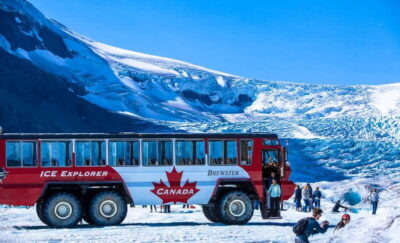
Columbia Icefield Skywalk and Ice Explorer Ticket
Read our review →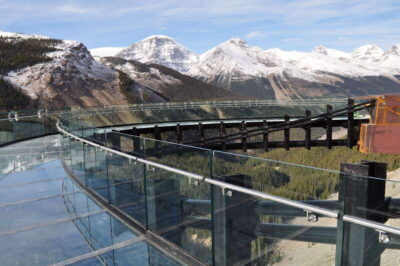
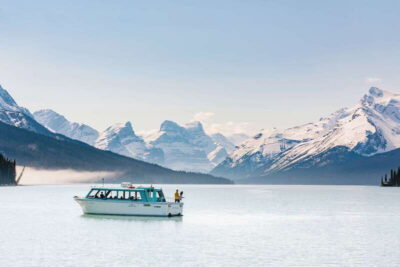
Jasper National Park: Maligne Lake Cruise With Guide
Read our review →
Jasper National Park: Evening or Morning Wildlife Watch Tour
Read our review →
Jasper Wildlife & Sightseeing Tour with Maligne Lake Cruise
Read our review →
Browse the lists this tour appears in