
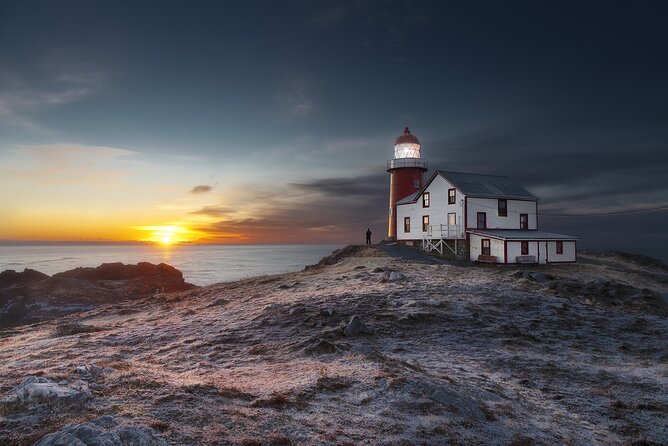
REVIEW · ST JOHNS TOURS
Irish Loop Smartphone Audio Driving Tour
In This Review
- Irish Loop audio makes the drive feel longer
- Key highlights worth planning around
- What this drive actually feels like
- Price and value: $11.20 per group can be a steal
- Getting set up in the Tripvia Tours app
- Stop-by-stop: the Irish Loop from Deadman’s Bay to St. John’s
- Launch point: set off from Fort Amherst Rd
- Deadman’s Bay: why the name feels ominous
- Blackhead: a fishing village with ocean views
- Cape Spear: the edge-of-the-continent feeling
- Maddox Cove: survival stories under calm water
- Petty Harbour: colorful shores and a local skipper
- First Pond, Second Pond, Third Pond, and the naming logic
- James Doyle: someone who lived part of the story
- Bay Bulls: history, pirate raids, fairy legends, and puffins
- Witless Bay: charming, and the name explanation matters
- Mobile Bay: whales, puffins, and soaring eagles
- Tors Cove: Nathaniel and a stormy night with fear and cannons
- La Manche: stunning views plus a late January 1966 story
- A place with flickering lights: cemetery folklore and glowing graves
- Calvert: name change, silver fish, and supernatural rock formations
- Ferryland Lighthouse: Lady Sara Kirke may make an appearance
- Avalon archaeological treasure: a 17th-century colony with secrets
- Pirates in the area: a hideaway story
- Aquaforte: strong water, not strong drink, plus a waterfall
- Tommy Brophy: a master storyteller who swears the waves talk back
- Renews: the quirky name has an origin
- Chance Cove: worth the detour for shipwreck views
- Cape Race: the Titanic link
- Evolution cliff: a rocky cliff that changed what you thought you knew
- Overturned fishing boat: cod stocks collapse and resilience
- Pirate and cod stories again: Biscayan fishers, burning ships, and Black Bart
- Trepassey: aviation history twice
- Saint Vincent’s: ocean and pond contrast
- Point La Haye: Irish heritage meets ice age geology and mummering
- St. Mary’s: British soldier during the American Revolution
- Name sorting section: St. Catherine’s, Salmonier, and Mount Carmel-Mitchell’s Brook
- Butter Pot: fugitives, forest fires, and local freedom stories
- End in St. John’s: North America’s oldest city
- Who this audio tour is best for
- A few practical tips to make it smoother
- Should you book the Irish Loop Smartphone Audio Driving Tour?
- FAQ
- Where does the tour start and where does it end?
- How long does the Irish Loop Smartphone Audio Driving Tour take?
- What do I need to use the tour?
- Is the tour only for a private group?
- How many people can be in one booking?
- Do I need signal or data during the drive?
- What connection do I need at the start?
- What language is the audio offered in?
- What are the tour operating hours?
- Can I cancel and get a full refund?
Irish Loop audio makes the drive feel longer
If your road trip needs a brain and a soundtrack, this is it. The Irish Loop Smartphone Audio Driving Tour turns a day behind the wheel into a GPS-guided story route through Newfoundland’s fishing communities, place-name mysteries, and ocean wildlife.
I love that it is easy to run on your own time, with no time limits, so you can stop for views (and still keep moving). I also love the sheer variety of voices and themes, from Captain Morgan to Aussie wildlife lover Steve, with plenty of practical suggested moments to pull over and look.
One thing to plan for: you need mobile or WiFi at the start to download the audio, but the tour is designed so you will not need signal or data while you are driving.
Key highlights worth planning around
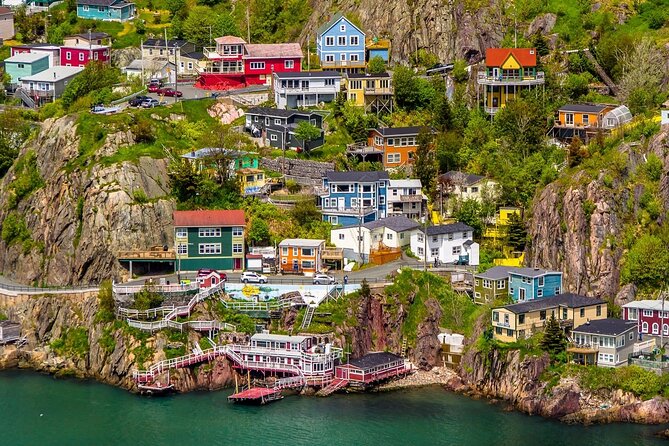
- GPS-guided narration that makes the Irish Loop feel like a guided route without a group meeting
- Offline-friendly design, so your trip can keep going even when the signal drops
- Value for groups, priced per group (up to 15 per vehicle)
- Stop-by-stop storytelling tied to famous headlands, harbours, and puzzling place names
- Wildlife callouts to keep your eyes on the water for puffins, whales, icebergs, and more
A few more St Johns days to compare
- Newfoundland Puffin and Whale Watch Cruise
★ 5.0 · 837 reviews - 2 Hours Guided Whale and Bird Boat Tour in Bay Bulls
★ 5.0 · 557 reviews - 2 Hour Award-Winning Whale and Seabird Boat Tour from St. John’s
★ 4.5 · 455 reviews
What this drive actually feels like

This tour is built for the rhythm of a self-drive Newfoundland day: pull off when something catches your eye, start listening again when you are back on the road, and repeat as needed. There are no strict time constraints, so I find it works best when you treat it like a slow loop rather than a checklist.
You start and finish at the same place in St. John’s, at 3 Fort Amherst Rd. Then you head along a coastal sweep of Irish Loop communities where the audio stitches together Irish heritage, early exploration, and Indigenous traditions, all tied to the names and stories you see from the road.
The biggest advantage is that the audio is doing the hard work for you: it explains what you are looking at, and why locals care about it. If you love road trips that feel meaningful instead of repetitive, this setup is a good match.
Price and value: $11.20 per group can be a steal
At $11.20 per group (up to 15 people), the math can be surprisingly friendly if you are traveling with others in one vehicle. Even if you are just two people, it can still feel like a low-cost upgrade compared to what you might spend on tours that require timed entry tickets.
Here is how to think about it practically: you are paying for the audio experience itself, plus the guidance of GPS cues. If your group is already doing the drive anyway, this turns that drive into a story route. If you are only doing a quick peek and not planning to linger, the audio value is still there, but you will feel it most when you slow down.
Getting set up in the Tripvia Tours app
This is delivered through the Tripvia Tours app with a mobile ticket. Plan a quick download before you start your driving day, because you need good mobile or WiFi connection for the initial download.
After that, the tour is designed so you do not need signal or data during the actual route. That is a big deal on Newfoundland roads, where coverage can be spotty and you still want your narration to keep flowing.
Also note: you will need your own smartphone or tablet, and transportation is on you. The tour is private for your group, meaning it is just your vehicle following the audio route.
A different day out in Canada:
- Historic St. John’s Newfoundland and Cape Spear Tour
★ 5.0 · 248 reviews - St. John’s Downtown Walking Tour
★ 5.0 · 219 reviews - 4 Hour St John’s Tour w Come From Away star (lunch included)
★ 5.0 · 168 reviews - St. John’s 3 Hour Newfoundland Food Tour
★ 5.0 · 132 reviews
Stop-by-stop: the Irish Loop from Deadman’s Bay to St. John’s

Think of the stops as a mix of viewpoint moments and story checkpoints. In most places, you can treat the stop as: pull over safely, listen to the audio section, then look for the details the narration points out.
Launch point: set off from Fort Amherst Rd
Your audio begins with a clear invite to discover Newfoundland’s Irish Loop, describing the overall feel of the route: rugged coastal scenery, historic fishing villages, and ocean views. I like starting with the big picture because you get better at spotting what the tour wants you to notice later.
You will also hear a wildlife promise early on: watch for puffins, whales, and even icebergs drifting past the coast. That kind of tip helps you keep your eyes up, not stuck in “turn by turn” mode.
Deadman’s Bay: why the name feels ominous
Next up is Deadman’s Bay, where the audio focuses on the ominous name and introduces Captain Morgan’s stories of pirates, peril, and Atlantic adventures.
What I like about this kind of stop is that it gives you a hook before the landscape turns quiet. Even if you do not see anything dramatic at the waterline, the name itself carries the mood, and the narration makes the coastline feel like it has a pulse.
Blackhead: a fishing village with ocean views
Blackhead is where the tour turns to a traditional fishing village vibe. The audio frames seafaring history and the viewscape you can take in from the coast.
Practical note: fishing communities often reward slow looking. If you can, give yourself a few minutes to watch how the water sits against the shore before you move on.
Cape Spear: the edge-of-the-continent feeling
At Cape Spear, the audio leans into scale: you are at the edge of a continent, staring into the endless Atlantic. The stories here center on courage, survival, and discovery.
This is the kind of stop where the value is not just the facts. It changes how you see everything else after it, because you realize how exposed this coastline is and why so many of the stories revolve around weather, travel, and being prepared.
Maddox Cove: survival stories under calm water
Maddox Cove may look peaceful, but the audio says the water has a history of survival, tragedy, and triumph. It includes stories of raids, legendary storms, early innovation, and local folklore.
If you like your travel history grounded in place names, this stop works well. The audio helps you connect the “quiet scene” to the human stakes behind it.
Petty Harbour: colorful shores and a local skipper
Petty Harbour is presented as a magnet for fishers and filmmakers, and the audio adds a local skipper’s perspective. This is where the tour feels less like folklore and more like lived experience told from a working mindset.
I recommend using this stop to reset your focus. After several heavier stories, it helps to spend a moment on what the harbour is like in real life now.
First Pond, Second Pond, Third Pond, and the naming logic
Then you get the “pond” puzzle: First Pond, Second Pond, Third Pond, and the next one. The narration explains why everything gets called a pond, no matter the size.
This is one of the places I find most useful on a self-guided tour. When place names make sense, you stop wondering and start noticing patterns. It also gives you a fun conversational topic for later back at your lodging.
James Doyle: someone who lived part of the story
The audio points you toward James Doyle, framing it as firsthand knowledge for the part of the story that needs explanation.
I like when self-guided tours include a named voice like this, because it signals that the narration is pulling from someone’s lived account rather than just generic descriptions.
Bay Bulls: history, pirate raids, fairy legends, and puffins
Bay Bulls is described as small but packed with history, pirate raids, fairy legends, and puffins galore. The narration says locals will share tales, and you might even dodge a mischievous fairy.
This is a fun shift in tone. It also sets you up to look for the birds the audio calls out, so you do not treat wildlife as an accidental bonus.
Witless Bay: charming, and the name explanation matters
Witless Bay is introduced with charm, but the audio also promises to explain the name. It is a good reminder that quirky names usually have a reason, and the tour is there to supply it.
Mobile Bay: whales, puffins, and soaring eagles
Mobile Bay comes alive in summer in the narration, with callouts for whales, puffins, and soaring eagles. The audio tells you to keep your eyes on the waves and watch closely.
I recommend you treat this as a “slow down your eyes” stop. When you are looking for marine life, sudden head movement can make you miss what is right there.
Tors Cove: Nathaniel and a stormy night with fear and cannons
At Tors Cove, the audio has Nathaniel telling a wild story of a stormy night when fear, cannons, and history collided.
Stops like this are great on an audio tour because you can listen while you look. Even if you are only able to see coastline and not battle details, the narration helps you feel how fragile a moment like that must have been.
La Manche: stunning views plus a late January 1966 story
Then comes La Manche, with the tour promising both stunning coastal views and a look at an unthinkable fate in late January 1966.
This is the kind of stop where I would give yourself a bit more listening time than you think you need. Serious stories benefit from not being rushed.
A place with flickering lights: cemetery folklore and glowing graves
The route includes a quiet cemetery with flickering lights, and the audio warns you not to spook too quickly while it tells a ghostly-legends tale of glowing graves and how old folklore found a modern twist.
If you are traveling with kids, this can be a great moment, but I would keep expectations flexible. Think of it as a local folklore-style story section rather than a proof of anything supernatural.
Calvert: name change, silver fish, and supernatural rock formations
Calvert is described as not always being called Calvert, with an explanation of how and why the name changed. The audio also ties the town to silver fish and supernatural rock formations.
This stop is good for anyone who loves when a tour does not just say what happened, but connects it to what you see in front of you.
Ferryland Lighthouse: Lady Sara Kirke may make an appearance
At Ferryland Lighthouse, the narration focuses on ocean views and mentions Lady Sara Kirke might drop in. That is a memorable hook, and it fits the tour’s pattern of blending documented and legendary storytelling.
Practical tip: lighthouse stops often feel windy. If you plan to stop for a few minutes, bring layers and be ready to step aside for safe listening and viewing.
Avalon archaeological treasure: a 17th-century colony with secrets
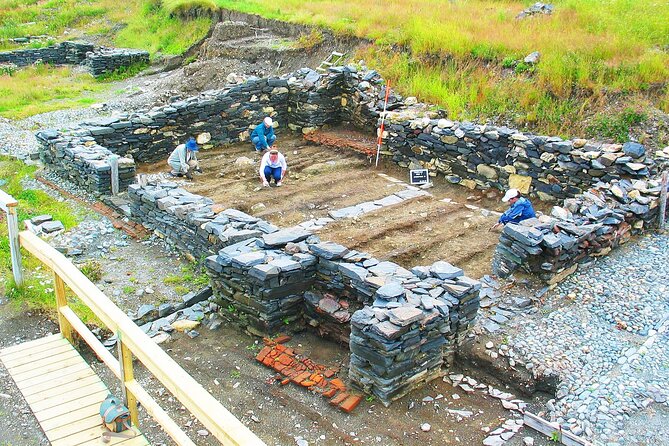
The audio describes Avalon as one of North America’s most important archaeological treasures, tied to a 17th-century colony that challenged stereotypes and left behind secrets still being uncovered.
This is where the tour can surprise you, because you start as a road-trip driver and end up thinking about time depths. Even without seeing excavations directly, the narration gives you a reason to treat the area as more than just a scenic stop.
Pirates in the area: a hideaway story
The route includes a stop tied to pirates, with a story of a pirate hideaway.
I like that this theme repeats, because Newfoundland pirate stories often feel local and specific. The tour keeps you from thinking it is all generic “pirate talk.”
Aquaforte: strong water, not strong drink, plus a waterfall
Aquaforte is framed as strong water, not strong drink, and the audio explains why the harbour got its name and includes a note about dodging pirates plus a Canada first mentioned in the narration.
It also offers a chance to get up close to the waterfall that gave Aquaforte its name. That is one of the practical reasons to take the tour slowly, because the story becomes more real when you can hear or feel water nearby.
Tommy Brophy: a master storyteller who swears the waves talk back
You then hear from local legend Tommy Brophy, described as a master storyteller who believes even the waves have tales to tell.
On self-guided audio tours, named storytellers are gold. They create a rhythm, so the audio feels like characters in a series instead of a single continuous narrator.
Renews: the quirky name has an origin
The tour returns to place names with Renews, promising an explanation of how the name came to be.
This is the sort of stop that takes two minutes to listen to and makes the entire drive more fun, because you start spotting how names preserve old meanings.
Chance Cove: worth the detour for shipwreck views
Chance Cove is presented as a stop where you can hear the story without necessarily stopping, but the detour is worth it for shipwrecks and stunning views.
This is a practical reminder: the audio might not force you to walk or stop if you do not want to, but the payoff is in the coastline you see when you take the extra turn.
Cape Race: the Titanic link
At Cape Race, the narration explains its connection to the Titanic.
Even if you know the basics, tying a major historic event to a specific cliff and coastline changes the way you picture maritime travel. It is the difference between reading about history and standing near the geography that made it possible.
Evolution cliff: a rocky cliff that changed what you thought you knew
The audio mentions a rocky cliff linked to a twist on evolution, presented as a way Cape Race changed what people thought they knew.
Because the specifics are part of the audio, I would listen carefully rather than trying to guess based on headlines. This is one of those places where the narration matters more than any quick summary.
Overturned fishing boat: cod stocks collapse and resilience
Then you see an overturned fishing boat by the road, with the story of collapsed cod stocks, traditions halted, and a community that chose to endure. The audio focuses on loss turning into resilience.
This is one of the heavier emotional stops. I would plan to give it full attention and not rush past it while multitasking in the car.
Pirate and cod stories again: Biscayan fishers, burning ships, and Black Bart
There is also a quiet stretch where Biscayan fishers, burning ships, and a pirate named Black Bart are part of the story. The narration suggests even the wind carries wild tales.
If you like atmosphere, this section is for you. It is the sort of listening where the landscape is partly visible and partly felt.
Trepassey: aviation history twice
Trepassey gets a time-machine moment in the audio, with aviation history that happened twice.
Aviation in a coastal loop can feel unexpected, which is exactly why it works on an audio drive. It keeps you from treating the route as only a fishing and folklore circuit.
Saint Vincent’s: ocean and pond contrast
Saint Vincent’s is described as a contrast, framed by ocean on one side and calm pond on the other. The audio also promises one of the strangest and richest ponds you will ever encounter.
This stop ties back to the pond naming theme earlier, and it makes the route feel coherent. You start to understand that these place names are not random, they are part of how people map and survive their coast.
Point La Haye: Irish heritage meets ice age geology and mummering
Point La Haye is described as where Irish heritage and ice age geology meet Newfoundland traditions like mummering.
If you want a cultural stop that feels more than informational, this is it. It also gives your drive a reason to think about community rituals, not just scenery.
St. Mary’s: British soldier during the American Revolution
In St. Mary’s, the audio includes a British soldier stationed during the American Revolution, tied to cannons protecting fishing riches and firing in battle.
This is another stop where the listening adds context to what might otherwise look like plain coastline.
Name sorting section: St. Catherine’s, Salmonier, and Mount Carmel-Mitchell’s Brook
The route includes St. Catherine’s, Salmonier, Mount Carmel, Mitchell’s Brook, and St. Catherine’s again, with the audio promising it will sort out the names.
This is helpful because Newfoundland coastal regions often have similar-sounding place names. Having the audio explain them keeps you from getting lost in your own notes.
Butter Pot: fugitives, forest fires, and local freedom stories
Butter Pot gets a quirky introduction, with wild blueberries and ancient rocks tied to tales of fugitives, forest fires, and freedom. It also mentions watching out for guys with cap-guns, with an explanation coming in the audio.
I like this tone shift because it feels like local storytelling, not a museum lecture.
End in St. John’s: North America’s oldest city
The tour finishes in St. John’s, described as North America’s oldest city, with salt air, music, and legend. For many road trippers, ending in a bigger hub is the easiest way to wrap your day.
Who this audio tour is best for
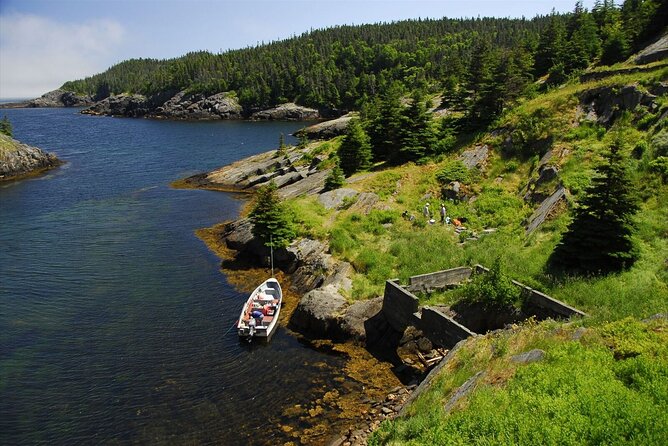
I think this works especially well if you:
- Want to travel at your own pace, with no hard schedule
- Like listening while you look out the window, rather than needing a live guide at each stop
- Are curious about place names and local storytelling themes like pirates, ponds, and cultural traditions
It might be less satisfying if you prefer highly structured tours where someone tells you exactly where to stand, where to park, and when to move on. Since this is self-guided, you control the pace, for better or worse.
A few practical tips to make it smoother
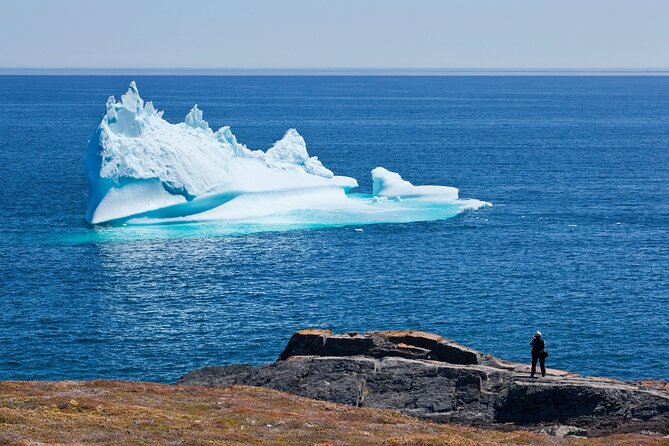
- Download first, then start your driving day. Good WiFi at the start is the one step you cannot skip.
- Use pull-over listening time. When you see a coastline point, listen to that stop’s audio instead of racing past it.
- Plan for weather. Coastal Newfoundland can change fast, and you do not want to be stuck rushing because you are uncomfortable.
- Pair it with slow scenic breaks. The tour is at its best when you can look around while the story plays.
Should you book the Irish Loop Smartphone Audio Driving Tour?
Yes, if you want a low-stress way to add meaning to a Newfoundland road trip. The best part is how the audio turns dozens of small stops into a connected route, with named voices like Steve, Nathaniel, James Doyle, and Tommy Brophy, plus pirate and folklore themes that keep the drive from feeling like background noise.
I would book it if you are already planning to drive the Irish Loop and you can spare a half-day to a full day, with the option to stretch it longer. If you only want the highlights fast, you might miss some of the value. But if you like road trips that reward curiosity, this one is a strong match.
FAQ

Where does the tour start and where does it end?
It starts at 3 Fort Amherst Rd, St. John’s, NL A0A 1J0, Canada, and it ends back at the same meeting point.
How long does the Irish Loop Smartphone Audio Driving Tour take?
The duration is listed as 4 to 8 hours (approx.), and there are no time constraints, so you can take as long as you like.
What do I need to use the tour?
You need your own smartphone or tablet to run the mobile ticket and audio in the Tripvia Tours app. Transportation is not included, so you use your own vehicle.
Is the tour only for a private group?
Yes. Only your group participates, and the experience is private for your vehicle.
How many people can be in one booking?
The price is per group, up to 15 people per group, and only 1 tour booking is needed per vehicle.
Do I need signal or data during the drive?
No. After the initial download, the tour is designed so no signal is required and no data is used during the tour.
What connection do I need at the start?
For the initial download, the info says you need good mobile or WiFi connection.
What language is the audio offered in?
The tour is offered in English.
What are the tour operating hours?
The listed opening hours are Monday to Sunday, 8:00 AM to 8:00 PM.
Can I cancel and get a full refund?
Yes. You can cancel for free up to 24 hours in advance for a full refund, as long as you cancel at least 24 hours before the experience start time.
Recently listed around St Johns
- Murder Mystery Detective Experience in St Johns NL★ 4.0 · 4 reviews
- St. John’s Audio Walking Tour★ 4.0 · 4 reviews
- The Best of St. John’s Private Walking Tour★ 4.0 · 5 reviews
- St. John’s Local Pub Tour & History Lesson★ 5.0 · 11 reviews
- St. John’s Guided Walking Tour★ 5.0 · 4 reviews
- St. John’s, Quidi Vidi Village & Signal Hill Small Group Tour★ 4.0 · 34 reviews
- Late Season Puffin & Scenic Coastal Cruise★ 5.0 · 18 reviews
- St. John’s Small Group Tour with Iceberg Quest Boat Cruise★ 3.0 · 21 reviews
St Johns Tours, compared.
2 Hour Award-Winning Whale and Seabird Boat Tour from St. John’s
Read our review →
Historic St. John’s Newfoundland and Cape Spear Tour
Read our review →

4 Hour St John’s Tour w Come From Away star (lunch included)
Read our review →
Browse the lists this tour appears in