
REVIEW · CANADA
Intro Survival Course Rockies
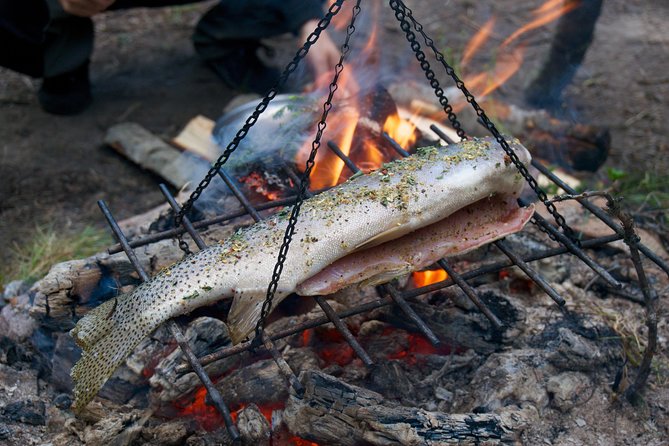
A first-aid-of-the-mind weekend in the Rockies. This 2-day intro survival course in Alberta trades theory for hands-on bushcraft: you practice survival fires and shelters, work with knots, and get instruction you can actually use if you ever end up off-grid. You also have a real chance to build confidence for backcountry travel with the kind of step-by-step coaching that keeps things practical, not scary.
Two things I really like are that the course is private and customizable for your group and that it includes the gear to complete the training. One consideration, though, is that transportation to and from the program is not included, so you’ll want to plan your own way to the meeting spot at HI Nordegg Shunda Creek Wilderness Hostel.
In This Review
- Key Highlights You’ll Feel in Day 1 (Not Just at the Finish Line)
- Where You Train: Nordegg, Abraham Lake, and the Cline River Hike
- Day 1 at Abraham Lake: Precautions, Fire Skills, Shelters, and Knots
- Day 2 Morning on Repeat: Skills Refresher That Builds Real Confidence
- Cline River Afternoon: Navigation, Medicinal Plants, and Survival Extras
- Instructors, Group Feel, and Why “Private” Can Mean Better Learning
- Equipment and Meals: What’s Included, What That Means for Your Wallet
- Price check
- Location Advantage: Real Rocky Mountains Skills, Not a Classroom Performance
- Who Should Book This Survival Course (and Who Might Want Something Else)
- Weather, Timing, and How to Keep the Weekend Stress-Free
- Should You Book Intro Survival Course Rockies?
- FAQ
- How long is the Intro Survival Course Rockies?
- Where do we meet for the course?
- Is transportation to and from the program included?
- What meals are included?
- Do they provide the equipment?
- Is the course private and can it be customized?
- Is there a vegetarian option?
- Is there a minimum group size?
- What happens if the weather is poor?
Key Highlights You’ll Feel in Day 1 (Not Just at the Finish Line)
- Customizable private course for your group, so the teaching can match your comfort level
- Abraham Lake base camp training, including making survival fires, shelters, and learning priorities in emergencies
- Sleep inside your own survival shelter overnight, so you get real context fast
- Navigation and medicinal plant identification on the Cline River hike
- Advanced options if time permits, like cordage, basic snares and traps, and survival saw skills
- All necessary equipment included, including items like compasses and GPS
Where You Train: Nordegg, Abraham Lake, and the Cline River Hike
This is an Alberta Rockies course that starts in the Nordegg area and quickly shifts you from “where am I?” to “I’ve got this.” You meet at HI Nordegg Shunda Creek Wilderness Hostel at 9:30 AM for a meet-and-greet and intro to your instructor(s), then you drive roughly 40 km from Shunda Creek to the training location. That short transfer matters, because it gets you into the right terrain without wasting your training time.
Day 1 centers on Abraham Lake at Kootnay Plains, where you set up base camp and learn core survival skills in the field. Day 2 then moves into a more hike-and-navigation style session on the Cline River, where you connect survival thinking to real movement through the outdoors, including identifying medicinal plants. Even if you’re new to this stuff, the sequence helps your brain: learn the basics at camp, then practice decisions while walking.
Also, since this is a private course, you’re not mixing with strangers in the middle of hands-on training. You keep your group together while you learn skills that tend to be way easier with personal coaching.
More of Alberta worth an afternoon:
- Wild Water Adventures
★ 5.0 · 581 reviews - Abraham IceBubble/Sunwapta, Athabasca Falls, Peyto, Bow Lake
★ 5.0 · 298 reviews - Moraine Lake, Lake Louise Johnston Canyon Banff National Park
★ 4.5 · 243 reviews
Day 1 at Abraham Lake: Precautions, Fire Skills, Shelters, and Knots
Day 1 is where the course earns its keep. After the meet-and-greet and the drive into the Rockies, you reach Abraham Lake and begin with a safety foundation. The teaching starts with precautions and the dangers you should be aware of, then moves into what matters during an emergency: proper equipment and how to think in priorities instead of panic. That section is especially valuable for beginners, because it helps you focus on survival logic, not just isolated tricks.
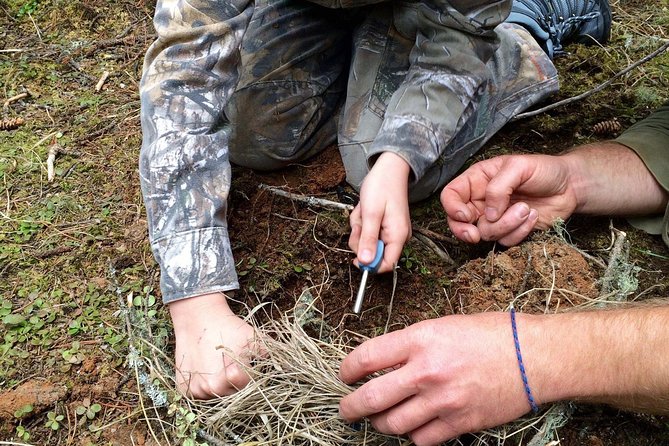
From there, you get practical bushcraft work. The day includes making survival fires and building shelters under adverse conditions. This isn’t just a demo where you stand back and watch. You’re trained to approach the tasks as a process: assess conditions, choose a method, build something that works, and understand what could go wrong.
You also cover useful knots. Knots are one of those survival skills that sound simple until you try them while you are cold, tired, and working with limited patience. In a structured course like this, knots become a tool you can reuse for shelter setup, cordage, and gear management later.
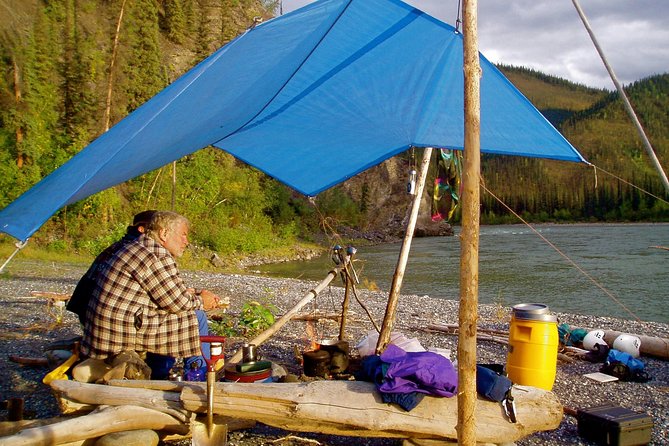
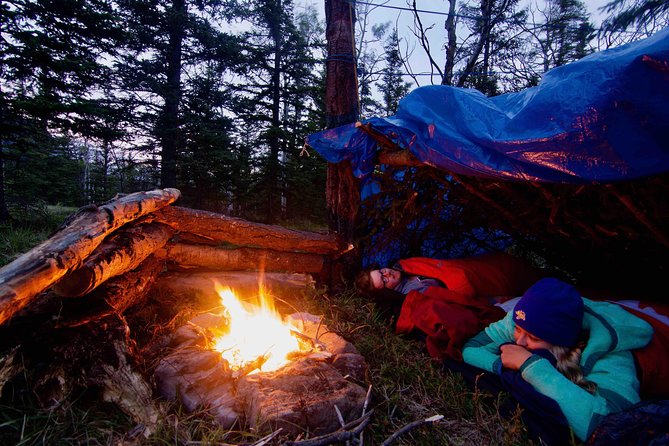
The day ends with the most memorable part: you get the opportunity to sleep in your very own survival shelter. It’s a powerful way to connect the classroom to reality. You don’t just learn how to build it, you experience what it feels like when you are relying on your own work overnight.
Day 2 Morning on Repeat: Skills Refresher That Builds Real Confidence
The second day starts right where the first left off, with morning session time at Abraham Lake. From 9:00 AM to 11:00 AM, you continue topics introduced on Day 1. That “practice and reinforce” block is one of the underrated strengths of the itinerary. Survival knowledge sticks better when you revisit it quickly and then adjust based on what you got wrong the first time.
If you’re coming in with beginner-level experience, this morning structure helps you get to that stable point where you stop second-guessing every step. It’s also helpful if you’re coming with mixed comfort levels, because private instruction lets your group spend more time on what you need most.
The course’s overall emphasis stays grounded in real outdoor situations. Instead of turning this into a survival survival-quiz, the morning keeps everything tied to practical field use, like emergency priorities, shelter thinking, and basic bushcraft competence.
Cline River Afternoon: Navigation, Medicinal Plants, and Survival Extras
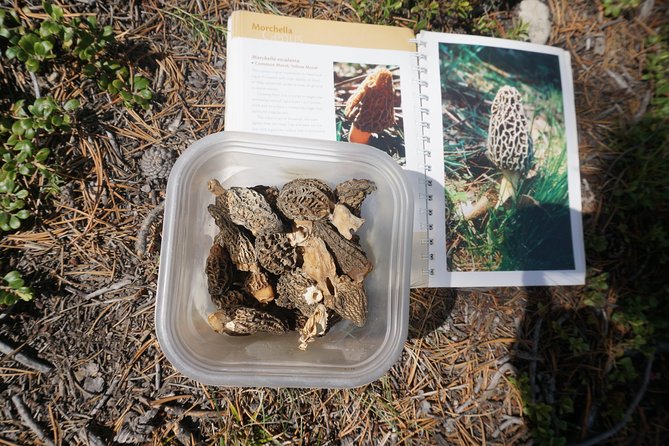
After lunch, you shift from camp survival to moving through the outdoors. The Cline River hike session is a strong change of pace: you learn navigation in the outdoors, and you also practice useful plant identification, including medicinal plants. That combination matters. In the real world, survival is not only about fire and shelter. It’s about decision-making while you travel, and it’s about understanding what you can and cannot safely use.
As the afternoon progresses, you may cover more advanced survival topics if there’s time. The course notes mention possible additions like alternative food sources, basic traps and snares, making improvised rope or cordage, and survival saw skills. Even if you are not ready to use those techniques on day one at home, you’ll still leave with a map of what’s possible and how instruction would progress if you kept training.
This is also the part where you get a sense of how confident you feel. Navigation and plant ID are the skills that expose gaps fast, which is good. It helps you see what you should practice next, either through additional training or by building comfort in local outdoor routines.
The course wraps up by late afternoon or early evening and returns you to the meeting point, keeping the experience tidy rather than stretching your whole weekend into a longer ordeal.
A different day out in Canada:
- Icefields Parkway: a Smartphone Audio Driving Tour
★ 4.0 · 118 reviews - Lake Louise Summer Gondola Experience
★ 4.0 · 65 reviews - Calgary Airport Shuttle to Banff & Lake Louise
★ 4.5 · 54 reviews - Adrenaline Canyoning Tour
★ 5.0 · 39 reviews
Instructors, Group Feel, and Why “Private” Can Mean Better Learning
You should expect a friendly, hands-on teaching style. One participant described Mark and Joel as great teachers, and another emphasized Marc as extremely informative and approachable. The consistent theme is that the instructors are willing to answer questions while you work, not after the session ends. That matters because survival questions are rarely simple. People want to know what to do first, what to avoid, and why a certain method makes sense in the conditions you’re likely to face.
Because this is a private tour/activity with only your group participating, you can ask the basic questions without feeling like you’re slowing everyone down. That’s a big deal for true beginners. It also means your group can be more consistent about practicing the same skills instead of getting rotated through different skill stations.
There’s also a customization angle. The course is described as private and can be tailored to your needs. Even with the same overall structure, that can affect pacing and how much time you spend on things like knots, shelter techniques, or navigation.
Equipment and Meals: What’s Included, What That Means for Your Wallet
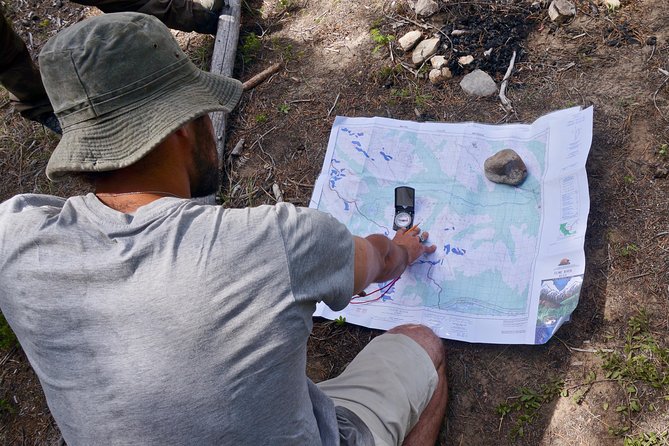
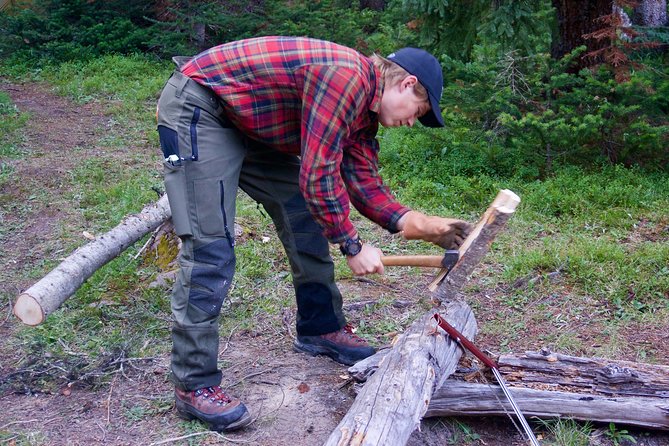
This course includes a lot that can otherwise cost money or be hard to source. You get all necessary course equipment, including tents, hatchets, knives, compasses, GPS, and other tools needed for the training. You also get one night of accommodation, described as camping. That means you aren’t trying to learn survival techniques while simultaneously learning how to pack, assemble, and manage gear you’ve never touched.
Food is also included. The course lists dinner and breakfast, plus lunch and dinner throughout the duration, along with lunch items. There’s even a vegetarian option available if you advise when booking. One participant specifically called out delicious camp food, including honey garlic sausages, which tells me you’re not just surviving on sad sandwiches all weekend.
That said, one negative point came up about food quality and inconvenience for a specific long-weekend situation, including comments about wet sandwiches and pasta. I can’t promise every menu will hit the same notes, but the good news is you should at least know you are not paying extra for meals. If you’re picky, choose vegetarian (if needed) early and arrive with the mindset that this is camp cooking, not a sit-down restaurant.
Price check
At $205.56 per person for roughly two days, you’re paying for private instruction, field training, camping, meals, and a full equipment setup. The real value is that you get coached use of tools like GPS and compasses in real terrain, plus hands-on shelter and fire training, which is hard to replicate cheaply on your own.
If you compare that to piecing together a private guide, gear rentals, and a guided multi-skill weekend, it can make sense. Just remember transportation is not included, so factor gas, parking, or whatever your plan is to reach the meeting point.
Location Advantage: Real Rocky Mountains Skills, Not a Classroom Performance
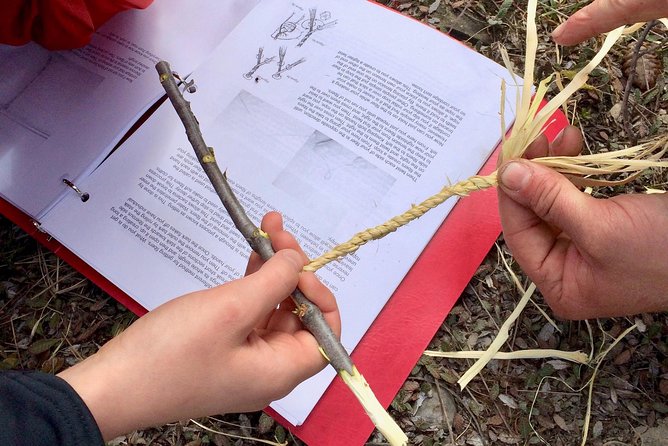
What makes this course feel like it fits the Rockies is how it uses actual settings for practical skills. Abraham Lake base camp supports shelter and fire training because you have a controlled place to practice without constantly relocating. Then Day 2 uses a hike setting on the Cline River to make navigation and plant identification feel like part of traveling, not a separate science lesson.
That rhythm matters. If you’ve ever taken a class that taught survival as theory, you know how quickly it becomes useless. Here, you get to apply what you’re learning immediately. You build something, you see what works, you sleep inside it, and you carry your skills into a movement day.
Also, because the course is in Alberta and uses specific local training areas like Nordegg, Abraham Lake, Kootnay Plains, and Cline River, you’re learning in conditions that are similar to what many people actually face when they explore that region.
Who Should Book This Survival Course (and Who Might Want Something Else)
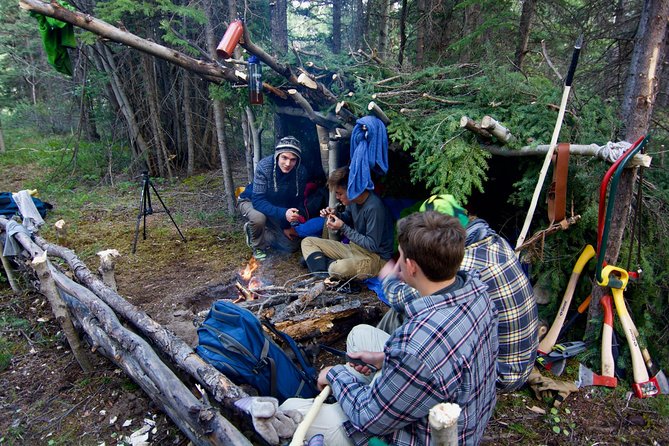
This course is a good fit if you’re:
- A beginner who wants practical survival and bushcraft skills with coaching
- An outdoor enthusiast building confidence for backcountry traveling
- Someone who learns better by doing, not by reading manuals
- A small group that benefits from a private setting and customizable pacing
It can also work for kids, since one participant attended with a young son and described the weekend as extremely enjoyable. The course notes also say children must be accompanied by an adult, and there’s a child rate only when sharing with paying adults.
You might want to consider a different option if:
- You expect transportation to be included, because it isn’t
- You want a long, multi-week expedition style program with no time constraints, since this is designed as a tight two-day course
Also note the course requires good weather. That means you should expect that Mother Nature has veto power, and the plan is weather dependent.
Weather, Timing, and How to Keep the Weekend Stress-Free
The course runs on a schedule that includes a meeting window on weekdays and weekends, with hours listed from 9:00 AM to 6:00 PM. Day 1 starts at 9:30 AM with meet-and-greet and introduction, then moves into the training blocks. Day 2 begins at 9:00 AM and continues through late afternoon or early evening.
Because the course requires good weather, you should treat it as outdoor training, not a museum visit. If weather forces a change, the course notes say you’ll be offered another date or a full refund.
To keep things smooth, arrive on time at the meeting point listed at HI Nordegg Shunda Creek Wilderness Hostel. Since transportation is not included, your best tool is clarity: show up ready, get instructions from the team, and ask questions early if anything about the day’s flow feels unclear.
Should You Book Intro Survival Course Rockies?
If you want a beginner-friendly introduction to survival fires, shelters, knots, navigation, and medicinal plant identification, this is one of those two-day adventures that can actually change how you think outdoors. The strongest reason to book is the combination of hands-on training plus included equipment, meals, and one night of camping, taught by instructors described as approachable and able to answer questions.
I’d book it if you’re comfortable handling the basics of getting to the meeting point on your own and you want to leave with real field skills rather than just photos. For anyone else, consider booking only if you’re good with weather-dependent outdoor plans and the idea that camp food is part of the experience.
If that sounds like your style, this weekend in the Rockies is a practical way to build confidence fast.
FAQ
How long is the Intro Survival Course Rockies?
It runs for 2 days (approx.).
Where do we meet for the course?
The start is at HI Nordegg Shunda Creek Wilderness Hostel, 321 Shunda Crk Rd, Nordegg, AB T0M 2H0, Canada. The activity ends back at the meeting point.
Is transportation to and from the program included?
No. Transportation to/from the program is not included.
What meals are included?
The course includes dinner and breakfast, plus breakfast lunch and dinner throughout the duration of the course, with lunch (2) also listed.
Do they provide the equipment?
Yes. All necessary course equipment is included, including tents, hatchets, knives, compasses, GPS, and other items needed for the training.
Is the course private and can it be customized?
Yes. This is a private tour/activity, only your group participates, and it can be customized to suit your needs.
Is there a vegetarian option?
A vegetarian option is available if you advise at the time of booking.
Is there a minimum group size?
Yes. A minimum of 4 people per booking is required.
What happens if the weather is poor?
The course requires good weather. If it is canceled due to poor weather, you will be offered a different date or a full refund.
Recently listed around Alberta
- Lake Louise, Moraine Lake & Yoho Waterfalls from Golden BC Tour★ 5.0 · 3 reviews
- Discover the Lake Agnes Tea House Trail with an Audio Nature Tour★ 4.0 · 7 reviews
- Yoho National Park Self-Guided Driving Audio Tour★ 4.0 · 4 reviews
- Official SkiByk Rentals in Banff & The Canadian Rockies★ 5.0 · 9 reviews
- Nikka Yuko Japanese Garden Winter Light Festival★ 5.0 · 6 reviews
- Smartphone Audio Driving Tour between Lake Louise and Calgary★ 4.0 · 15 reviews
- Lake Louise Winter Sightseeing Gondola★ 4.0 · 5 reviews
- Lake Louise to Jasper One-Way Tour★ 5.0 · 17 reviews