
REVIEW · COLUMBIA ICEFIELD TOURS
Icefields Parkway Self-Guided Driving Audio Tour
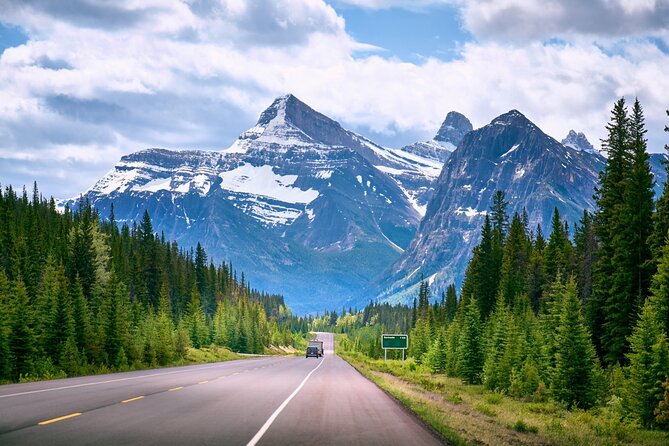
Glaciers, lakes, and facts, on your schedule. This location-based self-guided drive uses GPS cues to play stories as you pass viewpoints and trailheads along the Icefields Parkway between Jasper and Banff, covering about 140 miles with 76+ audio stops. Make sure you pick the correct direction for your start, because the tour has versions starting around Jasper and around Lake Louise.
I really like the offline setup. The tour includes offline maps and plays automatically without cellular or wifi after you download, and it’s priced at $16.99 per group (up to four people), which makes it one of the better-value ways to learn the “why” behind what you’re seeing. You also get lifetime access with no expiry, so you can reuse it on future trips.
One possible drawback is getting started. You’ll need to download the app, then enter a password sent by email and text, and if that step does not go smoothly, the tour will not launch when you want it to.
In This Review
- Key points worth knowing
- Icefields Parkway by audio: how the GPS timing really helps
- Price and value: $16.99 per group for a learned-with-your-eyes drive
- Setup and tech you actually need (phone, car sound, offline)
- Picking the right start: Jasper version vs Lake Louise version
- Drive-and-stop itinerary, from Jasper viewpoints to Lake Louise classics
- Jasper start: Five Lakes, Athabasca Pass, and glacial colors
- Sunwapta and the Athabasca River: quick hikes that feel worth it
- Columbia Icefield moment: Skywalk optional, glacier trailheads real
- Banff side: Mistaya Canyon to Bow, Peyto, and Lake Louise
- How long it takes and how to pace stops without rushing
- Optional hikes versus quick pull-offs: choose your intensity
- The best-loved part: narration that makes the drive feel smarter
- Should you book this Icefields Parkway self-guided audio tour?
Key points worth knowing
- Lifetime access, no expiry, so it can live on your phone for future Icefields Parkway trips
- Offline maps and audio, ideal for a drive where signal can vanish
- Hands-free playback by location, so you do less tapping and more looking
- Value per group up to four, rather than paying per person
- A tight mix of short pulls and optional hikes, from quick viewpoints to longer trails
- Optional big-ticket attractions like the Columbia Icefield Skywalk are not included, so plan for separate passes if you want them
Icefields Parkway by audio: how the GPS timing really helps
This tour is built for a drive where you stop when something catches your eye. Instead of forcing you to push buttons or read maps every time you pull over, the audio keys off your location and starts the next story when you arrive at each stop. That matters on the Icefields Parkway, where there are a lot of viewpoints in a short distance, and you do not want to lose the thread.
You also get the right kind of pacing for this kind of road trip. The total drive route is about 140 miles, and the recommended time is roughly 3 to 4 hours, which is long enough to enjoy the big sights but short enough to stay flexible. If you want more time for photos, you can pause and come back to the same spot later, instead of feeling rushed.
Compare these Columbia Icefield tours in Jasper:
- Jasper: Columbia Icefield Skywalk and Ice Explorer Ticket
★ 4.6 · 2,444 reviews - Jasper: Columbia Icefield Skywalk
★ 4.3 · 916 reviews - Columbia Icefield Tour with Glacier Skywalk from Jasper
★ 4.5 · 184 reviews
Price and value: $16.99 per group for a learned-with-your-eyes drive

At $16.99 per group for up to four people, this tour is priced for families, couples, and small friend groups. When you compare that to bus tours or per-person guided options, the savings add up quickly, especially if you plan to do most stops from your car and only step onto a trail when it’s worth it to you.
And because the stories are tied to what you’re looking at, the audio feels like an upgrade to the drive, not just background noise. You learn what caused the turquoise lakes, why glaciers matter here, and why specific peaks got their names. It turns the road into a moving lesson, with the scenery as the textbook.
One more value point: the access is lifetime with no expiry. So if you have a second trip on your calendar, this is not a one-and-done purchase.
Setup and tech you actually need (phone, car sound, offline)
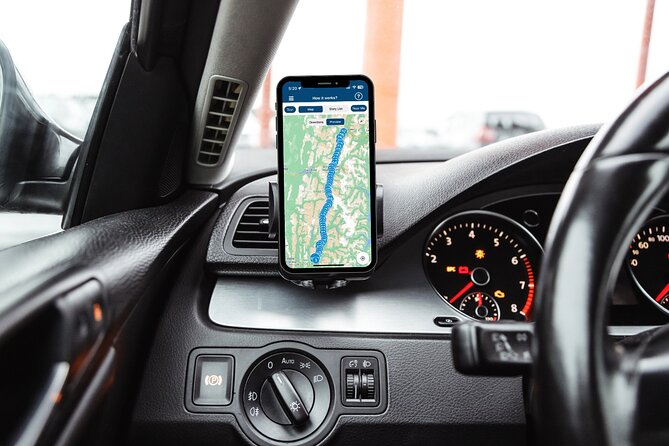
The tour works through the Action’s Tour Guide App. After booking, you get setup instructions by email and text and a password, and you’ll need to download the tour while you have strong wifi or cellular. Once downloaded, it runs offline, which is exactly what you want in remote sections where signal is unreliable.
For audio playback, you can connect your phone to your car’s stereo using Bluetooth, USB, or AUX. If you use Apple CarPlay, audio playback is compatible, and Android Auto support is described as on the way, so check what your vehicle can do. If you plan to do any walking stops, headphones can help you keep the narration without speakers competing with trail sounds.
I’d keep the practical mindset here. Do the download before you leave town, then test the app at your first stop. That way, you do not end up on the roadside troubleshooting while the most photogenic scenery is already passing by.
Picking the right start: Jasper version vs Lake Louise version
This is where you want to pay attention. The tour includes content for the Jasper-to-Banff drive, but it’s also offered in versions based on starting point and direction. The meeting point shown here is Lake Louise, while the itinerary text also notes that this version begins in Jasper, with guidance that you can switch to the Lake Louise version if you’re starting near Banff.
So before you roll away, confirm you launched the version that matches your plan: Lake Louise to Lake Louise in the listing, plus the correct route direction you want for your day. If you start at the wrong end, you’ll still get stories, but your timing for when certain stops appear will be off.
A few more Jasper days to compare
- Jasper National Park: Maligne Lake Cruise With Guide
★ 4.7 · 896 reviews - Jasper Evening Wildlife Tour
★ 4.5 · 710 reviews - Jasper National Park: Evening or Morning Wildlife Watch Tour
★ 4.6 · 691 reviews - Jasper Wildlife & Sightseeing Tour with Maligne Lake Cruise
★ 5.0 · 603 reviews
Drive-and-stop itinerary, from Jasper viewpoints to Lake Louise classics
Below is what you can expect as the audio guides you from stop to stop. The tour is designed around quick roadside moments, with optional trails cued when they make sense.
Jasper start: Five Lakes, Athabasca Pass, and glacial colors
Your first big moments build the theme: this drive is really about glaciers and the water they leave behind.
- Valley of the Five Lakes Trailhead: The audio cues a trailhead for a 3-mile hike that’s described as moderately challenging, about 1.5 hours round-trip. If you want turquoise payoff, this is the kind of spot that makes you stop caring about your schedule.
- Athabasca Pass Lookout: You get one of the best viewpoints in this stretch, looking toward the South Jasper Mountain Range, with Mount Edith Cavell mentioned as a prominent peak.
- Horseshoe Lake: You’ll pass a U-shaped lake known for dramatic rock faces. The audio describes a cliffside jump of about 75 feet, which is an adrenaline magnet, even if you only watch from afar.
- Athabasca Falls: The audio highlights a 75-foot waterfall dropping into a canyon, with a glacier explanation for how the pass and canyon were shaped over Ice Age time.
Then it keeps stacking peaks and small “why is that there?” moments.
- Mount Kerkeslin (Maligne Range): Named as the highest peak in the range, noted as a challenge for early explorers.
- Goats & Glacier Lookout: The story here connects mineral-rich cliff rock, salt, and mountain goats that often lick those surfaces.
- Mount Christie: Named after James Hector’s host, William Joseph Christie, with the exploration connection used as a naming thread.
- Honeymoon Lake: A relaxed payoff, with mirrored mountains in the Maligne Range and even mention of people paddling canoes.
Sunwapta and the Athabasca River: quick hikes that feel worth it
Next comes a run of water-and-geology stops.
- Sunwapta Falls: The audio cues an easy 2-mile trail described as taking just over an hour, featuring a 60-foot drop fed by the Athabasca Glacier. It also notes Sunwapta is the Stoney-Nakoda word for turbulent water.
- Endless Chain Ridge: You’ll see a ridge described as spanning more than 9,000 feet, with deep-time geology tied to Jurassic-era rock and uplift.
- Poboktan Creek trail parking: This is a taste of ambition, with the audio mentioning a 24-mile trail and an average multi-day completion time. It’s here to give you context for what serious hiking looks like in the region.
- Alberta 93: You’re reminded that even something that looks like a pile of rocks has a story, here tied to the history of the landscape.
And then more water detail.
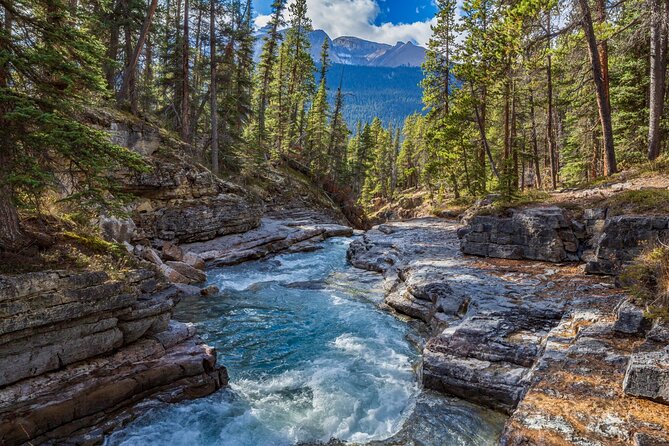
- Beauty Creek: The audio frames it as glacial-lake meltwater and points toward Stanley Falls, with multiple cascades and a note that in colder months waterfalls can become sheets of ice.
- Stutfield Glacier Viewpoint: A big glacier visible directly from the parkway, described as about 3,000 feet over the cliff face, with double icefalls and the hazard of deep crevasses for climbers.
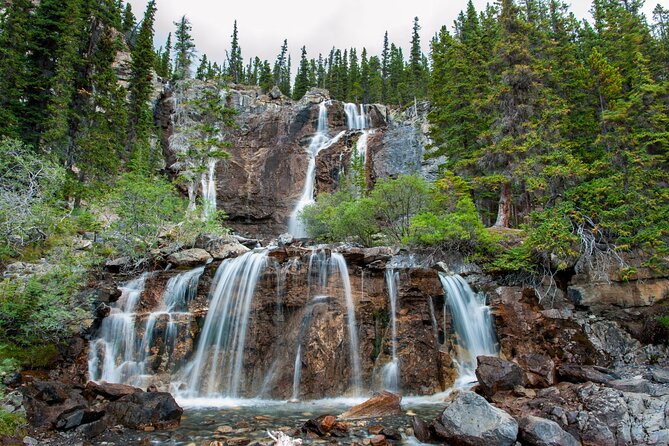
- Tangle Creek Falls: A 90-foot cascade so close to the road that spray dampens the way, plus a naming connection to Mary Schäffer Warren and a guide named Samson Beaver.
Columbia Icefield moment: Skywalk optional, glacier trailheads real
Then the audio leads into one of the most famous “walk-outside-your-comfort-zone” experiences on this route.
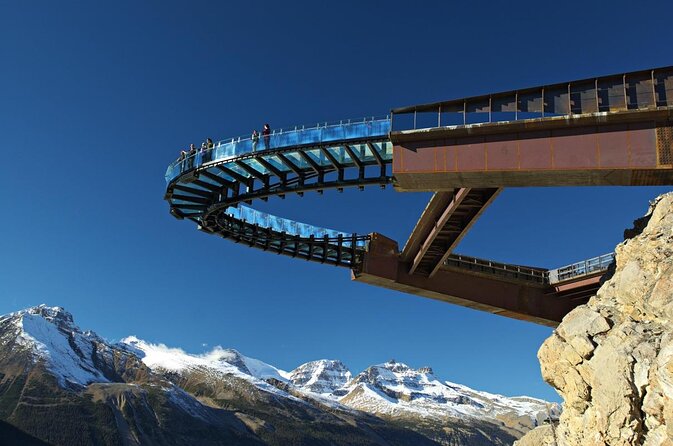
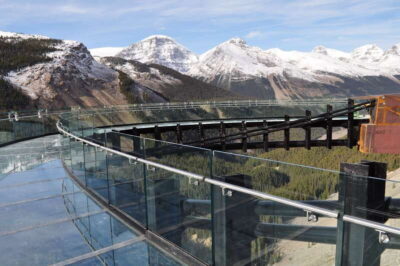
- Columbia Icefield Skywalk (optional): The narration describes the glass floor trail along the cliffside, jutting about 100 feet across the Sunwapta Valley, with a view down more than 900 feet. If you want to walk it, remember attraction passes are not included, so you’ll need separate tickets and planning.
Right after, the tour keeps the glacier theme going.
- Mount Kitchener: A towering peak named for Horatio Kitchener, tied to World War I and a ship sinking in 1916.
- Toe of the Athabasca Glacier Trailhead: A moderate, just-over-1-mile hike described as one of the better chances for close-up views of the Athabasca Glacier.
- Wilcox Pass Trailhead: A challenging 7-mile hike is suggested, with a practical note that many visitors only hike a little over a mile toward a viewpoint before turning back. This is a good “choose your own intensity” moment.
- Parker Ridge Trail: A 4-mile challenging route described as taking a bit over two hours for alpine meadows, panoramic views, and glimpses of the Columbia Icefield.
- Panther Falls: An easy 1.5-mile forest walk to a 210-foot cascade, about 30 minutes, with an optional longer continue to Bridal Veil.
- Weeping Wall viewpoint: A 900-foot cliff that acts like a part-time waterfall, depending on seasonal conditions and natural springs.
- Mount Coleman: Another peak cue, named and positioned for quick photo pull-offs.
There’s also a human-history story woven in.
- HI Rampart Creek Wilderness Hostel (passed by, story in audio): The tour notes it as a humble lodging tied to changes in regional tourism about 100 years ago.
- Saskatchewan River Crossing: The audio goes back to 1882, describing a plank crossing with horse and carriage and a man behind the operation named John Walter.
- Howse River / Howse Pass Viewpoint: A parking area stop with views of the river and mountains beyond.
Banff side: Mistaya Canyon to Bow, Peyto, and Lake Louise
As you move toward Banff, the audio shifts toward more classic lake and canyon beats.
- Mistaya Canyon Trailhead: A moderate 1.5-mile hike, about 40 minutes, leading to the bottom of a deep gorge.
- Mount Chephren: A 10,715-foot challenge described for pro-climbers, with a naming story tied to pyramids and an Egyptian pharaoh reference.
- Waterfowl Lake Viewpoint: An easy roadside overlook of an emerald body of water, with a note that lakes here became part of a 1960s countercultural movement.
- Mount Patterson / Snowbird Glacier Viewpoint: Snowbird Glacier is described as flowing in a way that looks like outstretched wings.
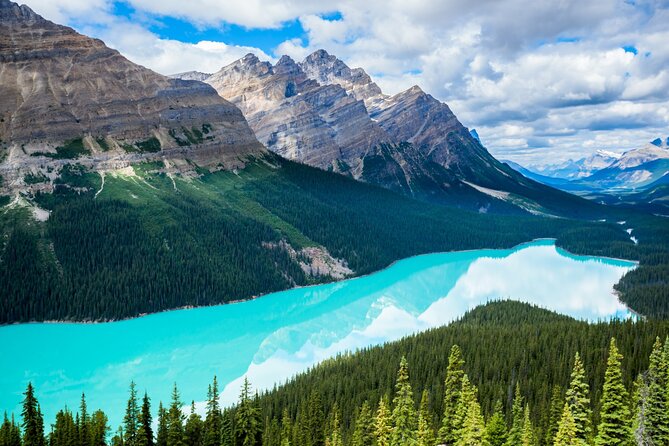
- Peyto Lake: Glacier-fed water with bright turquoise color, plus mention of a side road for an overlook and a 2-mile trail around the lake.
- Bow Lake: A blue-water highlight with Mount Jimmy Simpson reflected in the narration.
- Crowfoot Glacier Viewpoint: A glacier block described as receding since the Ice Age, with mention of losing one of three lobes, shaped like a crow’s foot.
- Wapta Icefield: A quick cue with the Stoney-Nakoda word meaning running water tied into the story.
- Hector Lake Viewpoint: A pristine glacial lake under Lilliput Mountain and Mount Balfour, called out as popular for photos.
- Lake Louise: The tour ends here, with the practical note to drive another 5 to 10 minutes to reach Lake Louise.
How long it takes and how to pace stops without rushing
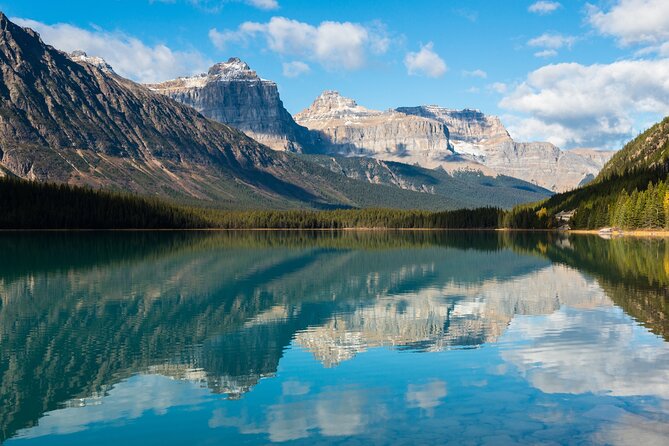
The stated duration of about 3 to 4 hours assumes you’ll do a mix of car views and short stops, with some optional hikes sized for quick decisions. The key is to treat the longer trails as choices, not obligations. For example, Valley of the Five Lakes is about 1.5 hours for the hike itself, while Poboktan Creek is a full multi-day project, so the audio is giving you context, not pressuring you to do everything.
A smart pacing trick is to match your stop type to your energy level. When you’re fresh, grab one hike and two viewpoints. When you’re tired, do the viewpoints only and let the audio do the storytelling. If you want wildlife, take it slow at pull-offs, because impatience is how you miss the interesting stuff.
And yes, you might spot a bear. You might not. This region is a wildlife zone, so scan from safe areas and keep your expectations flexible.
Optional hikes versus quick pull-offs: choose your intensity
One reason this tour works well is that it doesn’t pretend every stop is the same. Some cues are basically roadside look-and-learn moments, while others clearly label the hiking effort.
- If you want quick value: Sunwapta Falls trail is described as easy and about 2 miles, and Panther Falls is a short 1.5-mile forest hike.
- If you want a solid workout without a full day: Toe of the Athabasca Glacier is just over 1 mile, and Wilcox Pass is a challenging 7-mile option with a suggested shorter turnaround.
- If you want big plans for another day: Poboktan Creek’s 24-mile, multi-day nature is the kind of reality check that helps you plan future trips.
This mix is also good for groups with mixed fitness. One person can do the short trail while others stay with the car and listen, because the audio is tied to location.
The best-loved part: narration that makes the drive feel smarter
The strongest praise focuses on the audio itself. People like the fact it is informative and entertaining, that the tone and pace feel right for driving, and that it helps you not miss the big sights along the way. The GPS-based playback also gets credit for flexibility, letting you stop and start without micromanaging a schedule.
One small wish that comes up is about flow. Some people would prefer a bit more audio between points of interest, meaning less silence or repetition when they park and wait. That’s a minor factor, but it can matter if you like continuous narration like a guided tour.
Overall, this kind of “watch, learn, move” setup is especially good for seniors and anyone who prefers independent travel with structure. You get the structure without the bus schedule.
Should you book this Icefields Parkway self-guided audio tour?
If you want to drive the Icefields Parkway and feel like you understood it afterward, this is an easy yes. It’s strong value at $16.99 per group, it works well without signal once you download, and it gives you a practical set of stops that range from quick roadside views to hikes you can pick based on energy.
Book it if:
- You’re driving independently and want stories matched to what you see.
- You like learning from narration while you photograph and pause.
- You want something reusable, since access lasts for future trips.
Skip it or plan alternatives if:
- You know you dislike app-based setup, passwords, and downloads. If tech setup stresses you out, do your download carefully before you leave.
- You want only one major attraction experience. The big-ticket stops like Skywalk are not included, so you’ll need separate planning anyway.
If you fall into the typical Icefields Parkway traveler bucket, this audio tour is a smart way to turn a beautiful drive into a trip with real context and staying power.
Recently listed around Jasper
- Half Day Canyoning Experience in Revelstoke★ 5.0 · 16 reviews
- Half Day Walk&Wade (Fly-Fishing / Spin Casting from shore)★ 4.5 · 6 reviews
- Family Rafting Adventure | Kicking Horse River★ 5.0 · 51 reviews
- Beartooth Canyon- Half Day Canyoning Tour – Golden, BC★ 5.0 · 11 reviews
- Extreme Whitewater Rafting on Kicking Horse River★ 5.0 · 77 reviews
- Wildlife Wild Skies: Jasper Planetarium Combo★ 3.0 · 3 reviews
- Whitewater Rafting on Jasper’s Fraser River★ 5.0 · 59 reviews
- Wildfire Peak Nic★ 5.0 · 5 reviews
Columbia Icefield Tours, compared.
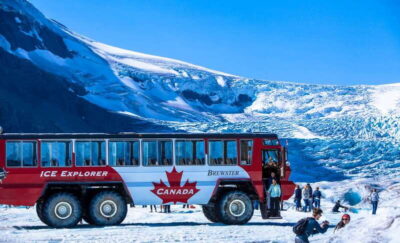
Columbia Icefield Skywalk and Ice Explorer Ticket
Read our review →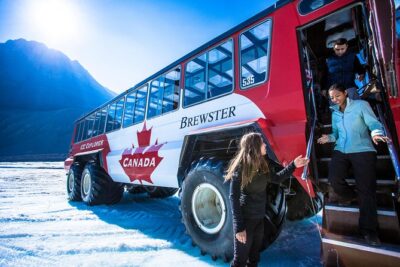
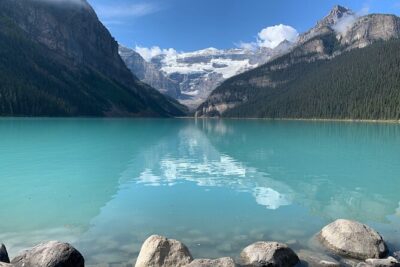
Lake Louise, Moraine Lake and the Icefields Parkway Full-Day Tour
Read our review →
Columbia Icefield Tour with Glacier Skywalk from Banff
Read our review →
Columbia Icefield, Skywalk, Crowfoot Glacier, and Lakes Tour
Read our review →
Athabasca Glacier and Columbia Icefield Day Trip
Read our review →
Browse the lists this tour appears in