
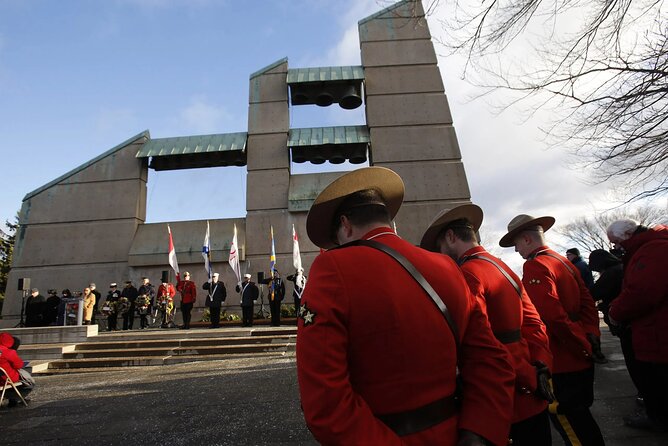
REVIEW · WALKING TOURS
Halifax Explosion Smartphone Audio Walking Tour
Halifax’s 1917 Explosion hits closer when you walk it. This smartphone audio route guides you through Hydrostone stops tied to survival stories, memorials, and the aftermath, with a live GPS map that plays the next clue when you reach each point. It is built for a calmer pace than big group tours, because you can pause, wander a bit, and come back when it suits you.
I like the no-rush, self-paced setup: you get the professional tour-style commentary automatically at each interest point, plus a trivia game at the locations (optional). I also like that the tour is built around specific people and places, from Ashpan Annie to Billy Wells and the firefighters tied to the memorials.
One thing to consider is that the audio relies on you being at the right spots outdoors. If weather is miserable, cold, or slippery, you might feel it more than you would on an indoor museum stop, especially since the audio plays from your device speaker.
In This Review
- Key Things I’d Focus On Before You Go
- Hydrostone Park Starts the Story, Not Just the Walk
- Live GPS Audio, Download on Wi‑Fi, and the Real Meaning of Flexible Dates
- Avoiding Crowds by Choosing a Route Built for Attention
- Hydrostone Park and the Memorial Bell Tower, Where Survival Stories Begin
- St. Joseph’s Square and the Small Places That Hold Big Meanings
- The Ships, the Shock, and the Reality Check of Timing
- Fort Needham, Richmond School, and Remembering Through Names on Stone
- From Lumber Mill Secrets to a Pilot’s Life Change
- Firefighters, Weather, and the Hard Questions About What Survivors Faced
- Names You Can Connect With: Vincent Coleman and Two Big Survival Stories
- Hydrostone’s Planning, Back Lanes, and Tudor Revival Rowhouses
- Relief Commissions, Global Help, and the Hydrostone Market Finish
- Price and Logistics, Why This Is Such Strong Value
- Who Should Book This Halifax Explosion Audio Walk
- Should You Book This Halifax Explosion Smartphone Audio Walk?
- FAQ
- What do I need to bring for the Halifax Explosion smartphone audio tour?
- Do I need cell service during the walking tour?
- How long is the walk?
- How much walking is involved?
- Is this a private experience?
- Where does the tour start and end?
- Can I listen on different days or start partway through?
Key Things I’d Focus On Before You Go
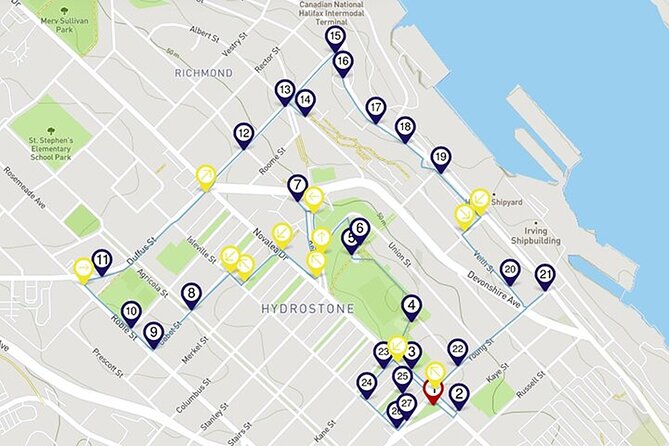
- Live GPS guidance that tracks where you are and what plays next
- Auto-playing audio at each stop, so you are not constantly tapping menus
- A 5 km walking route paced to fit about 1 hour 30 minutes to 2 hours 20 minutes
- Trivia game included at locations, optional for extra engagement
- Private experience with only your group participating
- Download-first setup so you can listen without using cellular data during the walk
Hydrostone Park Starts the Story, Not Just the Walk

You begin in Hydrostone Park on Young St, right where the neighborhood’s post-1917 rebuilding spirit shows up in the ground you are standing on. This matters because the Halifax Explosion is not only about the blast. It is also about what survivors did next, and Hydrostone is one of the places that keeps that answer visible.
From the start, you get the tone of the day: tragedy, survival, and perseverance. Your first moments are tied to how people carried on after the shockwave, and the route quickly frames Hydrostone as a living memorial, not a frozen scene.
You will also want to notice the practical side right away. This is a walk, about 5 km total, and it is described as moderate physical fitness. If you are comfortable strolling city streets and parks for a couple of hours, you are in the right range.
More Walking Tours in Halifax
- Halifax Harbourfront Small Group Food Walking Tour
★ 4.5 · 63 reviews - Halifax Walking Food Tour
★ 5.0 · 40 reviews - Halifax Churches, Gardens & Graveyards: a Smartphone Audio Walking Tour
★ 4.5 · 25 reviews
Live GPS Audio, Download on Wi‑Fi, and the Real Meaning of Flexible Dates
This tour is designed to feel like a guided experience, but without the pressure of a packed bus schedule. Before you go, you download the tour on Wi‑Fi, and then you do not need signal or data while you listen. That is a big deal in Halifax, where cell service can wobble depending on where you are.
On the walk, you get a live GPS map that shows your location and the direction of the next stop. As you get close, the commentary plays automatically at that point of interest. It means you spend less time fiddling with your phone and more time just looking around and absorbing the story.
Here is the flexibility that I think makes this tour better than one-day-only activities. Your tour is yours to keep and enjoy anytime on Tripvia Tours, not only on the booking date. Even better, you can stop and start anywhere along the route, which is useful if you hit a detour, weather shifts, or you just want to linger at a memorial.
One more practical detail that trips people up if they ignore it: the number of travelers you select equals the number of devices you can download the tour to. So if you plan to share the experience between phones, get the device count correct before you download.
Avoiding Crowds by Choosing a Route Built for Attention
Big walking tours can feel like you are trying to keep up with the loudest voice in the group. This setup takes the crowd variable out of the equation, since it is a private tour/activity, only your group will participate.
You also get short stop timing throughout the route, so the audio keeps moving without requiring you to stand still for ages. Each stop is around five minutes, which is a sweet spot for story-based history. It keeps the pacing from dragging, yet it still gives you enough time to read the memorial context around you.
The tradeoff is that you need to pay attention to where you are. If you drift off the route or pause too long away from the exact location, the next audio cue may feel slower to trigger. In good weather, that is a minor annoyance. In bad weather, it can turn into frustration.
Hydrostone Park and the Memorial Bell Tower, Where Survival Stories Begin
At the first stop, you meet guide Jeff, and the tour quickly focuses on one of Canada’s most devastating tragedies: the 1917 Halifax Explosion. The opening connects historical sites and landmarks to the human stories that emerged afterward, including survival and perseverance.
As you move forward, you build a mental map of the day through named moments, not just abstract dates. You hear about the “miracle of Ashpan Annie,” plus the adventure of Billy Wells, and the way the explosion led to a tsunami. That set of themes is important because it shows the disaster was not a single event. It was an event plus cascading consequences.
Soon you reach the Halifax Explosion Memorial Bell Tower, a central anchor of the route. This is where the monument to Halifax and Dartmouth becomes more than a sight. The audio frames it as an expression of loss and remembrance, tied to people who experienced devastation firsthand.
If you are the type who likes to connect what you see with what you hear, this portion will feel rewarding. You are basically building a story that matches the visual cues around you.
A few more Halifax days to compare
- Halifax Boardwalk & Seaport: a Smartphone Audio Walking Tour
★ 4.0 · 19 reviews - Explore Halifax with 3 Unique Smartphone Audio Walking Tours
★ 4.0 · 16 reviews - Halifax: Small Group Walking Tour with Citadel & Museum
★ 4.8 · 16 reviews - Halifax Small Group Walking Tour with Citadel + Maritime Museum
★ 4.0 · 13 reviews
St. Joseph’s Square and the Small Places That Hold Big Meanings
Not every stop is a grand monument. St. Joseph’s Square is more of a quiet pause in the middle of the route, with audio that centers on a memorial to the Catholic Parish of St Joseph’s.
These smaller moments can feel easy to skim when you are rushing. But on an audio route like this, you naturally slow down. That helps you notice how the explosion’s impact reached community groups, not only ships and firefighters.
Next, you head through the Novalea Drive & Hennessey Place area, where the audio explains how the park began as military grounds and how it became a neighborhood park and memorial. This is one of those transitions that makes Halifax feel layered. The past is not buried. It is repurposed into everyday spaces that still carry meaning.
The Ships, the Shock, and the Reality Check of Timing
The tour brings you to the context of the ships involved, including SS Mont-Blanc and SS Imo, and it walks through what led up to the explosion. This part is helpful if you want to understand not only what happened, but why it happened in the first place.
I find ship and event context is one of the best ways to keep an explosion story from turning into a blur of names and dates. When the audio sets the stage, the later survival stories hit harder because you understand the conditions that created them.
From there, the walk keeps your attention on how physical forces and weather shaped what people experienced. That framing shows up again later when you hear about fire, ice, and black rain, and the tsunami’s reach.
Fort Needham, Richmond School, and Remembering Through Names on Stone

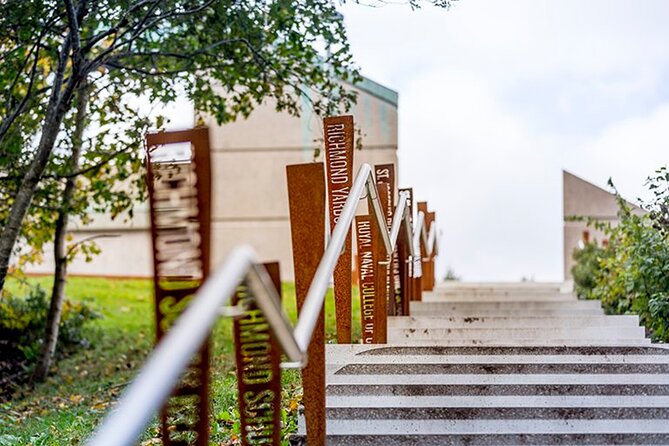
When you reach Fort Needham Memorial Park and the Richmond staircase area, you get symbolism explained in a way that makes the memorial feel intentional. The audio also notes that the names of businesses destroyed in the blast appear on the staircase elements.
This is one of the reasons I like the audio approach here. You are not just looking at stone. You are connecting the names and the layout to what the memorial is trying to communicate.
Nearby, you reach the building connected to Canada Family Court and the Richmond School tragedy. The audio explains that it was constructed immediately after the explosion and ties it to the tragedy of the Roome School. This is heavy material, but it is presented as place-based context, which helps you keep track of the human scale.
If you are someone who appreciates memorials but struggles with dates, the stop-by-stop method helps you organize the story as you walk.
From Lumber Mill Secrets to a Pilot’s Life Change
One stop, labeled as Secret of the Trees, turns toward lumber mill history and why a secret made them infamous across Canada and into the southern United States. This is a curveball compared to the disaster-only focus, but it is exactly the kind of wider connection that makes Halifax more than a one-day story.
Then the route touches Francis Mackey at an address stop, sharing his story as the pilot onboard the Mont-Blanc and how the explosion profoundly changed his life. I like this because it shifts from impersonal events to individual lives, while staying grounded in specific locations.
You also pass by the Robie Street Water Reservoir, with audio on the reservoir built in 1913 and its survival, plus a mention of its special designation. It is a reminder that disasters reshape infrastructure too, not only people’s routines.
Firefighters, Weather, and the Hard Questions About What Survivors Faced
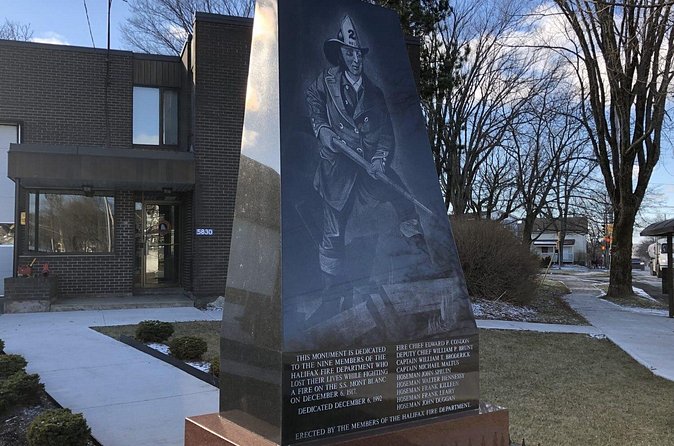
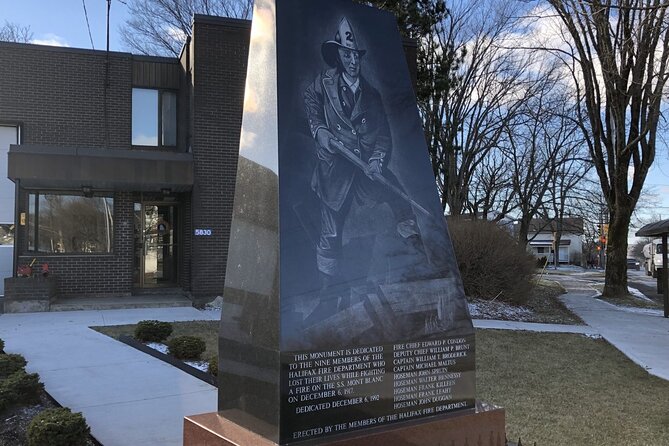
As you continue, you reach the memorial tied to Patricia & her crew, dedicated to firefighters of Halifax who lost their lives in 1917. This is one of the most emotionally direct parts of the route because it honors people by role and by sacrifice.
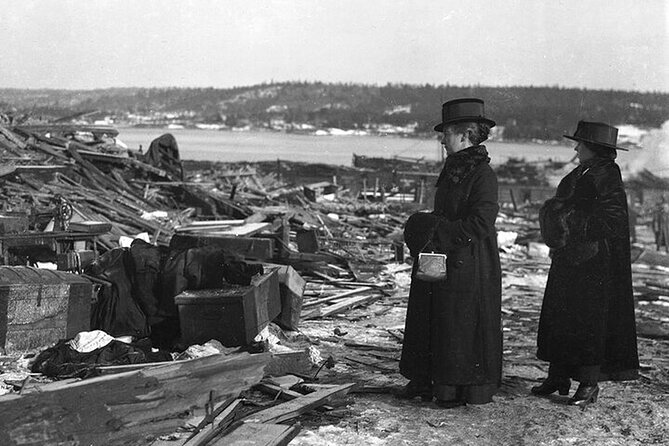
Right after, the audio focuses on conditions described as Fire & Ice & Black Rain, explaining the horrific circumstances for survivors. Then the route moves to Tsunami, where the audio describes how it swept up the hillside and how far it might have reached if you had been standing there at the time.
If you want a clear takeaway, it is this: the Halifax Explosion was not only sound and shockwave. It was heat, debris, weather, and water movement interacting in ways that people could not control.
The next stop, described as House holes and the razing of Richmond, adds another layer. You hear about changes in the land around you and markers that point to where people once lived and died. This kind of audio framing helps you read a city street like a page of history.
Names You Can Connect With: Vincent Coleman and Two Big Survival Stories
At Vincent Coleman, the audio gives you the why Haligonians remember him as a hero, credited with potentially saving hundreds of lives. Even if you already know the event is famous, this specific story makes it feel human and local.
Later, you reach the stop for Ashpan Annie, with a surprise: good news about a baby’s miraculous survival. That shift in tone can catch you off guard, but it also reflects how survival stories often include flashes of hope inside catastrophe.
Then you move to the amazing adventure of Billy Wells, built around his incredible story. The tour gives these named survival arcs space to breathe, so you are not only absorbing the disaster. You are absorbing people finding a way through it.
Hydrostone’s Planning, Back Lanes, and Tudor Revival Rowhouses
The end portion of the route becomes about the neighborhood that rose afterward. You hear about the Hydrostone District and the town planner bringing the idea of English garden cities to Halifax. Then you walk through Hydrostone’s back lanes, with an explanation for why back-lane business existed.
I like that these stops keep you oriented as you walk, because you are watching the neighborhood evolve in front of you. You are also learning what residents needed day to day, which makes the memorial elements feel integrated, not tacked on.
At Hennessey Place, the audio points out Tudor Revival design, including a block of rowhouse cottages built using the English style for surviving families. The style details are not trivia for trivia’s sake. They show how quickly rebuilding priorities translated into visible housing and streets.
Relief Commissions, Global Help, and the Hydrostone Market Finish
You finish with community and response stories. The route includes Halifax Relief Commission Building, with audio on a committee formed to deal with the emergency in this building, now designated as a cultural historic site. It is a shift from the day of crisis to the machinery of recovery.
You also hear about to the rescue, where the audio describes help Halifax received from around the world and a tradition that is still followed today. That matters, because it anchors the narrative in solidarity, not only on-the-ground heroics.
The tour ends at Hydrostone Market, with the final framing telling you the walk was not only about buildings and monuments, but about the people who lived through that day and the ones who raced to help. Starting in Hydrostone Park and finishing at the market creates a clean loop in your mind, and it makes it easier to continue the day with a real local meal afterward.
Price and Logistics, Why This Is Such Strong Value
At $8.96 per person, you are paying for a structured, story-led walk with live GPS, automated audio at each location, and a 5 km route designed for a real time window of about 1 hour 30 minutes to 2 hours 20 minutes.
That price feels especially fair because you are not just buying content. You are buying a guided method: download once, listen without data, and follow a map that keeps you moving. Compared to paid group tours that often cost much more and run on rigid schedules, this is a bargain if you value flexibility.
It is also good value for solo travelers and couples, because the experience is private to your group. You are not paying extra to avoid crowds.
The biggest practical drawback is the one you already suspect: it is an outdoor experience. If it is rainy, windy, or icy, plan extra time and dress for walking rather than museum-chair comfort. The audio still works, but the environment is on you.
Who Should Book This Halifax Explosion Audio Walk
This tour fits best if you want history tied to walking and place. It is ideal for people who like memorials with context, and for visitors who prefer to move at their own speed instead of matching a group pace.
It is also a good choice if you travel with someone who has different interests. The route moves from ships and disaster conditions to individual survival stories, to planning and neighborhood design. That variety helps everyone stay engaged.
If you struggle with outdoor walking in poor weather or you need heavy wayfinding support, you might find the audio cue system a bit demanding. In that case, consider going on a calmer weather day or building buffer time so you can regroup and keep the story thread.
Should You Book This Halifax Explosion Smartphone Audio Walk?
I think it is worth booking if you want a self-guided, guided-style experience, with live GPS and auto-playing commentary that keeps you focused on the key story points. The price is low enough that you can treat it as a smart add-on day activity, not a gamble.
Book it especially if you are the kind of traveler who likes learning through specific people and specific sites, not only through a single museum room. And if you care about flexibility, this one has a real advantage because you can enjoy the tour beyond a single date and can stop and start along the way.
If the weather is questionable, dress for walking and give yourself a little extra time. The information will still be there, but your comfort outdoors will shape your mood more than you expect.
FAQ
What do I need to bring for the Halifax Explosion smartphone audio tour?
You need your own smartphone or tablet. The tour audio plays from your device speaker, and headphones are not included.
Do I need cell service during the walking tour?
No. You download the tour on Wi-Fi before you go, and during the tour there is no signal required and no data used.
How long is the walk?
Plan for about 1 hour 30 minutes to 2 hours 20 minutes, depending on your pace and how long you stay at stops.
How much walking is involved?
The route is described as a 5 km tour, with stops spaced along the way.
Is this a private experience?
Yes. It is a private tour/activity, and only your group will participate.
Where does the tour start and end?
It starts at Hydrostone Park, 5547 Young St, Halifax, NS B3K 1Z7, Canada, and ends back at the same meeting point.
Can I listen on different days or start partway through?
Yes. The tour is yours to keep and you can enjoy anytime on Tripvia Tours. You can also stop and start anywhere along the route.
Recently listed around Halifax
- Southern Lakes Canoe Trip – 4 Day★ 5.0 · 23 reviews
- Mersey River Quickie Adventure – 2 Hours★ 5.0 · 142 reviews
- Zodiac Coastal Tour with Naturalist Guide: Lunenburg★ 5.0 · 105 reviews
- Private Tour in Halifax by a Luxury Vehicle with Informative Guide★ 5.0 · 92 reviews
- Wine Tour Wolfville Wine Tours in Nova Scotia- 6 Hours★ 5.0 · 14 reviews
- Wine Enthusiast Tour Lead by a Sommelier★ 4.5 · 6 reviews
- Winter Wine Escape★ 5.0 · 8 reviews
- JFarwell Private Yacht Wine & Cheese Sunset Sail★ 5.0 · 18 reviews
Walking Tours, compared.


Old Quebec City: Grand Walking Tour with Private Option
Read our review →
The Original Old Montréal Walking Tour by Guidatour
Read our review →
Old Montreal Small-Group Walking Tour | Max 10 | by MTL Detours
Read our review →

Old Quebec Classique Walking Tour with Funicular
Read our review →

Quebec: Crimes of New France Animated Walking Tour
Read our review →Browse the lists this tour appears in