
REVIEW · NATIONAL PARKS
Coho – Explore Banff and Jasper National Parks (4-Days)
Some trips feel like a highlights reel. This one is that, but in a good way. You get a packed four days that strings together Banff and Jasper National Parks with Okanagan lakes and waterfalls, all powered by Moose bus transport and a local guide who helps you make sense of what you are seeing. I especially like that Moraine Lake has exclusive access and that the plan includes 3 nights in hostel dorm-style rooms, so you can show up and not wrestle with accommodation bookings. One thing to consider: it is a short schedule, so most stops are brief, and the dorm-room setup means you should be comfortable sharing space and living out of a single bag.
Based on the guide names that come up repeatedly, like Mike and Troy, the experience also seems to work well if you want more than just scenic bus windows. Your day is planned, but you still get moments to hike, paddle, and take photos with people who are usually in the same headspace. If you want long, unhurried time in one place, you might feel the pace is brisk.
In This Review
- Key things I’d lock in before you go
- What this Coho Rockies tour is really good at
- Value and price: what $1,121.24 buys (and what it doesn’t)
- Day 1 in motion: rainforest waterfall, Hope stops, and Skaha Lake paddling
- Day 2: winery pastries, railway history at Craigellachie, and the long scenic drive
- Day 3 is the postcard day: Lake Louise, Moraine Lake access, glaciers, Peyto, and Mistaya Canyon
- Day 4 in Jasper: Athabasca Glacier toe hike plus Sunwapta and Athabasca Falls
- Pace, group size, and the real meaning of moderate fitness
- Lodging: hostel dorm-style for 3 nights, what that means in real life
- Packing and baggage rules, so the bus day stays calm
- How guides like Mike and Troy shape the experience
- Should you book this Coho Banff and Jasper tour?
- FAQ
- Where does the tour start and what time does it begin?
- How long is the Coho Explore Banff and Jasper National Parks tour?
- What’s included in the price?
- What meals are not included?
- Is paddleboarding included for every season?
- What kind of fitness level do you need?
- Are there luggage limits?
Key things I’d lock in before you go
- Exclusive Moraine Lake access saves you from the hardest part of planning.
- 3 nights in hostel dorm-style rooms is good value, just plan for shared sleeping space.
- Small group size (max 24) keeps the vibe social and helps the guide manage timing.
- A real mix of stops from rainforest waterfalls to glacier ice, not only postcard viewpoints.
- Paddleboarding on Skaha Lake can be a highlight if you travel mid May to September.
What this Coho Rockies tour is really good at
This is a short-time, high-contrast way to see the Canadian Rockies. In four days, you touch multiple regions and ecosystems: cool rainforest walks, lake days in British Columbia, and then iconic glacier and waterfall scenery as you roll into Alberta and spend time in Jasper.
The value is not just in the scenery. It is in the fact that you are not doing the heavy lifting. Park fees are handled, transportation is handled, lodging is included for three nights, and even the most famous lakes get special attention with exclusive Moraine Lake access. If you have ever tried to build a Banff-and-Jasper plan on your own, you know how easily that turns into a spreadsheet exercise.
Where it is less forgiving is time on the ground. Many stops are listed at around 30 minutes, with a few longer moments. That means you get to see a lot, but you need to treat each stop like a sprint, not a slow afternoon.
A few more Vancouver days to compare
- From Vancouver:4-Day Columbia Icefield & Banff National Park
★ 4.1 · 25 reviews - Yoho, Banff National Park, Okanagan Lake 4-Day Tour from VR
★ 4.5 · 21 reviews - From Vancouver: 4-Day Kamloops, Yoho and Banff National Park
★ 4.3 · 10 reviews
Value and price: what $1,121.24 buys (and what it doesn’t)
At $1,121.24 per person, the headline cost looks steep until you break down what is included.
You are getting:
- Moose bus transportation for the whole routing
- Breakfast plus 3 included dinners
- 3 nights accommodation in mixed gender, hostel dorm-style rooms
- National park fees, including exclusive access to Moraine Lake
- Paddleboarding on Skaha Lake (mid May to September)
That combination matters. In the Rockies, park logistics alone can be expensive or time-consuming. Add transportation and lodging, and the price starts to make more sense, especially because you also have a guide to keep the day moving and help you get the most out of short stops.
What you should budget separately:
- Meals not listed as included
- Optional activities, like the kayaking or SUP option during the Lake Revelstoke stop (not included)
If you arrive hungry, or you plan to upgrade every activity, the total cost will rise. If you are good with included meals and keeping optional add-ons minimal, this is closer to a controlled-budget trip than a pay-as-you-go one.
Day 1 in motion: rainforest waterfall, Hope stops, and Skaha Lake paddling
Your first day sets the tone, you are not easing into the Rockies theme. You start with a quick nature walk and then broaden out into small-town stops and lake time.
Bridal Veil Falls Provincial Park (short rainforest walk)
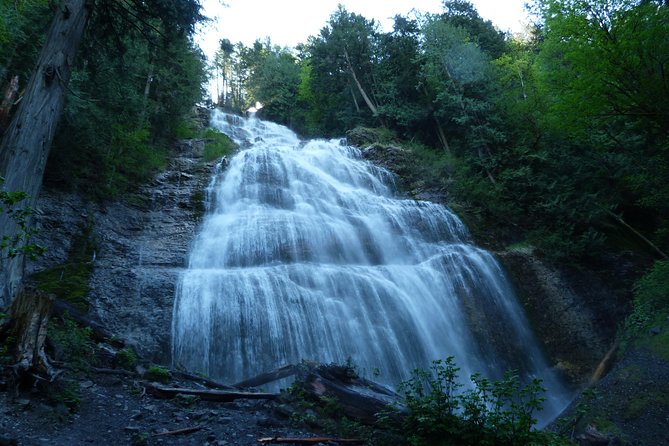
You get a 30-minute stroll through a west coast rainforest feel to see Bridal Veil Falls. The practical upside here is that you start building the “where am I, and why is it like this” context early, with an environment that feels different from the alpine scenes later.
Hope, BC (lunch supplies and a famous roadside detour)
You stop in Hope for lunch supplies, with a fun local flavor tied to chainsaw carving. This is less about a single landmark and more about refueling and getting your bearings.
E.C. Manning Provincial Park and Lightning Lake
Next comes a stop centered on stillness. You have time to explore Lightning Lake and take in the Cascade Mountains setting. The time is short, but lake stops are usually where you can reset your pace, stretch, and get ready for the more iconic postcard days ahead.
Skaha Lake Park (paddleboarding included, season dependent)
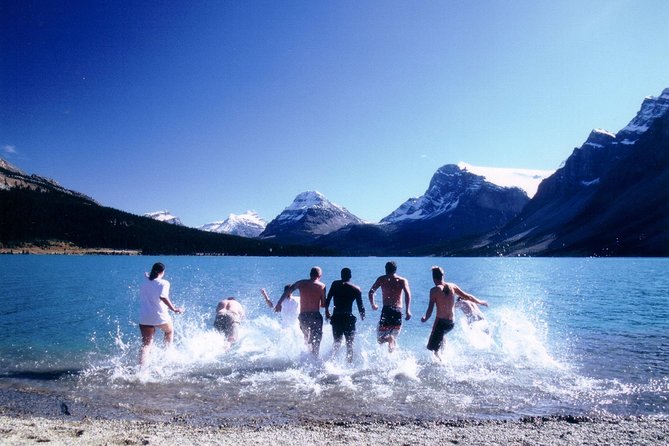
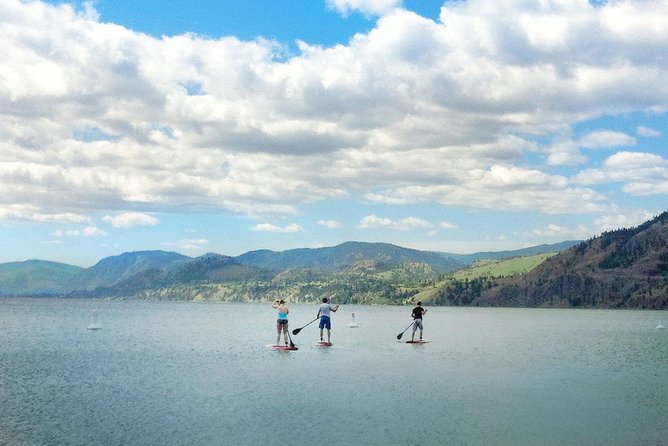
Then comes one of the more active inclusions: paddleboarding on Skaha Lake for about an hour. This is included from mid May to September. Even if you have limited experience, you are set up for a “learn basics, try it, get the photos” kind of moment.
Kelowna evening with Kekuli Café
You settle into Kelowna for dinner at Kekuli Café, noted for its Indigenous-inspired cuisine. This is a nice balance for day one. After waterfalls and driving, you get one solid cultural meal that feels like more than just a stop-and-go restaurant.
Possible drawback for day one: you can feel like you are always transferring. With multiple short stops, you will want to pack snacks and keep water handy, even though some meals are included later.
Day 2: winery pastries, railway history at Craigellachie, and the long scenic drive
Day two leans into variety: food views, a snap of Canadian history, and then a day that points you toward Alberta and the start of the big-name lakes.
Frind Estate Winery bakery stop
You start with pastries at Frind Estate Winery bakery in Kelowna, with views over the vineyards and Okanagan Lake. This is a simple stop, but I like it because it is not trying to be fancy. You get a break, you get something warm and easy to eat, and you get a scenic moment that is different from the mountains.
Craigellachie, Trans-Canada Railway last spike
A quick stop at Craigellachie connects the trip to a key engineering moment in Canadian history, where the Last Spike was driven. It is short, but it helps you see Canada as more than scenery.
Lake Revelstoke: wooden kayaks option
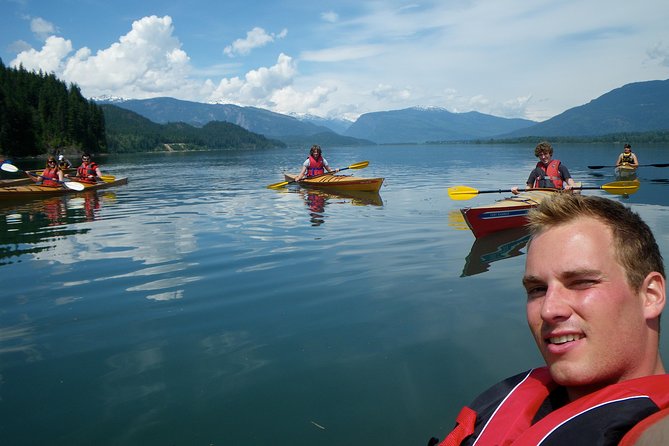
There is an activity option here at Natural Escapes: kayaking, canoeing, and SUP using handmade wooden kayaks. Important detail: this activity is not included. If you already know you want water time, plan to add it, because it is the only explicit “paid upgrade” type moment on day two.
Arrival at Lake Louise for the night
Then you head into Alberta and eventually arrive at Lake Louise to spend the night surrounded by the Rockies. Even if you only catch light on arrival, the change in scenery is a real psychological shift. You go from lakes and valleys to the big iconic terrain you came for.
One practical tip: because you are driving through major scenery routes, your best photos often come during those long road segments, not only at the stop points. Have your phone or camera ready, and keep the lens wiped.
A different day out in Canada:
- Vancouver Half-Day Whale Watching Adventure with Free Photos
★ 5.0 · 5,000 reviews - Big Bus Vancouver Hop-On Hop-Off Sightseeing Tour
★ 3.5 · 3,028 reviews - Victoria & Butchart Gardens Tour with Ferry from Vancouver
★ 4.5 · 2,703 reviews - Vancouver: Covered Whale Watching Adventure with Free Photos
★ 4.8 · 2,260 reviews
Day 3 is the postcard day: Lake Louise, Moraine Lake access, glaciers, Peyto, and Mistaya Canyon
Day three is built around the most famous views, and it is also where the exclusive Moraine Lake access matters most.
Lake Louise (morning time)
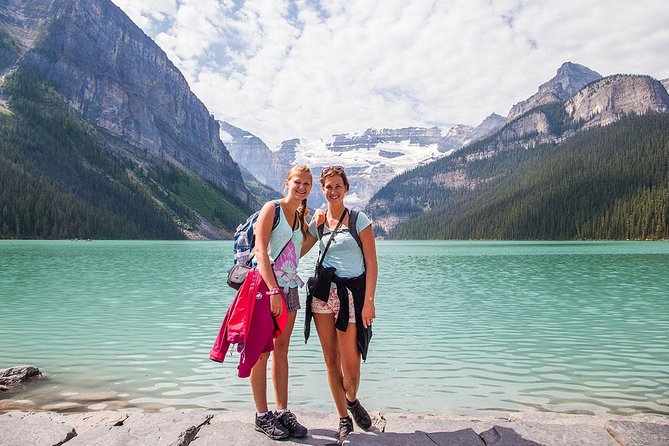
You begin with Lake Louise for about an hour. This is your first real hit of the “wow, I get it now” moment. The value of this stop is that you do not have to guess where to stand or how to time it. The tour plan provides a structured look before you move on.
Moraine Lake (included and the reason you chose this tour)
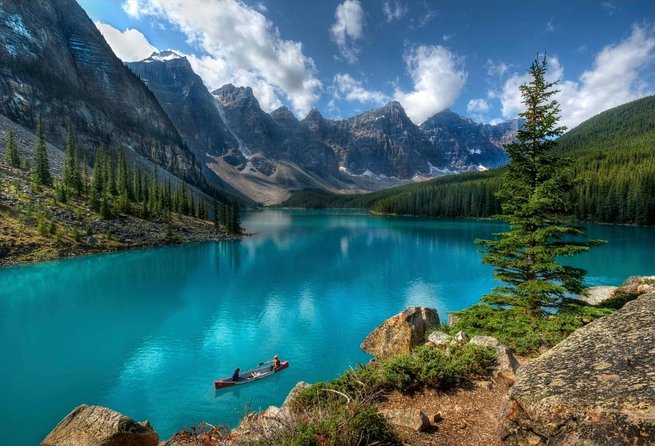
Next is Moraine Lake, with about an hour there and admission included. Moraine Lake is one of those places people plan months for, mostly because access can be tricky. Having it built in, plus the note of exclusive access, is a big deal for your sanity.
Crowfoot Glacier
After that you move toward the ice story with Crowfoot Glacier. You get around a half hour. This is not a long hike segment, but glaciers are the kind of thing where short time still feels dramatic, especially when you are close enough to see formations and textures.
Peyto Lake
Then you hit Peyto Lake for about 30 minutes. The reason this one gets attention is the distinctive wolf-shaped outline and turquoise color against the mountain backdrop. If you only have time for one “iconic viewpoint” on the day, Peyto is a strong candidate for your camera roll.
Mistaya Canyon
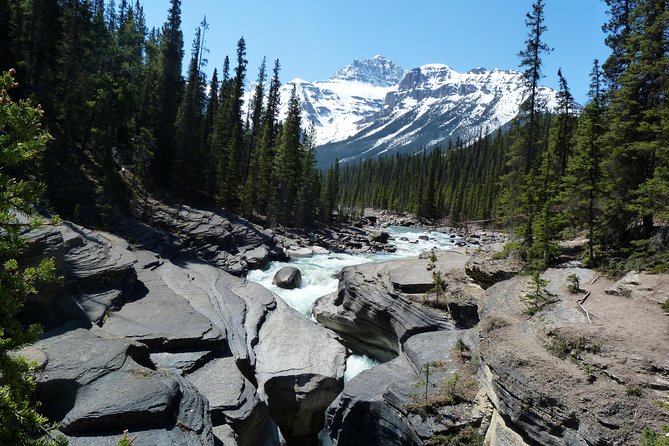
You finish with a walk to Mistaya Canyon, around 30 minutes, where you can see the Mistaya River and the rock formations it has carved. This is a good ending because it adds a bit of motion and geology, not only still water and ice.
Possible drawback for day three: the itinerary is long on sights, short on downtime. If you get motion-sick or hate rushing, you may want extra water, and you may benefit from bringing a light snack even if breakfast exists. You will be glad you planned for small needs.
Day 4 in Jasper: Athabasca Glacier toe hike plus Sunwapta and Athabasca Falls
Day four is your Jasper-centered closer, and it keeps the focus on water and ice.
Columbia Icefield, Athabasca Glacier
You head to the Columbia Icefield, the largest in the Rocky Mountains at 325 square kilometers, then take a short hike to the toe of the Athabasca Glacier. Plan for about two hours here. This is one of the most physically satisfying segments, because you are walking, not just stopping and snapping pictures.
Sunwapta Falls
Next is Sunwapta Falls in Jasper National Park. You have around 30 minutes to see a powerful cascade through a gorge. This is a classic “stand, look, and let the sound take over” stop, and the gorge setting makes quick time feel worth it.
Athabasca Falls
You close the tour at Athabasca Falls, also about 30 minutes, with a rugged canyon and a dramatic tumble. It is a strong finale because waterfalls are a visual and audio payoff, especially after glacier time.
At this point, you will likely feel you have seen a lot. That is the point of the tour design. Just don’t mistake “short time” for “small impact.” Waterfalls and glaciers land harder than you expect, even with limited minutes.
Pace, group size, and the real meaning of moderate fitness
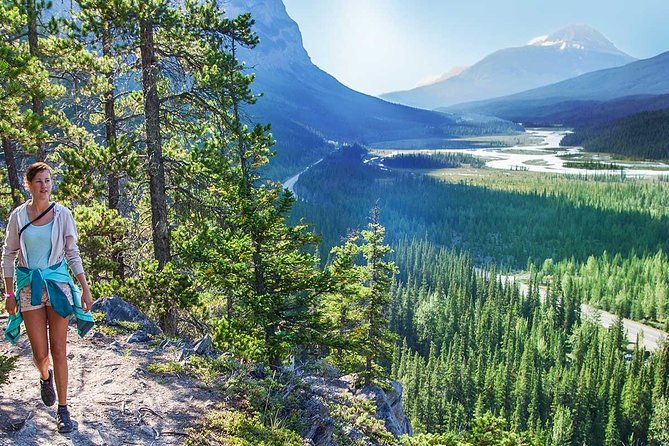
This tour is designed for people who can handle a moderate physical fitness level. You do not need mountaineering skills, but you do need to be comfortable with short hikes, walking on uneven ground, and doing it repeatedly over four days.
Another key detail: the group maximum is 24 travelers. That size helps. It is big enough that you usually get social energy, but small enough that the guide can keep everyone oriented and on schedule.
Weather is also part of the plan. The tour operates in all weather conditions, so you should dress for changing conditions and keep layers ready. Even in summer months, the Rockies can shift quickly.
Lodging: hostel dorm-style for 3 nights, what that means in real life
The included accommodation is 3 nights in mixed gender, hostel-style dorm rooms. This is great for cost control and meeting people, and it can be genuinely fun if you like a social travel vibe.
It is not great if you want:
- quiet, private sleeping space
- guaranteed silence at night
- room-by-room temperature control
If you book this, pack with the assumption you will share. Bring earplugs and a small sleep kit if you like darkness. Also, keep your essentials easy to reach so you are not digging through luggage in a shared space.
Packing and baggage rules, so the bus day stays calm
You are limited to one main backpack, bag, or suitcase that fits the bus luggage compartment:
- maximum 23 kg (50 lbs)
- maximum linear dimensions 158 cm (62 in)
You can also bring a small daypack for the passenger compartment.
Moose can refuse oversized luggage, and if they accept an overweight or oversized bag, there is a $50 fee per bag. The decision is made at departure, so you want to weigh and measure before you show up.
This matters because dorm travel is already about light packing. The best approach is one sturdy bag for your full trip plus a daypack for water, a layer, and your photo gear.
How guides like Mike and Troy shape the experience
One of the most praised parts of the trip is the human side, the guide who links it all together.
In the feedback, Mike comes up as friendly, helpful, and good at making sure you learn something about each place, not only see it. Another named tour leader, Troy, is described as outstanding and tied to the standout value moments, especially Lake Louise and the town of Banff.
Even without a long lecture, that kind of guiding tends to change how you experience quick stops. You notice details faster because someone explains what matters, why it is there, and what to watch for in the moment.
Should you book this Coho Banff and Jasper tour?
I think this tour is a strong fit if you want:
- Banff and Jasper in a short window
- Moraine Lake access without the hassle
- included lodging and meals so you can focus on being outside
- a social but manageable group size (max 24)
- an itinerary that includes both lakes and glaciers, plus active time like paddleboarding
You might want to skip it if:
- you need long, slow time at each sight
- you hate dorm-style accommodations
- you expect lots of optional paid activities to be included automatically
If you book, do one thing that pays off immediately: plan your packing around the bus baggage rules and bring a layer for cold moments. Then you can enjoy what this tour does best, moving efficiently from one unforgettable Rockies scene to the next, without feeling like you are doing the logistics yourself.
FAQ
Where does the tour start and what time does it begin?
The tour starts in Vancouver, Canada, with a listed start time of 8:00 am.
How long is the Coho Explore Banff and Jasper National Parks tour?
The duration is 4 days (approximately).
What’s included in the price?
Included features are breakfast, 3 nights of hostel dorm-style accommodation, Moose bus transportation, a professional local tour guide/driver, national park fees (including exclusive access to Moraine Lake), paddleboarding on Skaha Lake (mid May to September), and 3 dinners.
What meals are not included?
Meals are included only as stated under Inclusions, so meals other than the included breakfast and the 3 included dinners are not included.
Is paddleboarding included for every season?
Paddleboarding on Skaha Lake is included only from mid May to September.
What kind of fitness level do you need?
The tour recommends a moderate physical fitness level. You should be prepared for hiking and walking segments during the stops.
Are there luggage limits?
Yes. Each passenger can bring one main bag limited to 23 kg (50 lbs) and maximum linear dimensions of 158 cm (62 in), plus one small daypack. Overweight or oversize luggage may be refused, or a $50 fee may apply per bag if accepted at departure.
Recently listed around Vancouver
- Vancouver Top Attraction Highlights Tour Private With Capilano★ 4.5 · 3 reviews
- Private Transfer From Vancouver Airport to Vancouver Downtown★ 5.0 · 7 reviews
- Vancouver to Whistler – Private Transfer – One Way★ 5.0 · 4 reviews
- Whistler Sea 2 Sky Gondola, Shannon Falls Small Group Max 12 Tour★ 5.0 · 6 reviews
- YVR Layover – Vancouver City Sightseeing Private Tour★ 5.0 · 7 reviews
- Wild Whale Watching Experience – Open Air Vessel★ 5.0 · 158 reviews
- Whistler: Sea to Sky Gondola Shannon and Brandywine Falls Tour★ 5.0 · 16 reviews
- Whistler 1-Day Tour from Vancouver (Chn&Eng)★ 4.0 · 6 reviews
National Parks, compared.
Jasper National Park: Maligne Lake Cruise With Guide
Read our review →
Explore Banff National Park with Our Premium Day Tour
Read our review →
Banff National Park Tour with Lake Louise and Moraine Lake
Read our review →
Jasper National Park: Evening or Morning Wildlife Watch Tour
Read our review →
Discover Banff National Park – Premium Day Trip
Read our review →
2 Hour Wilderness Adventure Snowmobile Tour in Whistler
Read our review →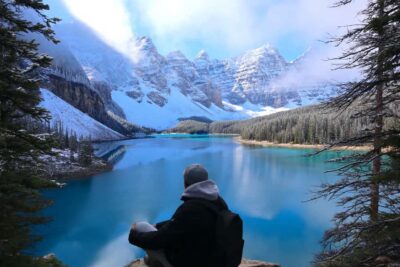
Explore Banff National Park & Lake Louise Day Trip
Read our review →Browse the lists this tour appears in