REVIEW · GUIDED
Banff: Mount Norquay 2.5 or 4-Hour Guided Via Ferrata Climb
Steel rungs, big skies, and zero climbing history.
This Mount Norquay via ferrata lets you clip into a cable and climb steel ladder holds with a pro watching your every move, so it feels thrilling without needing prior experience. I love how it turns Banff National Park from a scenic drive into a place you actually reach by hand on the rock. And the panoramic views from the summit ridge make it feel like you earned every photo.
The main thing to consider is the height factor. Even though you stay tethered, this is still on cliffs with open drop-offs, so if you freeze at the edge, you may want to talk to the guides first and pick the route that matches your comfort.
In This Review
- Key Highlights You Should Care About
- Banff Via Ferrata on Mount Norquay: What It Feels Like Up There
- Routes: Choosing Explorer vs Ridgewalker Without Regretting It
- Explorer Route (about 2 to 2.5 hours)
- Ridgewalker Route (about 3.5 to 4 hours)
- Getting to Mount Norquay: Easy Start, Real Mountain Setting
- Gear Up and Get Trained: Why Safety Feels Simple Here
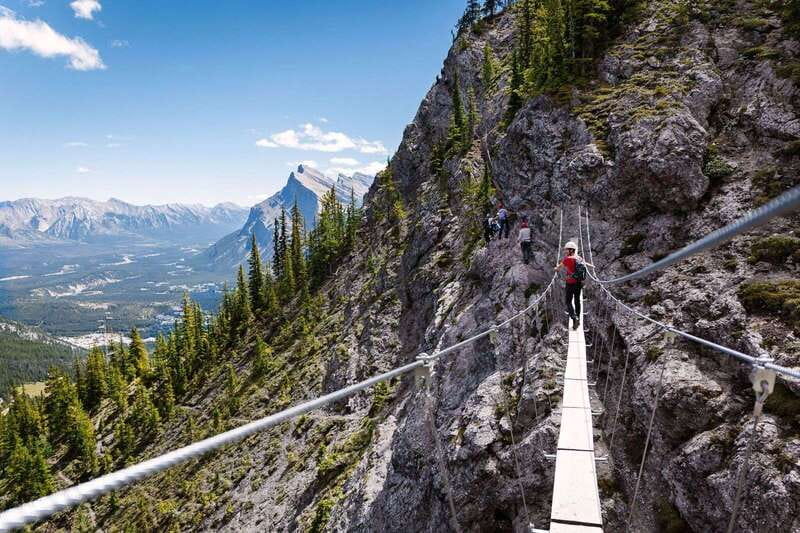
- The Climb Itself: Buttresses, Ladder Holds, and the Suspension Bridge Moment
- Your first buttresses and steel ladder holds
- The 30-meter suspension bridge
- The summit ridge payoff
- What’s Included, and Why the Price Can Be Fair
- Timing, Group Size, and Pace: How You’ll Avoid Feeling Rushed
- Bring This, Wear That: The Stuff That Actually Matters
- Who This Is For, and Who Should Think Twice
- Weather, Visibility, and the One Thing You Cannot Control
- Should You Book Mount Norquay Via Ferrata?
- FAQ
- What routes are offered on this Mount Norquay via ferrata?
- How long does the tour take?
- Do I need prior climbing experience?
- What is included in the price?
- Is food included?
- What should I bring with me?
- What are the age and weight requirements?
- Is the tour safe for beginners?
- How big are the groups?
- What languages are available for the live guide?
Key Highlights You Should Care About
- Two routes that match your comfort level (Explorer at 2.5 hours, Ridgewalker at about 4 hours)
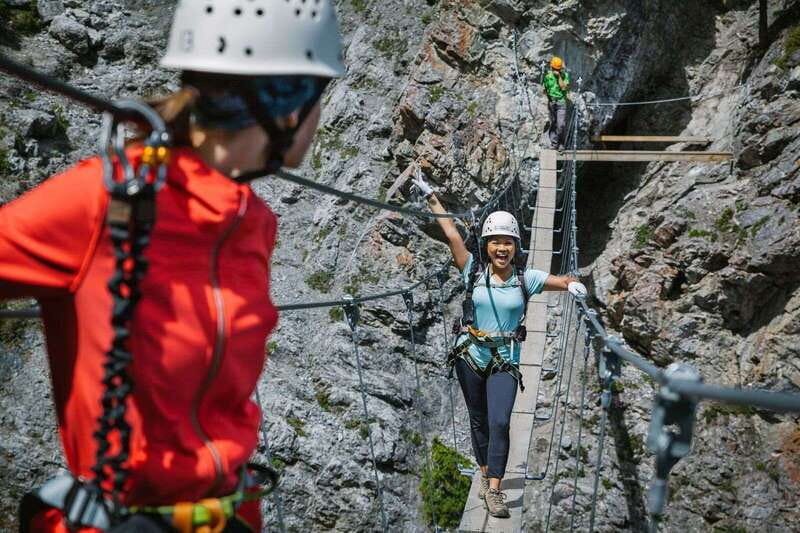
- A 30-meter suspension bridge that’s more fun than you expect
- Real via ferrata coaching with gear checks, training, and a steady pace
- Small groups with a tight guide-to-participant ratio (up to 8)
- Summit views near 2,300 meters that make the effort feel worth it
Banff Via Ferrata on Mount Norquay: What It Feels Like Up There
If your Banff trip needs one activity that is equal parts adrenaline and “I can’t believe I’m doing this,” Mount Norquay’s via ferrata delivers. You’re not scrambling unguided, you’re not bringing your own rope system, and you’re not guessing where your next handhold is supposed to be.
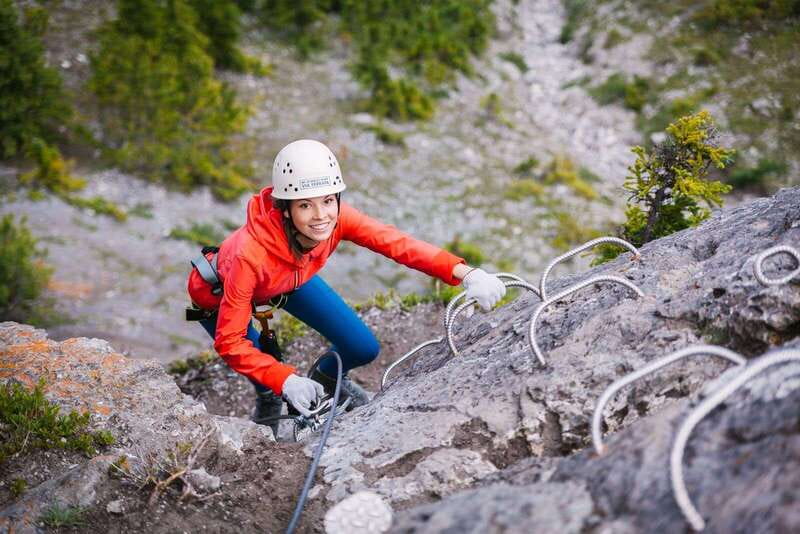
Instead, you climb a course that’s built for safe, guided exposure: steel ladder holds, buttresses you can work through step by step, and that memorable suspension bridge. You start with a quick training setup and then move onto the cliff line with a guide positioned to keep you moving and keep you safe.
What I like most is how the tour builds confidence fast. You go from feeling nervous at the harness to feeling locked-in by the time you’re crossing the first major obstacle. Many people end up describing the same pattern: it looks scary from below, but the system plus coaching makes it manageable.
A few more Banff days to compare
- Banff: Banff Gondola Admission Ticket
★ 4.7 · 3,698 reviews - Banff Gondola Ride Admission
★ 4.5 · 2,688 reviews - Columbia Icefield Tour with Glacier Skywalk
★ 4.5 · 1,860 reviews
Routes: Choosing Explorer vs Ridgewalker Without Regretting It
You get two options, and picking the right one changes how the whole day feels.
Explorer Route (about 2 to 2.5 hours)
This is the gentler on-ramp. It’s a shorter climb, about 1 kilometer of route distance with roughly 145 meters of elevation gain. In practical terms, you’ll spend less time working the vertical sections and you’ll get out sooner, which helps if you want to keep the rest of your Banff day flexible.
You’ll still do the key via ferrata elements: you’ll get instruction, climb a few pitches, and cross the suspension bridge, then descend back the way you came. If you’re new to via ferrata or you’re unsure about heights, this is the route that usually helps people get a true first experience without overcommitting.
Ridgewalker Route (about 3.5 to 4 hours)
This one gives you more time on the cliff and more time at higher exposure. The route runs about 1.4 kilometers with about 260 meters of elevation gain. You’ll climb to a summit ridge around 2,300 meters above sea level, and you’ll get the longer, more dramatic set of buttresses.
On this route, you’ll climb the memorial, sunrise, and vista buttresses, then traverse across the suspension bridge as part of the big line of movement. You also get the summit ridge moment where you stop, take photos, and enjoy the views before heading back down. If you’re debating whether to extend by a day or add the longer route during the same day, Ridgewalker is often the decision that makes the whole trip feel like a highlight.
A different day out in Canada:
- Lakes Moraine, Louise, Emerald, Johnston Canyon & Yoho Tour
★ 4.8 · 1,083 reviews - Lake Louise, Moraine Lake and the Icefields Parkway Full-Day Tour
★ 5.0 · 836 reviews - Banff: Lake Louise, Moraine, Emerald Lake & Johnston Canyon
★ 4.9 · 808 reviews - Banff: Lake Minnewanka Cruise
★ 4.7 · 791 reviews
Getting to Mount Norquay: Easy Start, Real Mountain Setting
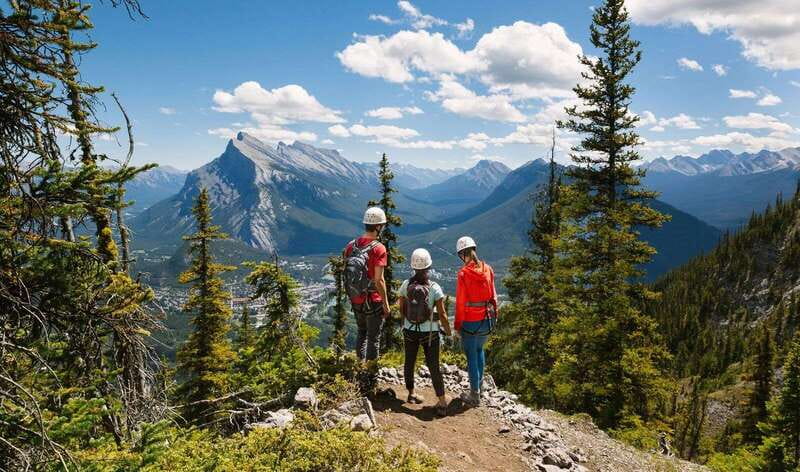
Mount Norquay is only about 10 minutes from Banff, and the tour makes the approach simple. You can ride a free shuttle bus from Downtown Banff to the mountain area, then you’ll check in at the site.
You’ll be equipped on arrival with a harness, lanyards, and a helmet. Then there’s a key add-on that helps this feel like a “Banff special” rather than just a generic outdoor activity: the sightseeing chairlift that takes you up to where your via ferrata starts. It’s one of those small logistics wins that makes the whole outing feel scenic from minute one, even before you climb.
The chairlift also does something psychological: it gets you toward the action without fatigue, and it gives you a preview of the cliff line you’ll work through next.
Gear Up and Get Trained: Why Safety Feels Simple Here
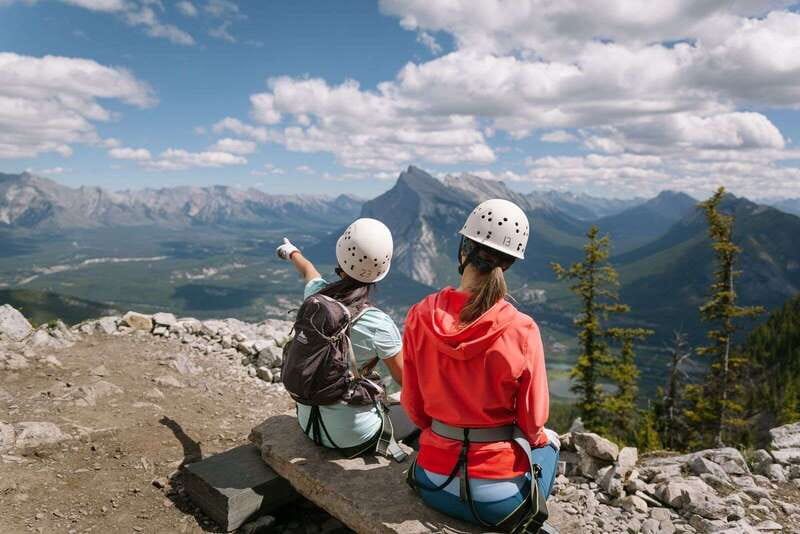
Via ferrata can sound intimidating, but the tour format is built to reduce unknowns.
After check-in, you’ll do an equipment check and a training session. From there, you’ll take a short walk to the first buttress, typically just a few minutes, so the day doesn’t drag.
A crucial point for how safe you feel: during the strenuous sections, you’re harnessed and attached to a steel cable. That means you’re not free-soloing. Your lanyards connect you into the system, and your guide manages technique and pacing while you follow the fixed route.
If you’re the type who worries about heights, this matters. You’re not only relying on willpower, you’re relying on a structure that keeps you connected while your hands and feet do their job. Guides are also good about scanning the group, slowing people down when needed, and coaching foot placement so you don’t waste energy.
One more small but real comfort factor: the tour runs with a small group size capped at 8 participants, which means you’re not stuck waiting far away from the front and your guide can actually watch everyone.
The Climb Itself: Buttresses, Ladder Holds, and the Suspension Bridge Moment
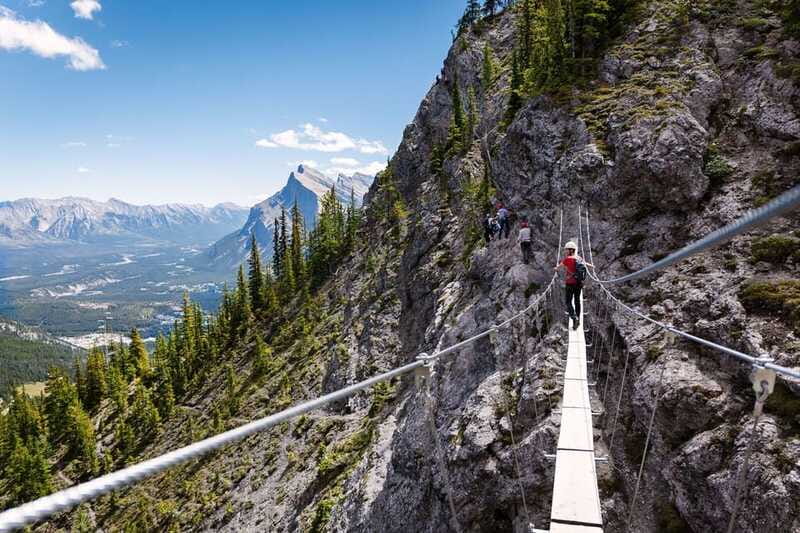
This is where via ferrata stops being a concept and becomes a physical experience.
Your first buttresses and steel ladder holds
You’ll start on buttresses with strategically placed steel ladder holds. The point is not to “be a climber.” The point is to help you learn how to move in a controlled way: hand placement, where to put your feet, and how to keep your body balanced while clipped in.
You’ll likely feel a mix of excitement and concentration. That’s normal. The harness system and fixed holds remove the big uncertainty, but your brain still has to handle exposure. Taking it one move at a time is the whole trick.
The 30-meter suspension bridge
Then comes the highlight many people remember most: a 30-meter suspension bridge. It’s long enough to feel real, but you’re also connected through the climb system, and your guide helps you cross at a pace that works.
If you expect a scary, white-knuckle moment, it can still get your heart going. But compared to a lot of “fear-based” stunts, this feels like a controlled thrill. Many folks end up saying they were more okay than they thought they’d be.
The summit ridge payoff
On the longer Ridgewalker option, the big payoff is the climb up toward the summit ridge, around 2,300 meters. Once you get there, you get time for photos and a view that looks like Banff’s whole mountain world stretched out under you. It turns the park into a three-dimensional place, not just something you drive past.
And then, because this is guided, you don’t spiral into uncertainty on the way down. You descend back to the starting point as part of the same system and coaching.
What’s Included, and Why the Price Can Be Fair
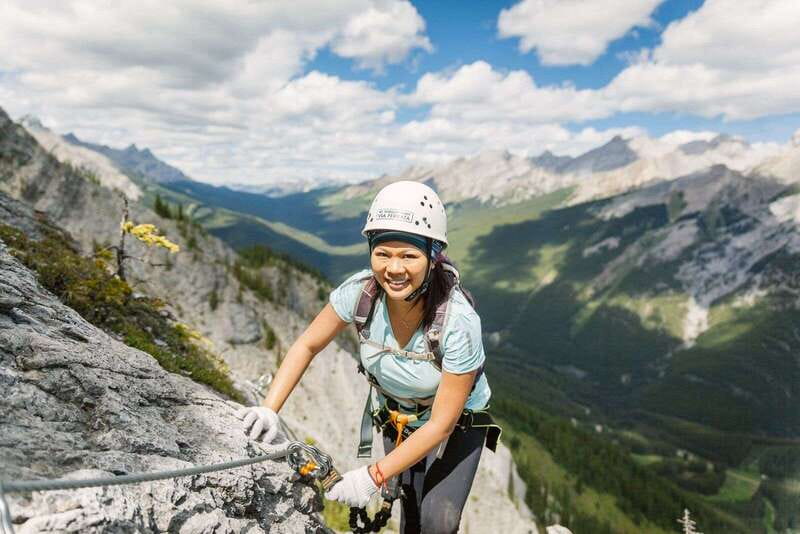
At about $145 per person, this isn’t a cheap add-on. But it also isn’t just “pay for climbing rocks.” The value comes from what’s covered:
- Expert guide (with coaching and safety management)
- All safety equipment including harness, helmet, and lanyards
- Chairlift access to reach the climbing start area
- Complimentary hiking boot and rainwear rental available (with the note that sizing can’t be guaranteed)
- Free shuttle bus from Downtown Banff
For me, the practical value is the safety system plus the chairlift and gear. If you had to rent and plan all of that yourself, you’d spend time and energy even before the climb. Here, you show up with water and snacks and follow the flow.
The one thing not included is food and drinks. You can buy snacks and drinks at the Cliffhouse Bistro after your tour, which is a nice way to recover without packing a whole meal.
Timing, Group Size, and Pace: How You’ll Avoid Feeling Rushed
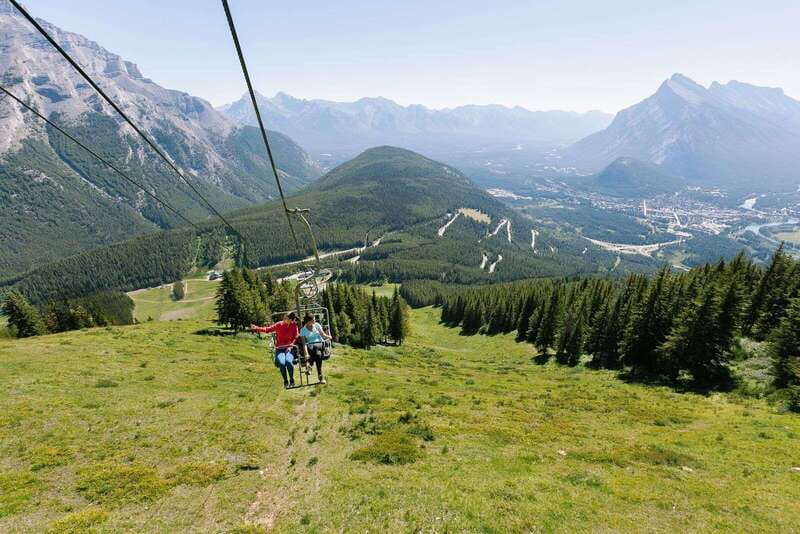
This is a short-to-half-day activity, usually 150 minutes to 4 hours depending on the route. The exact timing depends on the departure times you book, but the experience is structured so you’re climbing most of the time, not waiting around.
Because groups are small and guides are actively coaching, pacing tends to feel supportive. You’re not just a number standing in line. You can also expect your guide to adjust for differences in comfort and speed. That matters a lot for via ferrata, where one person moving slowly can make other people feel pressured. A good guide helps keep the whole group in a workable rhythm.
One more note: some people complete the Ridgewalker route faster than the estimate, especially when weather and trail conditions cooperate. Other days can feel slower when you take extra care over moves. Either way, it still stays within the half-day frame.
Bring This, Wear That: The Stuff That Actually Matters
You’ll get the harness and helmet, but you’re still the one responsible for your comfort and footing.
Bring:
- Snacks
- Water
- Rain gear (weather can change fast)
- Anything you need for personal comfort
Wear:
- Hiking shoes that staff approve (sneakers can be a gamble unless they meet the requirements)
- Comfortable layers you can move in
Boot and rainwear rental is available, but sizing isn’t guaranteed. If you have strong preferences or you wear specialized shoes, it’s worth bringing your own. If you’re flexible, rental can make the whole thing easier.
Also plan to arrive at least 30 minutes early. You’ll need time for check-in, gear fitting, and the safety waiver.
Who This Is For, and Who Should Think Twice
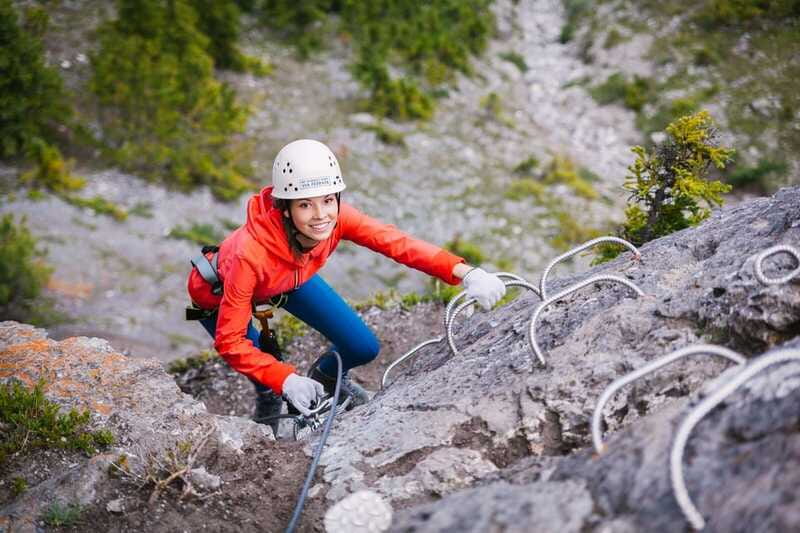
This is built for a range of abilities, including people with no previous experience. The minimum age is 12, and there are weight limits: 40 kg to 140 kg.
It’s a great fit if you want:
- A first-time introduction to via ferrata
- A guided way to experience real mountain exposure in a safety system
- A memorable Banff activity beyond the usual viewpoint circuit
It’s not a good fit if:
- You’re under 12
- You have mobility impairments, since the route involves climbing and ladders
- You’re outside the weight limits noted above
- You’re so afraid of heights that even controlled exposure will likely overwhelm you
The key is honesty about your comfort. You’ll feel more confident when you choose the route that matches your nervous system, not just your optimism.
Weather, Visibility, and the One Thing You Cannot Control
Banff can be gorgeous, but sometimes visibility is less than perfect. One rider noted the area was hazy due to wildfires, which can change how crisp the summit views look.
That doesn’t ruin the experience, but it does affect the “wow” factor of the panorama. If you’re scheduling around views, check local conditions the day of your climb. If smoke is heavy, you might still enjoy the climb for the achievement and the unique route, even if the distance views are muted.
Should You Book Mount Norquay Via Ferrata?
Book it if you want the best combo of safety structure, real climbing fun, and Banff views you earn. The chairlift start and small-group format make it feel like a curated adventure, and the tethered system reduces the uncertainty that makes via ferrata scary on paper.
Skip or reconsider if your comfort with heights is extremely low, or if you’re likely to struggle physically on ladders and cliff traverses. And if you’re the type who needs a lot of downtime, choose the Explorer route. It keeps your day active but not long.
If you’re debating between 2.5 hours and 4 hours, my practical advice is simple: take Ridgewalker only if you’re excited to spend more time on the cliff and you want the longer summit ridge payoff. Otherwise, Explorer still gives you the suspension bridge thrill and a first-time via ferrata win.
FAQ
What routes are offered on this Mount Norquay via ferrata?
You can choose either the 2.5-hour Explorer Route or the 4-hour Ridgewalker Route.
How long does the tour take?
The duration is listed as 150 minutes to 4 hours, depending on the route option you book.
Do I need prior climbing experience?
No previous experience is needed.
What is included in the price?
The tour includes an expert guide, harness, helmet, and lanyards, plus a sightseeing chairlift and free shuttle bus transportation from Downtown Banff. Complimentary hiking boots and rainwear rental are also available.
Is food included?
No. Snacks and drinks can be purchased at the Cliffhouse Bistro after your tour.
What should I bring with me?
Bring snacks, water, hiking shoes, and rain gear.
What are the age and weight requirements?
The minimum age is 12. The minimum weight limit is 40 kilograms (88 pounds) and the maximum weight limit is 140 kilograms (308 pounds).
Is the tour safe for beginners?
The tour is designed for all abilities, including people with no previous experience, and you are harnessed to a steel cable while climbing with a professional guide.
How big are the groups?
The group is small, limited to 8 participants, with 1 guide to every 8 participants.
What languages are available for the live guide?
The live tour guide is offered in English, Japanese, and French.
Recently listed around Banff
- Half-Day Guided Via Ferrata Climbing Tour in Banff★ 5.0 · 30 reviews
- Private Horse-Drawn Sleigh Ride In Banff★ 3.0 · 5 reviews
- Private Airport Transfer: Banff, Canmore, Lake Louise to Calgary★ 5.0 · 3 reviews
- Banff |Canmore| Kananaskis to Calgary YYC Airport–Private Shuttle★ 5.0 · 50 reviews
- Calgary to Banff, Canmore, Lake Louise, Luxury Lexus TX★ 5.0 · 4 reviews
- Private Forest Bathing Experience Connect with Nature★ 5.0 · 5 reviews
- Elevated Private Experience: Adventure & Wellness in Banff★ 5.0 · 4 reviews
- Park Distillery Tour with Craft Spirits Tasting★ 5.0 · 23 reviews
Guided, compared.

Guided Tour of the Fairmont Le Chateau Frontenac in Quebec City
Read our review →