
REVIEW · WALKING TOURS
Ancient Trees of Vancouver Walking Tour
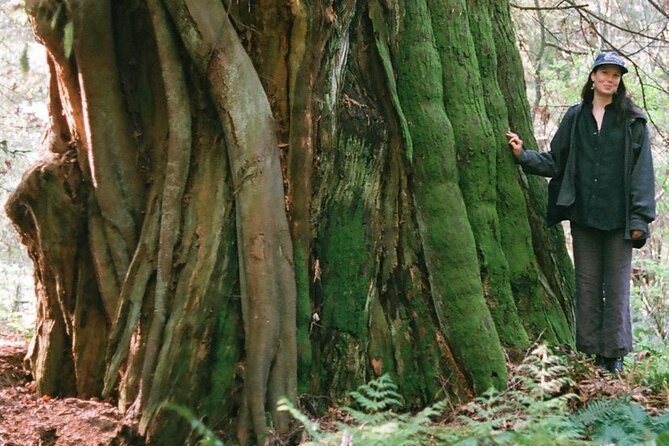
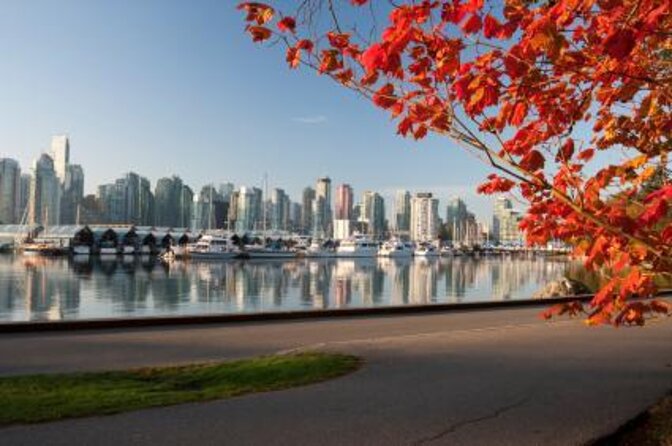
Stanley Park can make you feel time travel. This Ancient Trees of Vancouver walk uses archive photos and old maps to connect the forest you see today with the people who lived here long ago. The guide keeps the pace relaxed, so you spend your time looking closely, not just passing by big landmarks.
I love two things most: the chance to stand near ancient old-growth giants like millennium-old cedars and towering Douglas firs, and the way the tour uses old maps and postcard-style visuals to explain how the park changed over time. You’re not just learning names, you’re learning context.
One possible drawback to plan for is simple: there is no pickup or drop-off. You start and finish at Ferguson Point, so you’ll want your own way into Stanley Park and back again.
In This Review
- Key points before you go
- A walk through Stanley Park’s real old growth, not just scenic trees
- Getting started at Ferguson Point (and why meeting matters)
- The Stanley Park highlights: cedars, firs, and the big maple you should hunt for
- The archive element: old maps and 120-year postcards that change how you look
- How Colin Spratt makes tree identification feel practical, not nerdy
- Walking tour reality: what you’ll do for 3 hours in Stanley Park
- Morning vs afternoon: which departure fits your day better
- Price and value: what $56.33 buys you in an urban forest
- Who should book this ancient tree tour (and who might skip it)
- Should you book Ancient Trees of Vancouver?
- FAQ
- Where does the Ancient Trees of Vancouver walking tour start?
- How long is the tour?
- What is the price?
- How big is the group?
- What language is the tour offered in?
- Is there pick-up or drop-off provided?
- Are service animals allowed?
- Can I cancel for a refund?
Key points before you go
- Max 10 participants keeps the tour calm, question-friendly, and not rushed
- Expert guide Colin Spratt (BC Big Tree Committee member) focuses on tree stories and identification
- Old maps, 120-year postcards, and photos turn tree viewing into a history lesson
- Old-growth ecology explained in plain language including why these forests matter now
- Morning and afternoon departures let you fit it between other Vancouver plans
A walk through Stanley Park’s real old growth, not just scenic trees
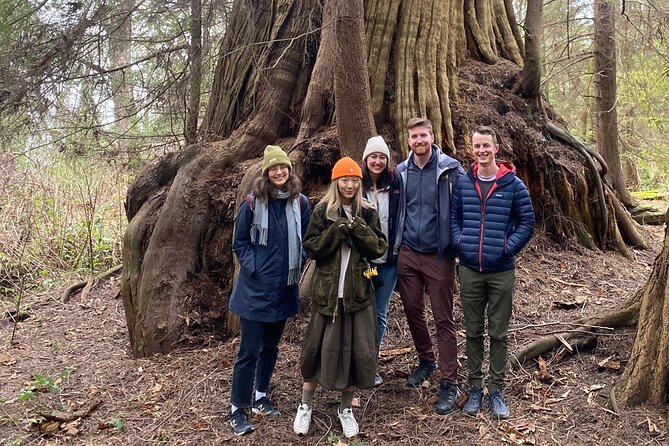
This tour works because it treats trees like living landmarks, not background decoration. You’re in Stanley Park, but you’re guided onto park trails where the focus is the forest itself, the species, the age, and the meaning of old-growth habitat in a city full of streets and schedules.
The small group size is a big deal. With a maximum of 10 people, I get the sense that the guide can slow down when someone asks a question, and you can actually look at bark, hollows, and branching patterns without feeling like you’re in a human conveyor belt.
The other reason it feels different is the guide style. Colin Spratt is not just reciting facts. He ties the trees to the history of the park and the area, including who lived here before the park existed. If you like nature and local history, this kind of mixed storytelling gives you something to carry home, not just a few photos.
More Walking Tours in Vancouver
- Gastown Historic Walking Food Tour
★ 5.0 · 1,863 reviews - Vancouver Lost Souls of Gastown Walking Tour
★ 5.0 · 1,273 reviews - A Wok Around Chinatown: Culinary and Cultural Walking Tour Led by a Chef
★ 5.0 · 610 reviews
Getting started at Ferguson Point (and why meeting matters)
The tour starts at Ferguson Point, 7501 Stanley Park Dr, Vancouver, BC V6G 3E2. It ends back at the same meeting point, so you’re not juggling a multi-stop transit plan. Since there’s no pickup or drop-off, you’ll want to arrive on your own time and route.
Timing is also flexible. There are morning and afternoon tours, and the duration is about 3 hours. That matters in Vancouver, where one rainy hour can change how you feel about a day. A 3-hour window is also long enough for real story time, but short enough that you won’t feel stranded if you have dinner plans afterward.
You’ll get a confirmation at booking time and use a mobile ticket. Service animals are allowed, and most people can participate since it’s a walking tour on park trails.
The Stanley Park highlights: cedars, firs, and the big maple you should hunt for
The walking route centers on Stanley Park’s remaining old-growth elements, with a spotlight on a handful of standout trees and the forest logic behind them.
Expect to hear about:
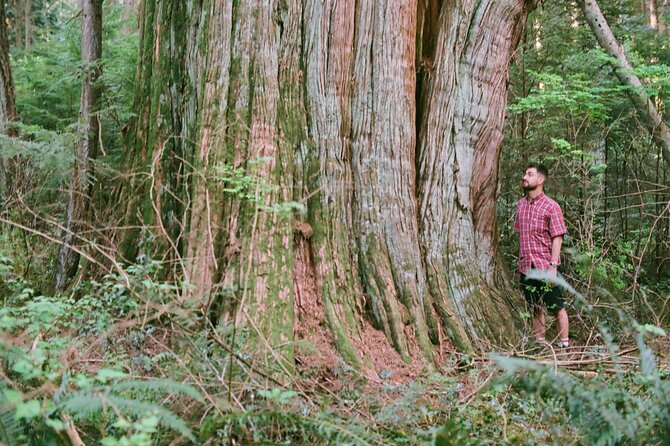
- Douglas firs that are described as around 600 years old (and the tour materials also reference Douglas firs around 800 years old, so you’ll likely hear the age range discussed in the field)
- Western red cedars described as about 800 to 1,000 years old, including the idea of “grandfather” scale trees
- The largest known maple tree in all of Canada, which is the kind of fact that pulls your attention toward a spot you might otherwise ignore
This is where the guide’s approach shines. Instead of treating these giants as isolated photo ops, you learn why old-growth matters ecologically. The tour explains threats old forests face today, and it connects the dots between what you can see, like structure and growth patterns, and what those patterns mean for wildlife and forest survival.
It also adds a human timeline. You learn about the park’s history and about the original Coast Salish inhabitants who called this area home for thousands of years before it became an urban park. That history is not a separate lecture. It comes through in how the trees were seen, used, and respected over time.
The archive element: old maps and 120-year postcards that change how you look
One of the most memorable parts of this experience is the use of old maps, 120-year postcards, and historical photographs. That might sound like museum stuff, but it works outdoors because you can compare what used to be there with what still survives.
Here’s what this adds for you as a visitor:
- You start noticing how parks are living systems, not fixed scenery
- You get a clearer sense of why certain tree areas endured while others changed
- You understand that conservation is ongoing, not a one-time decision
In the reviews, people repeatedly mention the visuals and the storytelling angle, and I get it. When you see an old image and then look at the current forest, the age of the trees becomes more than a number. It becomes evidence that the landscape has been shaped by human choices and natural processes for a very long time.
A few more Vancouver days to compare
- Vancouver: Gastown Historical Walking Food Tour
★ 4.8 · 539 reviews - The Forbidden Downtown and Gastown Walking Tour
★ 5.0 · 476 reviews - Gratuity-Based Vancouver City Highlights 3 Hour Walking Tour
★ 4.5 · 320 reviews - Street Art and Craft Beer 2 in 1 Walking Tour Vancouver
★ 5.0 · 61 reviews
How Colin Spratt makes tree identification feel practical, not nerdy
The tour is led by Colin Spratt, who’s identified as a big tree expert and a member of the BC Big Tree Committee. His job, as it comes across, is to help you see what you’re looking at.
Instead of just pointing, he explains details that turn a walk into real learning:
- Why nurse logs matter, meaning fallen wood can support new life
- The way old-growth forests regenerate, even when trees look damaged or broken
- How hollow cedar structures can still hold life and support animal habitat
Reviews also mention explanations about the hollowness of some of the oldest cedars and the idea that these hollows can provide shelter for wildlife. You also hear stories tied to how Indigenous communities viewed cedar as the tree of life, with practical uses like weaving fibers into textiles and using wood and bark for everyday needs.
This is the big value here. You leave with a mental “forest checklist.” Next time you walk through a park, you’re more likely to notice the understory, fallen trunks, and signs of regeneration, not just the tallest tree nearby.
Walking tour reality: what you’ll do for 3 hours in Stanley Park
This is not a long-haul hike. It’s a walking tour on park trails with enough comfort that most people can participate. Reviews describe the walk as easy on the trails, which lines up with the idea that the schedule is designed for learning and stopping, not sprinting.
What to expect during the walk:
- Regular stops for tree viewing and story pieces
- Focus on a small set of species and signature trees
- Time for questions, helped by the max group size of 10
If you’re traveling with kids, this format tends to work well because the guide can keep attention on something concrete, like counting features on a trunk or hearing how a tree supports new life. One review mentions kids ages 7 to 11 staying engaged with steady questions and friendly explanations, which is exactly what you want from a family-friendly nature outing.
Morning vs afternoon: which departure fits your day better
Since you have a choice of morning and afternoon tours, pick based on your energy and weather plan. Morning can be ideal if you want cooler air and steadier light for photos. Afternoon can be easier if you’re doing other daytime Vancouver sights first and want a nature reset later.
Either way, the tour is about 3 hours, so you’ll want a plan for the time gap after. This is the kind of tour where you may walk slower at the end because you’ll keep looking at trees on your way out.
Price and value: what $56.33 buys you in an urban forest
At $56.33 per person for about 3 hours, the price only makes sense if you’re buying more than “a walk in Stanley Park.” You are paying for:
- An expert guide who focuses on old-growth identification and context (Colin Spratt)
- A small group experience with up to 10 people
- Historical storytelling with old maps, 120-year postcards, and photographs
- A route designed around standout ancient trees and the ecological importance of old-growth forests
There’s also an “admission ticket free” note tied to the tour experience, and the structure suggests you’re not paying extra gate fees to enter the forest areas. The practical takeaway for you is that this price is mostly going toward the guided expertise and the added educational content, not transport or access fees.
One extra clue is demand. This tour is often booked about 46 days in advance on average, which usually means people are getting value out of the small-group format and expert guide.
Who should book this ancient tree tour (and who might skip it)
You should book if you:
- Want Stanley Park but prefer an experience about nature and history, not just sightseeing
- Like learning in the field, where you can see the subject while you hear the story
- Enjoy small groups and want time to ask questions
- Travel with kids who can handle a walk and prefer hands-on stories about the natural world
You might skip it if you’re short on time and only want a quick look at big trees from one viewpoint. This tour is built around guided walking, stopping, and learning. It’s not a drive-by checklist.
Should you book Ancient Trees of Vancouver?
Yes, if you want a calmer, more meaningful Stanley Park experience. This tour is strongest when you care about why old-growth matters and when you’re curious about how trees connect to human history in the region. The combination of ancient trees, archive visuals, and Colin Spratt’s tree-first storytelling makes it a standout use of a half-day in Vancouver.
If you’re deciding based on price, think of what you’re actually buying: a structured 3-hour guided explanation plus access to details you won’t get by wandering alone. And if you like learning from people who show real care for the subject, the guide’s energy comes through again and again in the tour experience.
Book it if it fits your walking comfort and schedule, then come ready to slow down and look up.
FAQ
Where does the Ancient Trees of Vancouver walking tour start?
The tour starts at Ferguson Point, 7501 Stanley Park Dr, Vancouver, BC V6G 3E2, Canada.
How long is the tour?
The tour runs about 3 hours.
What is the price?
The price is $56.33 per person.
How big is the group?
The tour has a maximum of 10 travelers.
What language is the tour offered in?
The tour is offered in English.
Is there pick-up or drop-off provided?
No. Pick-up and drop-off at the meeting point are not included.
Are service animals allowed?
Yes, service animals are allowed.
Can I cancel for a refund?
Free cancellation is available up to 24 hours in advance for a full refund.
Recently listed around Vancouver
- The Ultimate Stanley Park E-Bike Tour★ 4.9 · 33 reviews
- Vancouver: The Supernatural TV Show Locations Tour★ 4.9 · 32 reviews
- The Haunting of Vancouver Film Tour★ 4.9 · 9 reviews
- Stanley Park Tour by Car:Small Group Value,See More,Pay Less★ 4.9 · 51 reviews
- Stanley Park EUC & E-scooters loop tour★ 5.0 · 4 reviews
- Stanley Park Self Guided Bike Tour★ 4.1 · 12 reviews
- Snowshoeing At The Top Of The Sea To Sky Gondola★ 5.0 · 6 reviews
- Vancouver: North Shore Mountains Snowshoeing with Transfer★ 5.0 · 6 reviews
Walking Tours, compared.
Old Quebec City: Grand Walking Tour with Private Option
Read our review →
The Original Old Montréal Walking Tour by Guidatour
Read our review →
Old Montreal Small-Group Walking Tour | Max 10 | by MTL Detours
Read our review →
Old Quebec Classique Walking Tour with Funicular
Read our review →

Quebec: Crimes of New France Animated Walking Tour
Read our review →Browse the lists this tour appears in